A tightly timed Stone Town one day itinerary mixing free walking routes, iconic sights, and bookable island tours for day-trippers in Zanzibar.
Who This Itinerary Is For
This Stone Town one day itinerary is built for people with exactly one day — cruise passengers on a port call, travelers connecting between the airport and a beach resort in the north, or anyone who booked a short stopover before heading to Pemba or Mafia Island. If you have two or three days, slow down and ignore the clock; this schedule is deliberately tight.
It assumes you're reasonably mobile — Stone Town's streets are cobbled, uneven, and mostly shaded but still hot by late morning. Families with young kids can follow the same route but should expect to cut the afternoon island trip short; a toddler on Prison Island at 2pm in direct sun is a hard sell. Senior travelers will manage fine but should budget extra time between stops rather than rushing the museum-to-market transitions.
One honest trade-off: this itinerary prioritizes seeing the Old Town's architecture and one bookable marine experience over deep museum time. If you want to properly read every exhibit at the House of Wonders or the Slave Trade Museum, you'll need to drop the island excursion. I wouldn't recommend trying to do both at a leisurely pace — something has to give, and for most first-time visitors the open-air walking and the boat trip matter more than an extra hour indoors.
Morning: Doors, Architecture & Markets
Start early. Stone Town is genuinely pleasant to walk before 9am — the light is good for photos, the alleys are quiet, and the heat hasn't set in. Waiting until 10am costs you comfort, not sights.
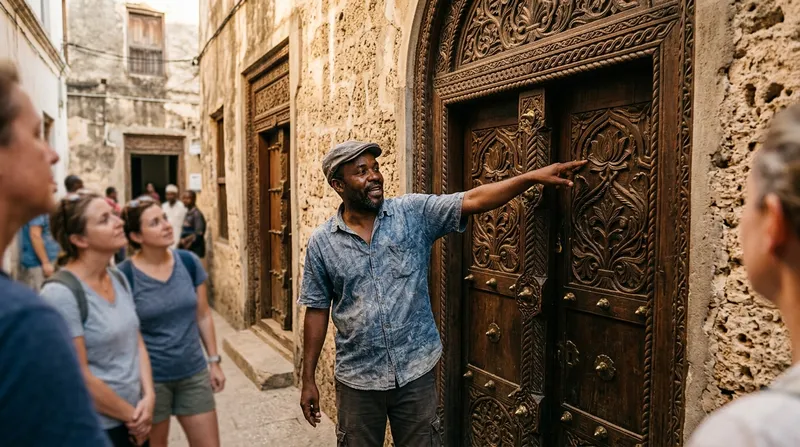
7:00–9:00 AM: Zanzibari Doors Walking Tour
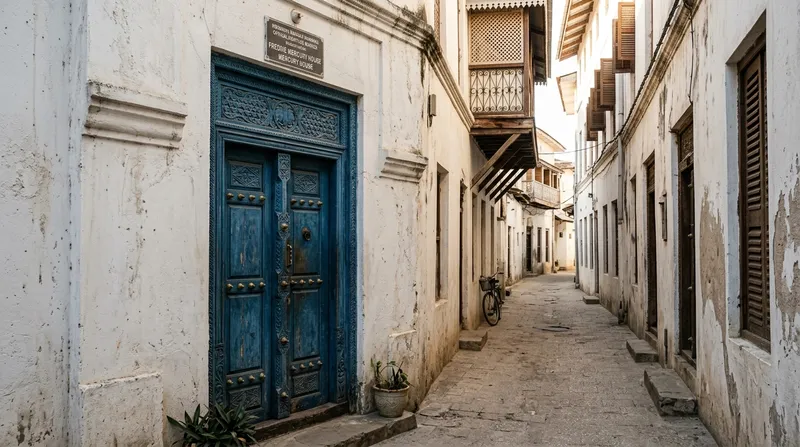
Begin near the Old Fort and work north through the grid of lanes toward Hurumzi and Kiponda. Stone Town has an estimated 500-plus carved wooden doors, many dating to the 19th century, with Indian-influenced brass studs on one style and Arabic geometric carving on another — you'll spot the difference within the first half hour. A self-guided route works fine here; the doors are dense enough that you don't need a formal tour to find good ones, though a local guide (typically arranged through your hotel for roughly $15–20 for a two-hour walk) will explain the symbolism and point out doors tucked down alleys you'd otherwise miss. Expect to cover 2–3km on foot at a slow pace. Wear shoes you don't mind getting dusty — flip-flops on cobblestones get old fast.
9:00–10:30 AM: Darajani Market Exploration
Darajani Market sits on the edge of Stone Town's old quarter and is where locals, not tourists, actually shop. Expect fish laid out on ice, mountains of spices, dried cassava, secondhand clothing stalls, and a fair amount of noise and shoving. It's not curated for visitors, which is exactly its appeal. Go with cash in small denominations, keep your bag zipped and in front of you, and don't expect English to be widely spoken past the spice vendors who deal with tourists daily. Thirty to forty-five minutes is enough unless you're buying spices to take home — cloves, cinnamon bark, and vanilla pods here cost a fraction of what you'd pay in a European supermarket. Bargain, but gently; this isn't a tourist souk and aggressive haggling over a dollar looks worse here than it does in Marrakech.
Afternoon: Museums & Island Tours
This is the pivot point of the day — decide now whether you're a museum person or a boat person, because you likely won't have time for a leisurely version of both.
For a single afternoon, Prison Island fits the timeframe; Chumbe Island and the museums each demand a trade-off in time or advance planning.
Stone Town one day itinerary: afternoon options compared
| Option | Travel time from Stone Town | Advance booking needed | Typical cost (USD) | Best for |
|---|---|---|---|---|
| Prison Island | approx. 30 min by boat | Same-day usually fine | $25–40 | Tortoises, quick snorkel, tight schedules |
| Chumbe Island | approx. 45–60 min by boat | Yes, days ahead | $150+ | Serious reef snorkeling, full-day only |
| House of Wonders | On foot, Old Town | No | $5–10 | Architecture, history |
| Slave Trade Museum | On foot, Old Town | No | approx. $5 | History, reflection |
Figures as of 2025; boat trip prices vary by operator, tide, and group size — always confirm before booking.
11:00 AM–1:00 PM: House of Wonders & Old Fort
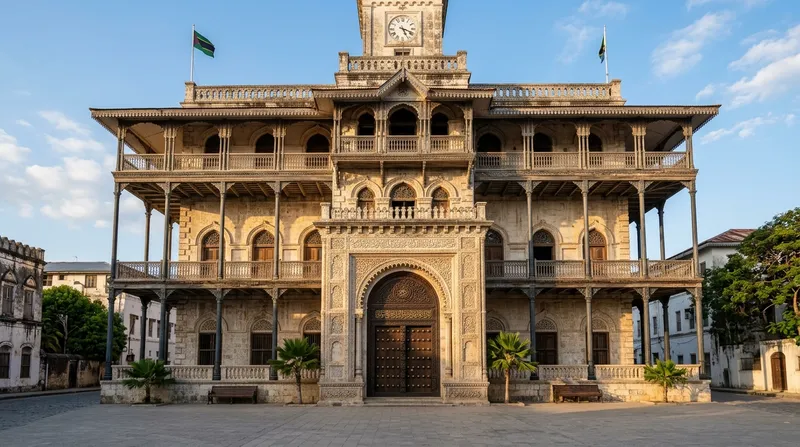
The House of Wonders (Beit al-Ajaib), built in 1883 for Sultan Barghash, was Zanzibar's first building with electricity and an elevator. It's been under restoration in recent years, so check current status before you go — when open, admission runs roughly $5–10 for foreign visitors. Even if it's closed inside, the exterior facade and clock tower are worth the ten minutes from Darajani. Next door, the Old Fort (Ngome Kongwe), built by Omani Arabs around 1700 on the site of an earlier Portuguese chapel, costs little or nothing to enter and now houses craft stalls and an open-air amphitheater. Fifteen minutes there is plenty unless there's a performance running. If you have extra time, the East African Slave Trade Museum nearby (around $5 admission) covers Zanzibar's role in the 19th-century slave trade in about 30–40 minutes — sobering, and worth it if your schedule allows a detour from the boat trip below.
1:00–4:00 PM: Prison Island or Chumbe Island Day Trip
This is the one experience on this itinerary you should book ahead, ideally the night before or first thing that morning. Prison Island (Changuu) sits about 30 minutes by boat from Stone Town's waterfront, was never actually used as a prison, and today is known for its giant Aldabra tortoises — some reportedly over 100 years old — and reasonable snorkeling just offshore. A half-day trip including boat transfer and island entry typically runs $25–40 per person. Chumbe Island, by contrast, is further south (about 45–60 minutes by boat), protects one of the best-preserved coral reefs in East Africa, and operates as a strict marine park with limited daily visitor numbers — it requires advance booking, sometimes days ahead, and costs considerably more than Prison Island. If you only have this one afternoon, Prison Island is the realistic choice; Chumbe deserves a dedicated day, not a squeezed-in half-day. Compare current boat tours and prices before you book, since availability shifts with tide and season.
Bad-weather or tired-legs alternative: skip the boat entirely and spend the afternoon at the Freddie Mercury Museum (small entry fee, under an hour needed) combined with a slow coffee at a rooftop café overlooking the harbor — less dramatic, but it keeps you dry and off your feet.
Evening: Waterfront & Night Market

Evening is Stone Town's best stretch of the day — the heat breaks, the light turns gold over the harbor, and the whole town seems to migrate toward the water.
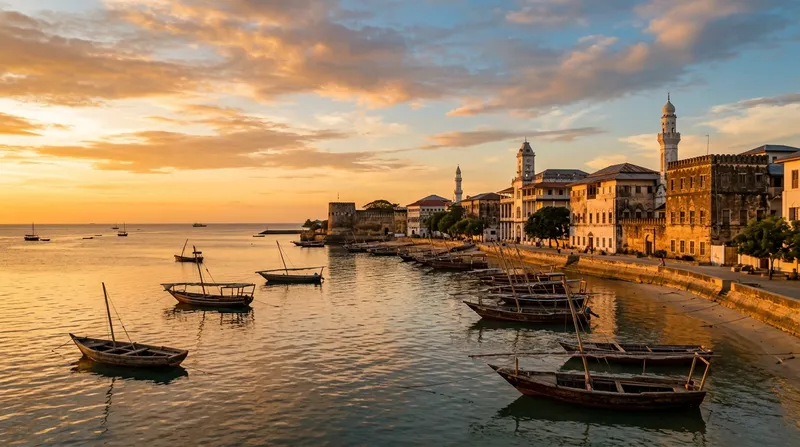
5:00–6:30 PM: Waterfront Stroll & Photography
Walk the seafront path running past the Old Fort toward Forodhani Gardens as the sun drops. This stretch gives you the classic Stone Town postcard shot — dhow sailboats silhouetted against the water, with the House of Wonders and old Arab-influenced facades behind you. Boys dive off the harbor wall near the fort most evenings, which makes for good candid photography if you ask first rather than shooting strangers up close. Low tide versus high tide changes the scene significantly; if you want dhows actually floating rather than stuck on exposed sand, check a tide chart the morning of your visit.
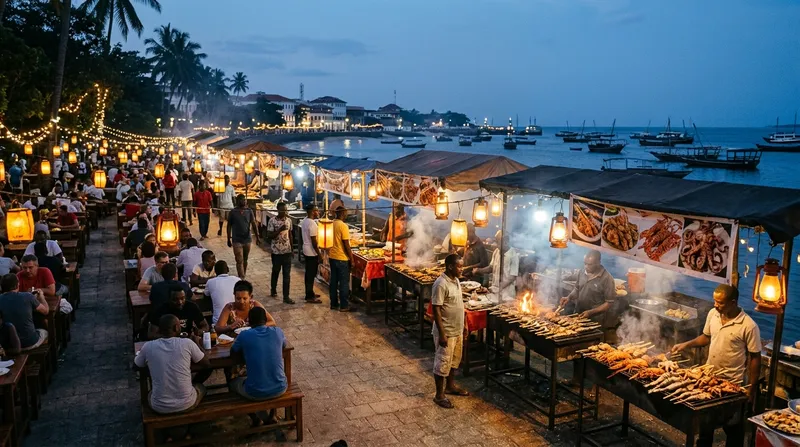
6:30–8:30 PM: Forodhani Gardens Night Market
Forodhani Gardens' food stalls typically set up from around 6pm and run until roughly 10–11pm, though the crowd and energy peak between 7pm and 9pm. Expect Zanzibari pizza (a stuffed, fried flatbread, not Italian pizza), skewered octopus and king fish, sugarcane juice pressed to order, and urojo soup. Prices are low by any international standard — a full meal of grilled seafood and a drink rarely exceeds $5–8. The catch: it's touristy, stalls compete loudly for your attention, and hygiene standards vary stall to stall, so go where the queue of locals is longest, not the stall with the biggest English sign. I'd skip the overpriced lobster skewers pushed hardest at tourists — the grilled squid and fish are usually fresher and a third of the price.
Getting Around Stone Town
Stone Town's old quarter is compact — roughly 1 square kilometer — and almost everything in this itinerary sits within a 15–20 minute walk. Cars can't access most of the narrow lanes anyway, so walking isn't optional for the doors tour or Darajani Market; it's the only way in. Wear closed shoes with grip, not sandals — the cobblestones are uneven and occasionally slick near the fish market.
For the harbor-to-Prison Island leg, boats depart from the waterfront near the Old Fort; your hotel or a stall at the jetty can arrange this same-day in most cases, though booking the evening before removes any morning scramble. Taxis and tuk-tuks (bajaj) are useful only for getting from the airport or a northern beach resort into Stone Town itself — within the old town, a car will often be slower than walking once you factor in one-way streets and pedestrian lanes. Avoid renting a scooter for this single day; parking and navigating Stone Town's alleys on two wheels adds stress without saving real time over walking.
Where to Base Yourself
Where you sleep the night before (or after) this itinerary affects how much of the early morning light you actually get to use.
Central Stone Town Hotels
Staying inside the old town — within walking distance of the Old Fort and Darajani — means you can start the doors walk at 7am without a taxi. Converted Swahili and Omani merchant houses, several dating to the 1800s, operate as boutique guesthouses in the Hurumzi and Shangani districts, generally in the $60–150/night range for a double room. The trade-off: these buildings often have narrow stairs, no elevators, and street noise from early morning calls to prayer and market deliveries. If you're a light sleeper, ask for a room away from the main lane.
Waterfront Accommodation Options
A handful of properties sit directly on or near the Forodhani waterfront, trading a few minutes of extra walking to the doors district for sea-facing rooms and easier access to the evening market and boat jetty. These tend to run slightly higher than inland guesthouses and book up faster for sunset-facing rooms specifically. If your priority is the evening photography session and night market rather than the 7am start, this location shaves real time off your evening logistics — useful if you're also catching an early flight the next morning from Abeid Amani Karume International Airport, about a 15–20 minute drive away.
Frequently asked questions
What can I see and do in Stone Town in one day?
In one well-planned day you can cover the main carved doors and architecture on foot, browse Darajani Market, visit the House of Wonders and Old Fort, take a half-day boat trip to Prison Island, and finish with sunset photography and dinner at the Forodhani Gardens night market. That's a full, realistic day — adding the Slave Trade Museum or Chumbe Island means cutting something else.
How many hours do I need to visit Stone Town?
Six to eight hours covers the essentials — doors, market, one major museum, and the waterfront. If you add a boat trip to Prison Island, plan for a 12-hour day starting around 7am and finishing after the night market around 8:30–9pm.
What are the worth seeing attractions in Stone Town?
Prioritize the House of Wonders exterior, the Old Fort, the carved doors around Hurumzi and Kiponda, Darajani Market, and Forodhani Gardens at sunset. The East African Slave Trade Museum and Freddie Mercury Museum are worth it if time allows but aren't essential to a single compressed day.
Can I do a self-guided walking tour of Stone Town?
Yes — the old town is small enough (about 1 square kilometer) that a map or offline GPS app gets you between the doors, markets, and Old Fort without a guide. A local guide adds historical context for around $15–20 for two hours, but it isn't necessary for basic navigation.
What is the best time to visit Forodhani Gardens?
Arrive by 6:30pm as stalls are setting up to get ahead of the crowds, and stay until around 8:30–9pm when it's liveliest. Going earlier, around 5pm, is better for photography of the waterfront before the market stalls fully open.