
Explore Old Fort Zanzibar (Ngome Kongwe) in Stone Town. Entry fees, guided tours, events, best visiting times, and nearby attractions explained.
What Is Old Fort Zanzibar & Why Visit
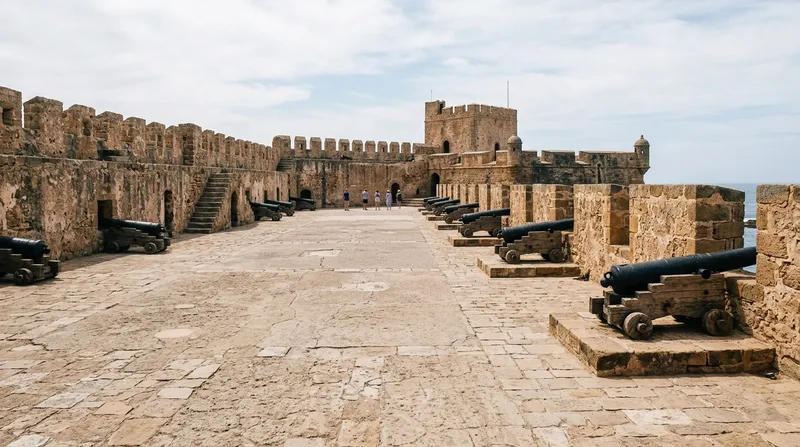
Old Fort Zanzibar — known locally as Ngome Kongwe — sits right on the seafront of Stone Town, a few minutes' walk from the House of Wonders and within the boundaries of the UNESCO World Heritage Site that makes up Zanzibar City's old quarter. It's one of the first landmarks you'll see if you arrive by ferry or dalla-dalla near the harbor, and it's usually one of the first sites visitors tick off, partly because it's free-flowing to enter and partly because it anchors the start of most Stone Town walking routes.

The fort is worth a stop, but go in with the right expectation: this isn't a museum with wall text and curated artifacts. It's a working public space inside a historic shell, and that's precisely what makes it interesting.
Historical significance and architecture
The Omani Arabs built the fort in the late 17th century, finishing around 1701, on the ruins of an earlier Portuguese chapel — a detail that tells you most of what you need to know about who controlled this stretch of the Swahili coast over the centuries. Its thick coral-stone walls and circular bastions at each corner were designed for defense against Portuguese and rival forces, not for comfort, which is obvious the moment you walk through the main gate into the open courtyard. There's no polish here. The walls are rough, sun-bleached, and patched in places, and that weathered texture is a large part of the visual appeal, especially for photographers working in early morning or late afternoon light. Architecturally it's simple compared to grander Omani forts elsewhere, but the scale — thick ramparts, a raised performance platform, narrow stone stairwells leading to the upper walls — gives you a clear sense of its military original purpose.
What's inside today: exhibitions and facilities
Today the fort functions mostly as a cultural and events venue rather than a formal museum. Expect a central courtyard used for concerts, film screenings, and craft stalls; a small amphitheater built into one corner for performances; a handful of curio and souvenir shops selling textiles, spices, and jewelry along the inner walls; and a café serving coffee, juice, and light snacks, usually with seating in the shade. There isn't a dense historical exhibition inside — if you're expecting detailed interpretive panels on Omani rule or the slave trade era, you'll find that kind of depth better served at the nearby House of Wonders or the Stone Town slave market memorial instead. What the fort does offer, and does well, is a quiet upper-level walkway with harbor views and a genuinely atmospheric sense of standing inside 300-year-old defensive stonework while modern Stone Town carries on around it.
How to Visit: Independent vs. Guided Tours
Most people visit the Old Fort on their own, , that's the right call for this particular site. It's small, the layout is intuitive, and there's no ticket booth maze or timed-entry system to navigate. Where a guide adds real value is in connecting the fort to the rest of Stone Town's layered history — the Omani, Portuguese, British, and Swahili threads that don't show up anywhere on-site.
A self-guided visit to Old Fort Zanzibar costs little and takes under an hour, while a guided tour costs more but links the fort into Stone Town's wider history.
Old Fort Zanzibar: independent visit vs guided tour compared
| Visit Option | Typical Duration | Typical Cost | Best For | Historical Context |
|---|---|---|---|---|
| Self-guided fort only | 30-45 min | Free to nominal fee | Quick stop, photographers | Minimal on-site signage |
| Self-guided + audio app | 45-60 min | Free entry + app cost | Independent travelers wanting context | Moderate, app-dependent |
| Guided Stone Town walking tour | 2-3 hours | Approx. $15-30 per person | First-timers, solo travelers, couples | High, narrated throughout |
| Guided tour + Forodhani evening market | 3-4 hours | Approx. $15-30 tour + food costs | Families, honeymooners | High, plus local food culture |
Figures as of 2025; prices and group tour inclusions vary by operator — confirm current rates when booking.
Self-guided exploration tips
Walk in through the main gate facing the seafront, do a loop of the courtyard first, then head up the stone stairs to the ramparts — this is where you get the best photos of both the harbor and the rooftops of Stone Town behind you. Budget 30 to 45 minutes if you're moving at a normal pace, longer if there's a craft market or live music happening, which is common on weekend evenings. Wear shoes with grip; the stairwells are narrow, uneven, and can be slippery after rain. There's minimal signage, so if context matters to you, read up beforehand or pair the visit with a short audio guide app rather than relying on anything provided on-site.
Benefits of hiring a guide
A licensed Stone Town guide typically folds the Old Fort into a broader 2 to 3 hour walking tour that also covers the House of Wonders, the old slave market site, Forodhani Gardens, and the winding alleys of the Stone Town core. This is where hiring one pays off — the fort alone doesn't need narration, but the connective history between sites does. Expect guided walking tours in Stone Town to run roughly $15 to $30 per person for a half-day group tour, though always check current prices and group sizes when booking, since rates vary by operator and season. If you're a solo traveler or a couple short on time, a guided tour is the efficient way to see the fort plus four or five other landmarks without getting lost in the old town's unmarked lanes — and Stone Town's street grid genuinely is confusing enough that first-timers benefit from this.
Entry Tickets & Admission Information
Compared to sites like the House of Wonders or Mnemba Atoll's marine park fees, the Old Fort is refreshingly cheap and low-friction. This is one of the few Stone Town attractions where you can genuinely just walk up and in.
Ticket types and pricing structure
Entry to the fort's courtyard and public areas is generally free or involves a nominal small fee, often collected informally at the gate rather than through a formal ticket counter — this has varied over recent years, so treat any number you read as a guideline and confirm on arrival. Some evening events, concerts, or film screenings held in the courtyard charge a separate ticket, priced independently of general daytime entry. If you're bundling the fort into a wider Stone Town heritage pass or a guided tour package, admission is usually included in that quoted tour price rather than charged again at the gate. Always check current prices and any festival-specific tickets before you go, since the fort occasionally hosts paid events that override normal free access.
Hours of operation and access
The fort is generally open daily from early morning until evening, roughly 8am to 10 or 11pm, since the courtyard café and shops operate well into the evening and performances often run after dark. Daytime access to the ramparts and courtyard is unrestricted during opening hours, though evening event nights can mean certain upper areas are closed off for stage setup. There's no mobility access beyond the stairs — wheelchair users and travelers with limited mobility should expect the upper ramparts to be inaccessible, though the ground-floor courtyard, shops, and café remain reachable.
Best Time to Visit & Events
Timing matters more here than at most Stone Town sites, because the fort's character shifts completely between a quiet midday visit and a packed evening event.

Seasonal crowds and weather
Zanzibar's dry seasons — roughly June to October and late December to February — bring the heaviest tourist numbers to Stone Town generally, though the fort itself rarely feels overcrowded since it's large enough to absorb groups. Midday heat (often 30°C-plus) makes the stone courtyard uncomfortably hot by early afternoon, so aim for a visit before 10am or after 4pm. The long rains, April and May, bring fewer visitors and genuinely quieter photos, but also slippery stone stairs — worth factoring in if you're traveling with older relatives or young kids who might struggle on wet steps.
Cultural events and performances
The Old Fort courtyard is one of the main venues for the Zanzibar International Film Festival (ZIFF), usually held in July, and it regularly hosts taarab music nights, craft markets, and dance performances throughout the year. These events transform the space — strings of lights, a packed amphitheater, food stalls along the walls — and they're genuinely worth timing a trip around if your dates allow it. Outside festival periods, smaller evening music or craft events still pop up irregularly, so it's worth asking at your hotel or checking local listings a day or two before you plan to visit, since there's no single reliable published calendar for smaller events.
Nearby Attractions & Add-Ons
The fort's real strength is its location — it's the natural starting or ending point for a Stone Town walk, not a destination you'd travel across the island for on its own.
Walking distance sites in Stone Town
The House of Wonders (Beit al-Ajaib) is a two-minute walk away and, despite fire damage and ongoing restoration in recent years, remains a key landmark worth seeing from outside even if interior access is limited. Forodhani Gardens, the seafront park famous for its evening food stalls selling Zanzibari pizza and grilled seafood, sits directly adjacent to the fort — a natural follow-up stop after a daytime visit. The old slave market site and Anglican cathedral are a 10-minute walk inland, and the main Stone Town market alleys, full of spice stalls and tailors, are within 15 minutes on foot. None of this requires transport; Stone Town's core is compact enough to cover on foot in a single morning or afternoon.
Combination visit recommendations
If you're short on time, pair the fort with the House of Wonders and Forodhani Gardens for a half-day Stone Town loop — roughly 3 hours including a coffee break. Travelers staying longer in Zanzibar often split their trip between Stone Town's cultural sites and the beach zones at Nungwi or Paje, or add a day trip to Mnemba Atoll for snorkeling; the fort works well as a rainy-day or arrival-day activity before heading to the coast. Compared with spending a half-day at a resort pool, this is the better use of a Stone Town stopover — but if architecture and history don't interest you much, you'll get more lasting value from a spice farm tour or a Mnemba snorkeling trip than from lingering at the fort itself.
Frequently asked questions
What is the Old Fort of Zanzibar also known as?
It's widely known by its Swahili name, Ngome Kongwe, which translates roughly to "Old Fort" or "ancient fort." Locals and tour guides use both names interchangeably, and you'll see Ngome Kongwe on some maps and signage around Stone Town instead of the English version.
Is there an entrance fee for the Old Fort?
General access to the courtyard and public areas is typically free or available for a small nominal fee collected at the gate — this has fluctuated over the years, so don't rely on a fixed figure. Separate ticketed events, like film screenings or concerts, charge their own admission on top of normal access.
Are guided tours available at the Old Fort?
Yes, though rarely as a standalone fort tour. Licensed Stone Town guides typically include the Old Fort as one stop within a broader 2 to 3 hour walking tour covering the House of Wonders, the old slave market, and Forodhani Gardens, usually priced around $15 to $30 per person depending on the operator and group size.
What cultural events are held at the Old Fort?
The courtyard hosts the Zanzibar International Film Festival (ZIFF) each July, plus recurring taarab music nights, dance performances, and craft markets throughout the year. Smaller events pop up without a fixed public calendar, so check with your hotel or local listings a day or two ahead if event timing matters to your trip.
Where is the Old Fort located in Stone Town?
It sits directly on the Stone Town seafront, immediately next to Forodhani Gardens and about a two-minute walk from the House of Wonders. It's within the UNESCO World Heritage-listed old quarter of Zanzibar City, making it an easy stop at the start or end of any walking tour of the historic center.