Best Zanzibar Beaches for Families with Kids
Find the safest Zanzibar beaches for families with kids. Compare tides, shade, and amenities at Nungwi, Paje, and Kendwa before you book.
8 min read · 8 Oct 2026
Best Zanzibar Beaches
Discover the best Zanzibar beaches with our full guide — top spots, water conditions, tides, activities, and how to book your coastal trip.
Ask ten travelers for the best Zanzibar beaches and you'll get ten different answers, because the island's coastline splits into distinct zones with almost opposite personalities. The northwest corner around Nungwi and Kendwa has deep water close to shore and swimming at any tide. The east coast — Paje, Jambiani, Bwejuu, Matemwe — has a shallow reef lagoon that empties out dramatically at low tide, which some people find magical and others find annoying when they can't actually swim at 2pm.
My ranking, for what it's worth: Nungwi first for all-round reliability, Kendwa second for sunsets and swimming, Paje third if you kitesurf or want a social backpacker scene, Matemwe fourth for snorkeling and quiet luxury stays, Jambiani fifth for budget travelers who don't mind tidal timing, and Kizimkazi last on this list only because it's more about dolphin tours than lounging on sand.
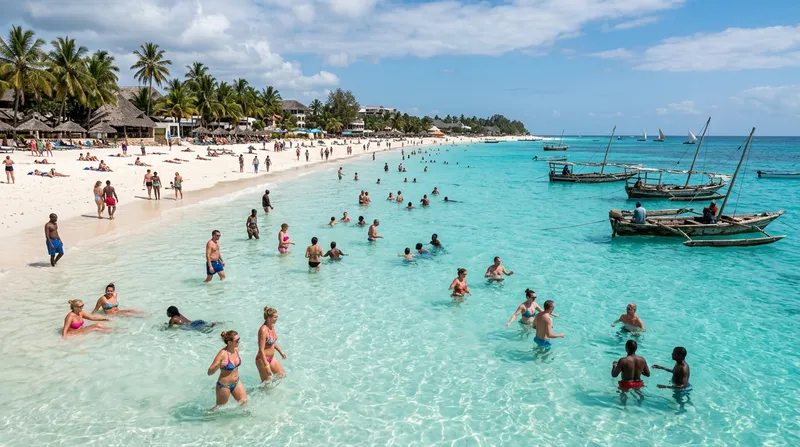
Nungwi and Kendwa offer the most consistent swimming regardless of tide, while the east coast beaches trade swim-time reliability for better wind sports and quieter sand.
Best Zanzibar beaches compared by location, tide, activities, and crowd level
| Beach | Region | Tide dependency | Best activity | Crowd level |
|---|---|---|---|---|
| Nungwi | North tip | Low — swimmable most tides | Swimming, sunset bars | Busy |
| Kendwa | North tip | Low — swimmable most tides | Sunset views, swimming | Moderate to busy |
| Paje | East coast | High — lagoon empties at low tide | Kitesurfing | Moderate |
| Jambiani | East coast | High — long sand flats at low tide | Walking, budget stays | Quiet |
| Matemwe | Northeast | Moderate | Snorkeling, reef trips | Quiet to moderate |
| Bwejuu | East coast | High | Quiet beach time | Quiet |
| Kizimkazi | Southwest | Moderate | Dolphin tours | Quiet |
Conditions as of 2024; tide timing shifts daily, so check local tide tables before planning swim times.
Nungwi sits at the island's northern tip, where currents keep the water usable regardless of tide — rare on Zanzibar and the main reason it's the most built-up beach town. Kendwa, a short walk or drive south, has a gentler slope into the water and is famous for the Full Moon Party scene, though it's quiet most other nights. Paje is flat, wide, and wind-exposed, which is exactly what kitesurfers want and exactly why it's less appealing for a family that just wants calm water. Matemwe faces Mnemba Atoll directly, making it the obvious launch point for reef trips, while Jambiani and Bwejuu are stretched-out fishing villages with long sand flats and a slower pace than anywhere up north.
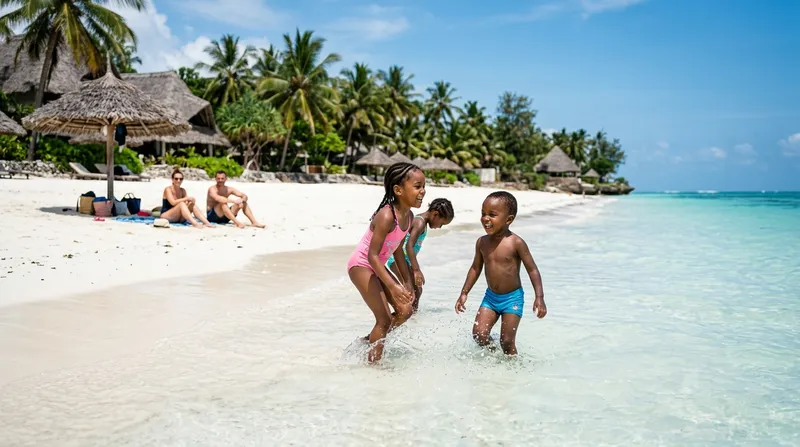
Families with young kids do best at Kendwa or Nungwi's calmer stretches, where lifeguarded resort pools back up the sea option on days the ocean looks rough. Couples and honeymooners gravitate to Matemwe or the quieter end of Nungwi, away from the party bars. Solo travelers and budget backpackers tend to cluster in Paje, where hostels, yoga studios, and kite schools create an easy social scene. Senior travelers who want a short walk from bed to water, minus loud nightlife, are often happiest in Kizimkazi's southern lodges or a quieter Jambiani guesthouse.
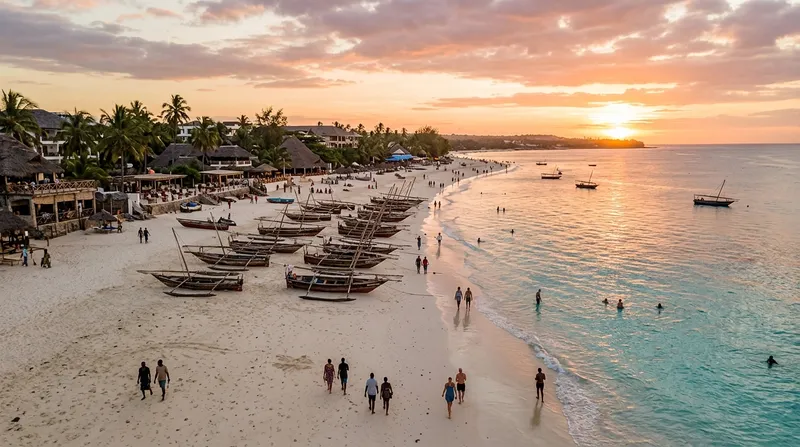
If you only have time for one beach town, Nungwi is the practical answer. It sits far enough from the tidal flats that dominate the east coast that you can swim in the morning, at noon, and at sunset without checking a tide chart first. That convenience comes at a cost — Nungwi is the most developed beach area in Zanzibar, with a dense run of hotels, dive shops, restaurants, and touts along the sand. Kendwa, a 10–15 minute drive or a flat beach walk away, is slightly less crowded and has arguably better sunset views over the Indian Ocean, unobstructed by the rocky points that frame parts of Nungwi.
Both beaches benefit from a deep-water channel close to shore, so the dramatic low-tide exposure you see in Paje or Jambiani barely registers here. Swimming is possible nearly any time of day, which makes Nungwi and Kendwa the default recommendation for families with small children and for travelers who hate planning around tide tables. The sand is soft and pale, and the seabed stays mostly sandy rather than reef-studded close to shore, reducing the risk of coral cuts. Strong swimmers should still ask locally about currents near the northern point, where tidal flow picks up.
Nungwi is the easiest place on the island to book a snorkeling trip, a sunset dhow cruise, or a scuba course — there are more dive operators clustered here than anywhere else in Zanzibar. Kendwa leans more toward sunset cruises and beach bars, with traditional dhow boats doubling as photo props and actual transport for evening sails. Both towns offer day trips out to Mnemba Atoll, roughly 45–60 minutes by boat, for what's generally considered the best snorkeling and diving visibility near the island. If you're comparing this to a Maldives resort day where the reef is steps from your villa, Zanzibar's version requires a boat ride — but costs a fraction of the price.
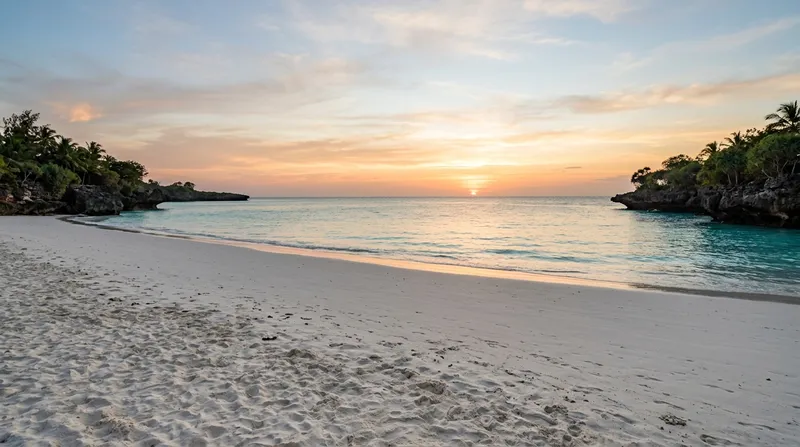
The east coast is where Zanzibar's tides stop being a footnote and start dictating your day. At low tide, the water can retreat several hundred meters, exposing sandbars, seaweed farms, and starfish pools that are genuinely interesting to walk — but useless for a swim. At high tide, the same stretch fills in to a swimmable lagoon protected by an outer reef. This isn't a flaw so much as a different kind of beach experience, and it's one reason Paje and Jambiani attract a different crowd than Nungwi: people who want long beach walks, kitesurfing, or quiet over guaranteed swim access.
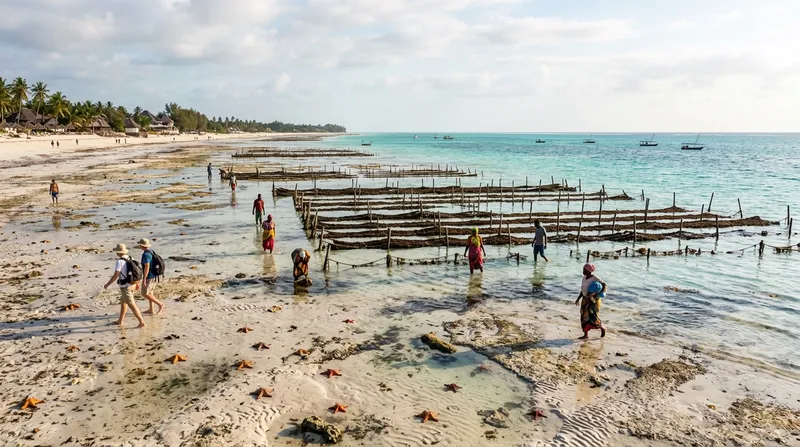
Tides here shift roughly six hours between high and low, and the cycle moves earlier by about 45 minutes to an hour each day, so what was swimmable at 10am on Monday might be a sand flat at 10am on Thursday. Hotels along this stretch, including options near Bwejuu, post tide charts at reception, and it's worth checking before you commit to a day of lounging. Access to the beach itself is easy and mostly flat, with lodges typically opening straight onto the sand rather than requiring stairs or cliff paths.
Paje is Zanzibar's kitesurfing capital, and for good reason — the lagoon's shallow, flat water and consistent trade winds between roughly June and September (kaskazi season brings lighter, less reliable wind from December to March) make it one of East Africa's better learn-to-kite spots. Multiple kite schools operate directly on the beach, with lesson packages generally sold in multi-hour blocks rather than single sessions. Matemwe, by contrast, is the better choice for divers and snorkelers, since it faces Mnemba Atoll directly and cuts boat transfer time to the reef down to around 20–30 minutes. Jambiani sits between the two in character — some wind, some reef access, but known more for its long, walkable sand flats and budget-friendly guesthouses than for any one activity.
The south and west coasts get a fraction of the visitors that pile into Nungwi or Paje, and that's the main selling point. Kizimkazi, near the island's southern tip, is less a swimming beach than a base for dolphin-watching boat trips — pods of bottlenose and humpback dolphins are regularly sighted just offshore, though swim-with-dolphins tours have drawn criticism for crowding the animals, so ask operators about group size and distance rules before booking. The west coast around Stone Town is mostly working harbor rather than resort beach, though Nakupenda — a sandbank a short boat ride offshore — functions as a day-trip beach destination rather than somewhere to stay overnight.
Nakupenda Beach is a sandbank that partially submerges at high tide, reachable by a roughly 20–30 minute boat ride from near Stone Town, and it's typically sold as a half-day trip bundled with snorkeling and a seafood lunch cooked on the sand. It's one of the more photogenic half-days on the island precisely because there's no permanent development — no hotels, no bars, just sand and water. Kizimkazi's dolphin tours usually run in the early morning, when the water's calmer and dolphins are more active; expect choppier water and lower sighting odds if you book a late-morning slot.
If crowds at Nungwi or the kite schools at Paje aren't your scene, the stretch of coast near Kizimkazi and the lesser-visited parts of Bwejuu offer a genuinely different pace — fishing boats, seaweed farmers working the shallows at low tide, and far fewer beach vendors. This is also where you'll see more of Zanzibar's actual daily life rather than tourist infrastructure, which some travelers prefer and others find under-serviced, with fewer restaurants and ATMs nearby. I'd avoid expecting Bali-level beach infrastructure here — it's a trade-off, not a downgrade.
Matching the activity to the right beach saves a lot of wasted time. Booking a snorkeling trip out of Jambiani when Mnemba Atoll is a two-hour boat ride away makes far less sense than booking the same trip from Matemwe, where it's a short hop. Similarly, showing up to Nungwi hoping to kitesurf will leave you disappointed compared to Paje's open, wind-exposed lagoon.
Mnemba Atoll is the headline snorkeling destination near Zanzibar, with visibility that regularly beats Mombasa's more sediment-affected coastal reefs. Trips are bookable from Nungwi, Kendwa, and Matemwe, usually as half-day packages including equipment and a guide; full-day versions sometimes add a second site. Expect a marine park conservation fee, generally collected on the boat, on top of the tour price. Pemba Island and Mafia Island both offer arguably less crowded, more pristine diving if you have extra days to spend — Pemba in particular is known among divers for wall dives and stronger visibility — but they require a separate flight or long ferry transfer from Zanzibar's main island.
Traditional dhow sunset cruises are sold almost everywhere along the northwest coast, typically running 1.5–2 hours with the better operators including a stop for swimming before the light fades. Kendwa's open west-facing position makes it the single best spot on the island for sunset photography, better than Nungwi's partially obstructed view. For more active water sports — jet skis, parasailing, banana boats — Nungwi has the widest range of operators, though it's worth comparing a couple of options on the beach before booking, since quality and safety equipment vary noticeably. The Rock Restaurant, perched on a rock outcrop near Pingwe on the east coast, isn't a water sports venue but is worth combining with a Michamvi or Bwejuu beach day — reservations matter here, especially around sunset, as it's one of the most photographed dining spots on the island.
Timing and logistics matter more in Zanzibar than in destinations like Mauritius or the Seychelles, where tidal swings are less dramatic and roads are more uniformly paved. Build in slack — both for tides and for Zanzibar's sometimes slow, potholed inland roads between beach towns.
June through October is the most reliable window — dry, warm, and good for both swimming and kitesurfing on the east coast. December to February is also solid, though hotter and more humid. Avoid the long rains, roughly April into May, when many smaller lodges close and heavy downpours can disrupt boat trips to Mnemba or Nakupenda. Compared to the Maldives' similarly split dry and monsoon seasons, Zanzibar's wet season is more disruptive to ground transport, since dirt roads to some east-coast villages turn to mud.
From Abeid Amani Karume International Airport near Stone Town, Nungwi and Kendwa are roughly 45–60 minutes by road, while Paje, Jambiani, and Bwejuu are closer, around 40–50 minutes. Matemwe sits roughly an hour north on a road that's improved considerably in recent years but still has rough patches. Most hotels arrange airport transfers for a fixed fee, generally cheaper than hailing a taxi cold at the airport. Shared minivans (dala-dala) connect beach towns for very little money but run on their own schedule, not yours — fine for backpackers, frustrating if you're on a tight tour schedule. For moving between beaches once you're settled, compare current private transfer and shared shuttle prices before you book, since rates vary by season and vehicle type.
Nungwi is the most reliable all-rounder because it's swimmable regardless of tide and has the island's widest range of tours, restaurants, and dive shops. Kendwa runs a close second, especially for sunset views and a slightly calmer atmosphere than Nungwi's busier strip.
Paje is the center of kitesurfing, with consistent wind roughly June to September and several established kite schools on the sand. Nungwi and Kendwa lead for snorkeling, diving, and sunset dhow cruises, with easy boat access to Mnemba Atoll in 45–60 minutes.
Bwejuu and the quieter stretches of Jambiani see far fewer visitors than Nungwi or Paje, with long sand flats and fishing-village surroundings rather than resort strips. Kizimkazi in the south is similarly low-key, built more around dolphin tours than beach lounging.
Kendwa and Nungwi are the safest bets for families because the water stays swimmable most of the day regardless of tide, unlike the east coast's dramatic low-tide drawdown. Many family-friendly resorts here also have pools as a backup on rougher ocean days.
Most beaches are 40–60 minutes from Zanzibar's international airport by road, with hotel transfers the most straightforward option. Dala-dala minivans connect towns cheaply but on unfixed schedules, while private taxis or pre-booked transfers suit travelers on a tighter itinerary.
Find the safest Zanzibar beaches for families with kids. Compare tides, shade, and amenities at Nungwi, Paje, and Kendwa before you book.
8 min read · 8 Oct 2026
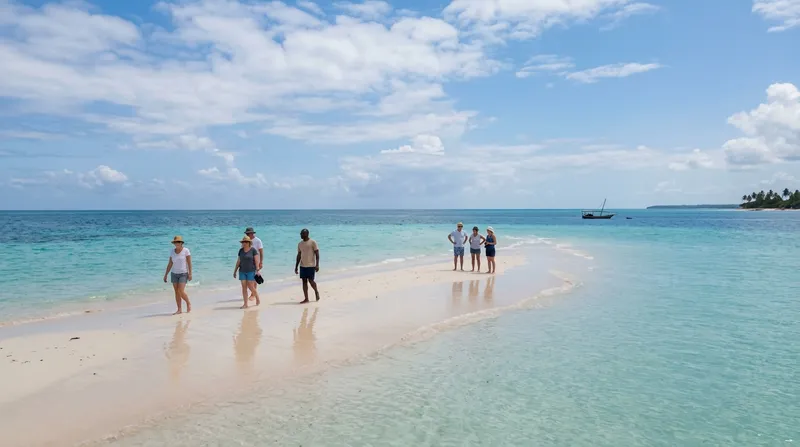
Planning a Nakupenda sandbank tour? Compare prices, operators, tide timing, snorkeling and booking options for Zanzibar's famous disappearing island.
9 min read · 8 Oct 2026
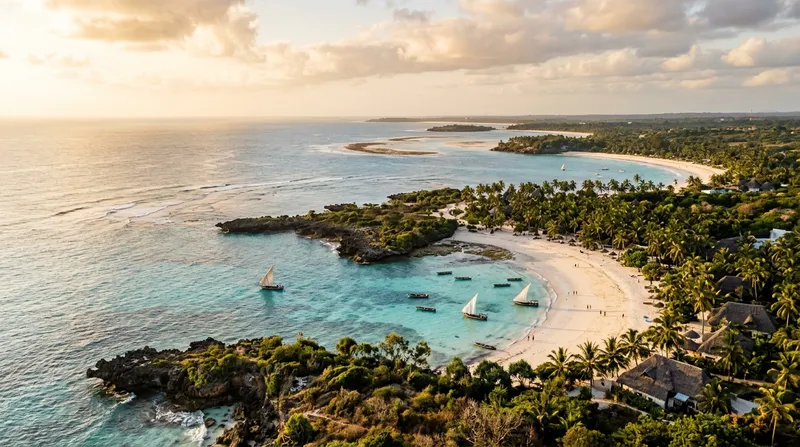
A 4-day Zanzibar beach hopping itinerary from Stone Town to Nungwi, Kendwa, Paje and Jambiani, with transfers, timings and bookable activities.
10 min read · 8 Oct 2026
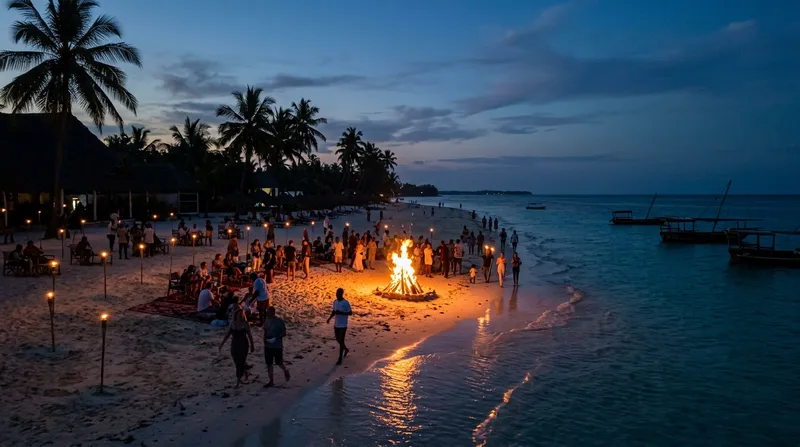
Discover Kendwa Beach tours, activities & tickets. Learn why its no-tide advantage makes it ideal for swimming, snorkeling & dhow cruises in Zanzibar.
9 min read · 8 Oct 2026
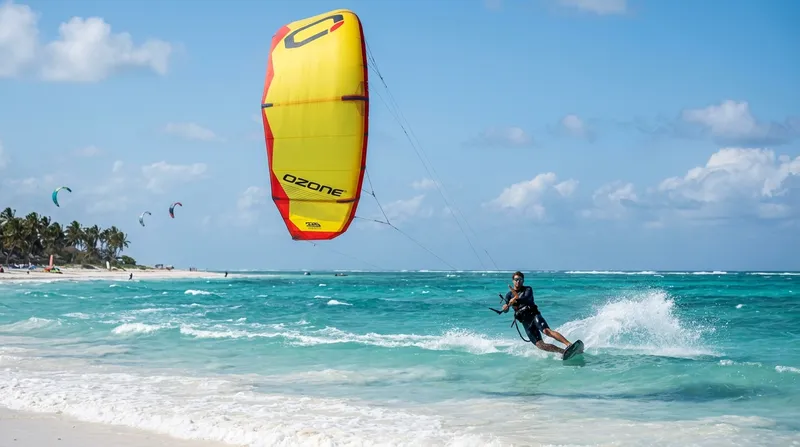
Discover Paje Beach activities: kitesurfing lessons, water sports & guided tours. Book kite lessons, snorkeling trips & beach excursions online.
10 min read · 8 Oct 2026
Discover bookable activities at Nungwi Beach: jet-ski rentals, snorkeling, dolphin tours, dhow cruises & more. Walk-up vs pre-book guide included.
10 min read · 8 Oct 2026