Compare Freddie Mercury house visits in Stone Town: solo museum trip vs guided walking tours. Costs, time, crowds, and which option suits you best.
The Options at a Glance
Anyone planning a Freddie Mercury tour Stone Town visit faces a simple fork in the road: go it alone, or join a guided walking tour that folds the museum into a wider Stone Town itinerary. Both get you to the same building on Kenyatta Road, near the junction with Shangani Street, but the experience around that visit differs enormously.
The house where Farrokh Bulsara — later Freddie Mercury — spent his early childhood before his family left Zanzibar in 1964 is now a small, privately run museum. It's not UNESCO-managed, but it sits inside the Stone Town UNESCO World Heritage Site, so the building itself is bound by the same conservation rules as the rest of the old quarter. That context matters more than people expect, because the house alone, without any framing, is just a modest coral-stone building with some photographs and memorabilia inside.
I'd push back on the idea that this is a "must-do" Zanzibar activity in isolation. It's a 20-30 minute stop at most. The decision that actually matters is what you build around it — and that's where the solo-versus-guided question earns its weight.
Self-guided museum visit only
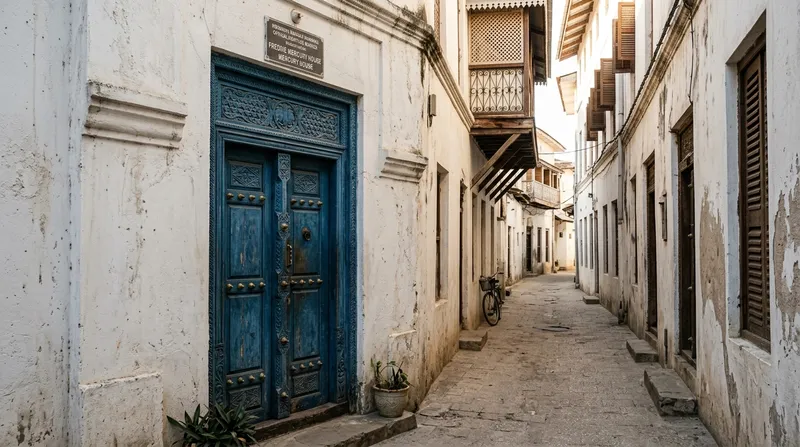
Walking in alone costs the price of museum entry — typically a few thousand Tanzanian shillings, roughly the cost of a bottle of water on Forodhani's waterfront — and nothing else. You can find Kenyatta Road on any map app, though Stone Town's alleys often defeat GPS accuracy, so expect to ask a shopkeeper for directions at least once.
Inside, you'll find a modest collection: childhood photos, replica stage outfits, magazine clippings, and a timeline of Bulsara's years in Zanzibar before boarding school in India and later life in London. There's no audio guide and signage is minimal, so without background reading beforehand, some context gets lost. If you already know the Queen story well, that's fine. If you don't, you'll leave with photos but limited understanding of why this house matters.
Guided Stone Town walking tour with museum
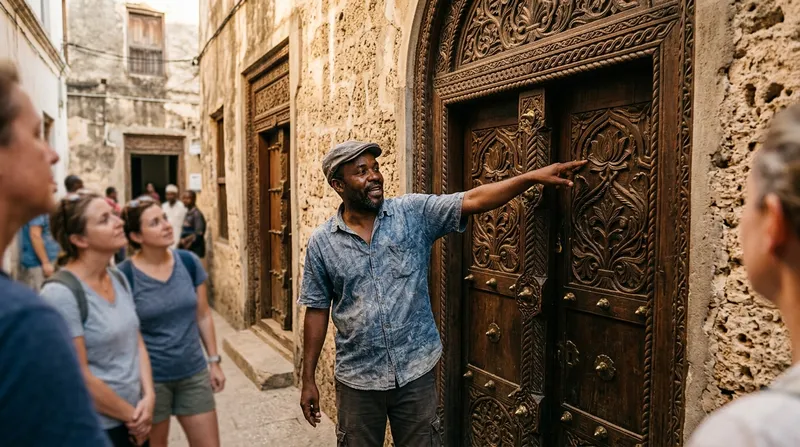
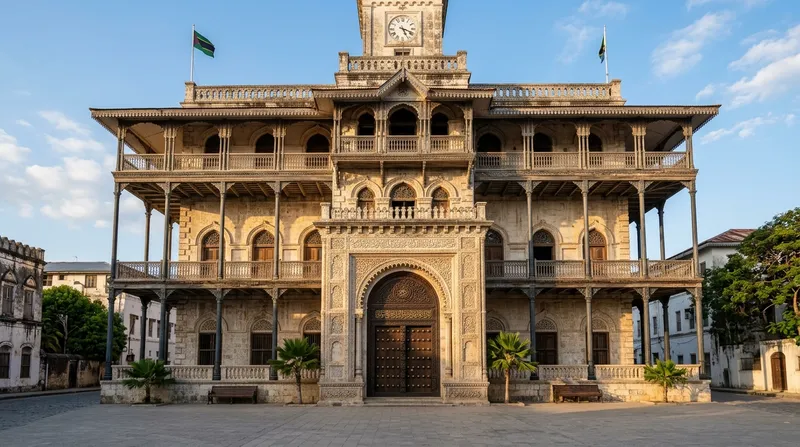
A guided Stone Town music tour typically runs two to three hours and threads the Freddie Mercury house into a broader route — old slave market sites, the House of Wonders, Shangani Street's merchant-era buildings, and often a stop near Forodhani Gardens at the end. Guides generally book through platforms like GetYourGuide or arrange locally through hotels, and reviews on TripAdvisor are a reasonable way to gauge which operators actually know their history versus those reciting a script.
The advantage isn't really about Freddie Mercury — it's that a knowledgeable guide can explain Zanzibar's Omani, Indian, and Swahili influences, which is what makes the architecture around Kenyatta Road interesting in the first place. Group sizes vary, but smaller tours (6-10 people) tend to allow more questions and better pacing through narrow streets that can't fit large crowds anyway.
Head-to-Head: Time, Cost, Effort
Numbers settle this faster than opinions do. If your Zanzibar itinerary is already packed — maybe you're splitting time between Stone Town and a Mnemba Atoll snorkeling trip, or heading south to Paje for kitesurfing — the time cost of each option matters as much as the price tag.
A solo visit is faster and cheaper, while a guided Stone Town walking tour trades time and cost for context and navigation ease.
Freddie Mercury tour Stone Town: solo museum visit vs guided walking tour compared
| Option | Typical Duration | Relative Cost | Navigation Effort | Historical Context | Best For |
|---|---|---|---|---|---|
| Solo museum visit | 45 min–1 hr incl. travel | Low (entry fee only) | High (self-navigate alleys) | Limited (sparse signage) | Independent, budget travelers |
| Guided walking tour | 2–3 hrs | Moderate–High | Low (guide leads) | Strong (narrated history) | First-timers, families, immersion seekers |
| Combination day (museum + spice tour) | Half day (4–5 hrs) | Moderate–High | Low | Strong | Travelers with one free day |
| Museum + self-guided Forodhani walk | 1.5–2 hrs | Low | Moderate | Limited–Moderate | Solo travelers wanting a loose plan |
Figures as of 2025; exact prices and tour lengths vary by operator and season — check current listings when booking.
Duration and logistics
A solo museum visit takes 20-30 minutes inside, plus whatever time you lose navigating Stone Town's unmarked lanes — budget an extra 20-30 minutes for that unless you've hired a local taxi to drop you directly outside. Total time investment: roughly 45 minutes to over an hour once you include getting there and back to wherever you started.
A guided walking tour runs longer by design — typically two to three hours — because the museum is one stop among six or eight. You're not saving time by going guided; you're spending more of it deliberately, in exchange for structure and narration. If you only have a single free morning in Stone Town and want to see multiple sites without research, the tour wins on efficiency per site visited, even though total time is longer.
Price comparison across options
Museum-only entry is cheap — a small, fixed fee that barely registers against other Zanzibar costs like a spice tour or a Mnemba Atoll boat trip. Guided walking tours cost considerably more, since you're paying for a guide's time across two-plus hours, sometimes bottled water, and occasionally a Forodhani street-food tasting folded into the route. Exact pricing shifts by season and operator, so check current prices when booking rather than relying on a number that might be a year old. As a rule of thumb, expect guided tours to run several times the cost of solo entry — the premium buys context, not just access.
If you're traveling on a tight budget, solo entry plus some pre-trip reading (there are solid magazine profiles and documentaries on Bulsara's Zanzibar years) gets you 80% of the value for a fraction of the cost.
Crowds, Views, and Experience Quality
Stone Town isn't Maldives-quiet or Seychelles-remote — it's a working old town with traffic, vendors, and cruise-ship day-trippers when ships dock at Zanzibar Island's port. That foot traffic affects both options, but differently.
Peak times and visitor volume
Midday (roughly 11am-2pm) brings the heaviest heat and the heaviest crowds near Kenyatta Road, partly because it overlaps with cruise excursion schedules. Early morning, shortly after opening, or late afternoon before sunset tends to be quieter for solo visitors. Guided tours often run in these same windows for the same reason — cooler temperatures — so you're not necessarily avoiding crowds by joining a group; you're just moving through them with a guide clearing the narrative path. If you've been to Bali's Ubud palace circuit or Mombasa's Fort Jesus, the crowd rhythm will feel familiar: manageable outside midday, tight during it.
Photo opportunities and storytelling depth
For photographers, the exterior shot on Kenyatta Road is the real prize — the pale building with its carved door is more photogenic than most of the interior displays. Solo visitors can linger as long as they like for the shot; groups move on a schedule, which can mean a rushed five minutes outside.
Storytelling depth favors the guide, clearly. A good guide connects Bulsara's Parsi-Indian family background to Zanzibar's trading history and the 1964 revolution that prompted their departure — details the museum's sparse signage doesn't cover well. Without that narration, solo visitors often leave knowing less about why the family left than about what Freddie Mercury's costumes looked like.
Who Should Choose Which Option
Neither option is objectively better — it depends on what kind of trip you're running and who you're traveling with.
Best for independent travelers
Solo travelers, budget-conscious couples, and anyone already comfortable navigating old-town street grids should skip the guided option. You'll move at your own pace, skip the parts that don't interest you, and pair the museum visit with a self-directed wander toward Forodhani for grilled seafood at sunset. Senior travelers with good mobility who prefer unhurried visits also tend to do better solo — group tours move faster than some would like through uneven cobblestones.
Best for cultural immersion seekers
Families with curious children, honeymooners wanting a shared narrated experience, and first-time visitors to Zanzibar who don't know Stone Town's layout benefit most from a guided Stone Town walking tour. European travelers unfamiliar with Swahili coast history, in particular, get far more value from a guide's running commentary than from museum placards alone. If you're combining this with other bookable Zanzibar experiences — a spice farm tour, a Mnemba Atoll snorkel day — a guide can often suggest realistic same-day pairings based on actual travel times, which a map app won't factor in.
The Verdict: Is It Worth Booking
The Freddie Mercury Museum zanzibar visitors ask about most often isn't a bucket-list-grade attraction on its own — it's a minor stop that gains meaning from context. If you're the type who reads the plaque, takes the photo, and moves on, solo entry is the obviously efficient choice, and you'll save money for better use elsewhere, like a sunset dhow cruise or a day trip to Prison Island.
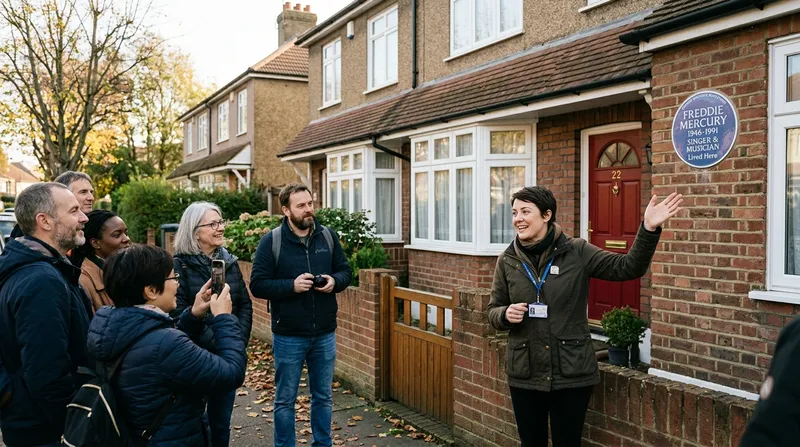
But if this is your only real cultural stop in Stone Town, and you want to understand how Freddie's childhood connects to the town's Omani-Swahili-Indian layers, a guided walking tour earns its higher price. Compare that to a Maldives or Mauritius trip, where cultural sightseeing is rarely the point — Zanzibar is one of the few Indian Ocean island destinations where the built heritage actually competes with the beaches for attention, and Stone Town's UNESCO status reflects that.
My honest take: skip any tour that promises the Freddie Mercury house as its headline draw. The best Stone Town walking tours treat it as one stop of many, not the star. Compare current walking tour options and prices before you book, and check whether the itinerary spends real time on the wider UNESCO old town rather than rushing between photo stops.
CAPTION: A guide leads a small group through a narrow Stone Town alley lined with carved wooden balconies. ALT_TEXT: Stone Town guided walking tour group in historic alley near Freddie Mercury house PLACEMENT_SECTION: the-verdict-is-it-worth-booking PLACEMENT_POSITION: inline
Frequently asked questions
Is the Freddie Mercury Museum worth visiting?
It's worth a stop if you're already in Stone Town, but don't build a special trip around it. The museum is small — 20-30 minutes covers it — and the real draw for most visitors is the exterior photo and the novelty of standing where Farrokh Bulsara spent his early years. Pair it with other Stone Town sites rather than treating it as a standalone destination.
How long does a Freddie Mercury tour take?
A solo visit takes about 20-30 minutes inside, plus navigation time through Stone Town's alleys. A guided Stone Town walking tour that includes the museum as one stop typically runs two to three hours total, covering several other heritage sites along the way.
What's included in a Stone Town walking tour?
Most guided tours cover the Freddie Mercury house, the old slave market memorial, House of Wonders, Shangani Street's merchant architecture, and often end near Forodhani Gardens. Inclusions vary by operator — some add street-food tastings or spice market stops, so check the itinerary before booking.
Can you visit the museum without a guide?
Yes. It's open to independent visitors for a small entry fee, no advance booking generally required. The challenge is finding it — Kenyatta Road isn't always well-marked, and GPS can struggle in Stone Town's dense alley grid, so budget extra time or ask locals for directions.
Which option is better for music fans?
Dedicated fans get more value from a guide who can connect Bulsara's Zanzibar childhood to his later Queen career and the family's departure during the 1964 revolution. Casual visitors who just want the photo and a quick look at memorabilia will find the solo visit perfectly sufficient.