Compare daytime vs night Stone Town food tours. Find family-friendly, allergy-safe options, pricing, what's included & best booking tips for Zanzibar.
Who Each Food Tour Type Suits
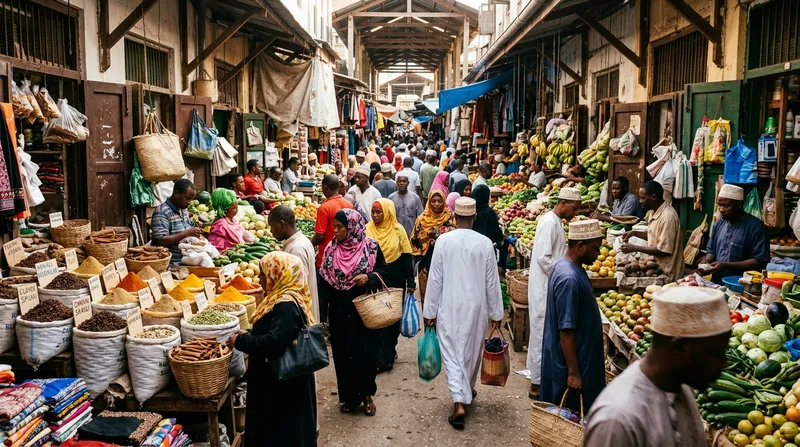
Stone Town food tours aren't one product — they split roughly into three categories: daytime market-and-walking tours, night market tasting tours, and private or small-group tours built around dietary needs. Picking the wrong one is the most common booking mistake. A family with two kids under ten gains little from a 9pm street-food crawl through Darajani Market's narrower lanes, while a solo backpacker chasing the best urojo stall in town will find a slow-paced heritage walk frustrating.
Think about your actual appetite for crowds and unfamiliar food before booking. Stone Town's main market, Darajani, is loud, narrow, and smells strongly of dried fish and spice sacks — some travelers love this immediately, others need a guide to make sense of it. A good local guide does more than point at stalls; they negotiate prices, explain what's safe to eat raw versus what needs to be freshly cooked, and steer you away from stalls with obvious hygiene issues.
Budget travelers and street-food adventurers
If you're comfortable eating standing up, sharing plates, and trying things without knowing the exact ingredients, a group street-food tour is the best value. These typically run 3 to 4 hours, cover six to ten tasting stops, and cost less per person than a private tour because the guide fee splits across the group. Expect cassava chips, Zanzibar mix (a spiced soup with bhajia and cassava fritters), grilled octopus, and sugarcane juice. The trade-off is pace — you move on a schedule, and if you hate one dish there's no substitution mid-stop. For solo travelers and younger couples on a budget, this is the category to book.
Families and dietary-restricted guests
Families with young children, older travelers with mobility concerns, or anyone managing a serious allergy should lean toward private or small-group tours capped at four to six people. You pay more per head — often close to double the group rate — but you control the pace, skip stalls that worry you, and the guide can pre-arrange specific vendors who understand cross-contamination risks. This matters especially with shellfish, which appears in multiple Swahili dishes (octopus curry, prawn pilau) and isn't always obvious on sight. Ask directly whether the operator has handled allergy requests before; vague reassurance is a red flag, not a good sign.
Daytime vs Night Food Tours Compared
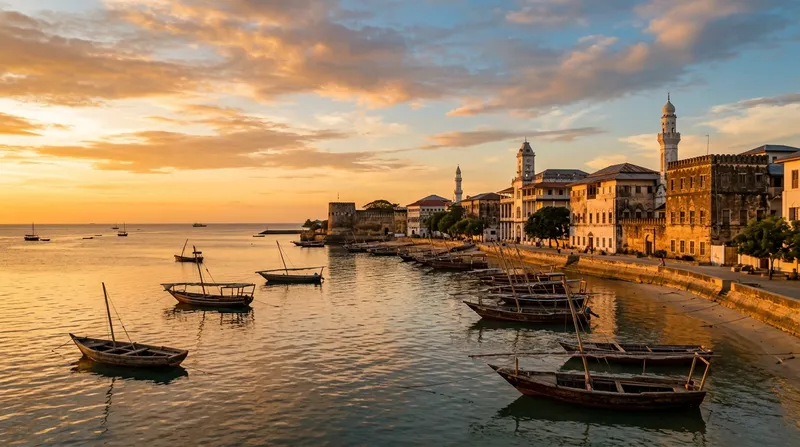
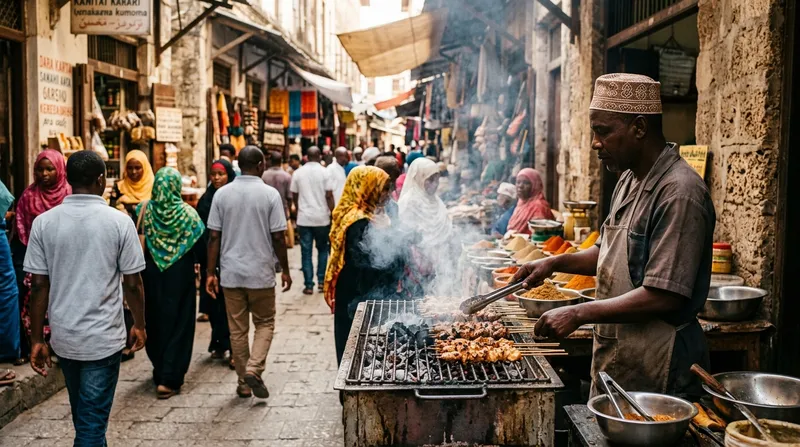
The daytime-versus-night choice changes the entire character of the experience, not just the lighting. Daytime tours typically run mid-morning (around 9am to 1pm) and center on Darajani Market itself — you see produce, spices, fish stalls, and working kitchens, which makes this the better pick for anyone who wants to understand how Swahili cuisine is actually built, not just eat the finished product. Night tours run after 6pm, when Forodhani Gardens and side-street vendors set up grills and stalls lit by lanterns and string lights; the food is more about street snacks — Zanzibar pizza, skewered meats, grilled seafood — than market produce.
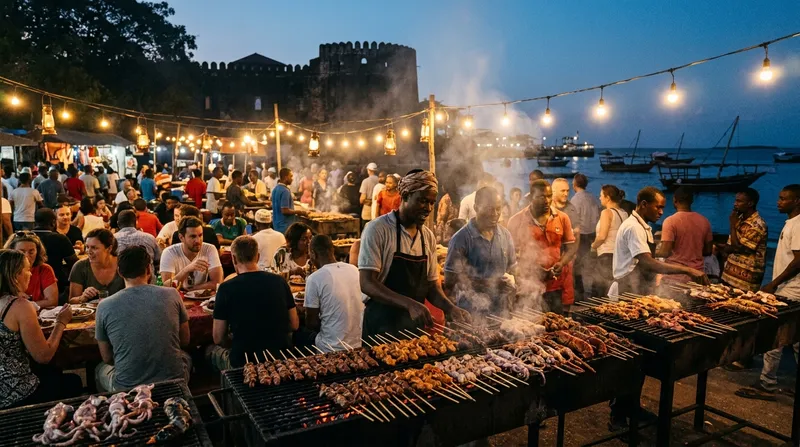
Neither is objectively better, but they suit different travelers. Photographers and nature lovers who want texture and color — sacks of turmeric, piles of cloves, fish laid out on ice — should book daytime. Couples and honeymooners after atmosphere, and travelers who want a lighter, snackier meal before a late dinner elsewhere, do better at night. One genuine drawback of night tours: Forodhani Gardens gets busy with both tourists and locals after sunset, and tour groups can end up queuing at popular stalls alongside everyone else, which eats into your scheduled time.
Daytime tours suit market lovers and photographers, while night tours suit couples and travelers after a relaxed evening of street snacks.
Stone Town food tour types compared: duration, focus, and who they suit
| Tour type | Typical duration | Focus | Group size | Best for |
|---|---|---|---|---|
| Daytime market tour | 3-4 hours | Market produce, spices, sit-down tastings | Group (8-15) | Photographers, first-timers, families with older kids |
| Night market tour | 2.5-3 hours | Street snacks, grilled food, atmosphere | Group (8-15) | Couples, honeymooners, evening-only schedules |
| Private daytime tour | 3-4 hours | Customized pace, allergy control | 1-6 | Families with allergies, seniors, mobility needs |
| Private night tour | 2.5-3 hours | Flexible stops, fewer crowds | 1-6 | Couples wanting privacy, photographers avoiding crowds |
Figures approximate as of 2025; durations and stop counts vary by operator and season.
Daytime walking tours and market visits
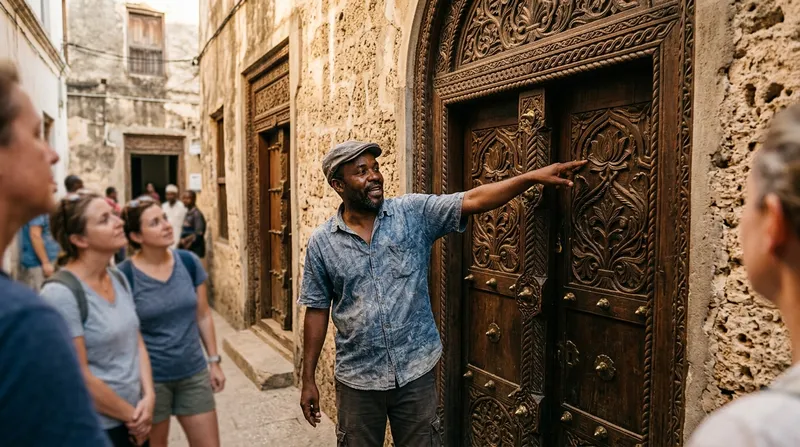
A daytime tour usually combines a market walk with two or three sit-down tastings at small local eateries — think fish curry, pilau rice, or a Swahili breakfast with mandazi (fried dough) and spiced tea. Guides often weave in some history of the spice trade, since Zanzibar's nickname as the Spice Island isn't just marketing — cloves, nutmeg, and cardamom genuinely shaped the island's economy under Omani rule. The downside: markets close or slow down significantly by early afternoon, and midday heat in Stone Town's unshaded alleys can be rough for older travelers or small children, so an early start matters more here than for night tours.
Night market and evening tasting tours
Night tours trade market education for atmosphere and variety of street snacks in a shorter window, often 2.5 to 3 hours. You'll likely sample Zanzibar pizza (a stuffed, grilled flatbread with minced meat or Nutella for a sweet version), grilled kingfish or octopus skewers, and fresh juice from roadside carts. It suits travelers who've already spent a day exploring Stone Town and want a relaxed evening activity rather than another walking-heavy itinerary. One caution: busier operators sometimes cluster multiple tour groups at the same two or three popular stalls, so ask in advance whether your guide varies the route — repetition is a common complaint in traveler reviews.
What to Look for When Booking
Not all Stone Town food tour listings are equal, and the description on a booking platform often hides important differences. The biggest variable isn't the food — it's logistics: how many people are in your group, whether the guide speaks fluent English (or your language), and what happens if it rains or a vendor isn't available that day.
Group size, duration, and inclusions
Check the listed group size before booking — anything above 12 people turns a food tour into a logistics exercise, with long waits at each stall and little direct interaction with vendors. Confirm whether drinks (juice, spiced tea, water) are included or extra, and whether the tour covers transport to and from your hotel; some Stone Town tours start on foot from a central meeting point, which matters if you're staying outside the old town near Kiwengwa or Nungwi. Also check if the tour overlaps with a broader Stone Town walking tour (covering the House of Wonders, the old slave market site, or the fish market) — combined tours run longer, usually 4+ hours, and suit travelers who haven't done any other orientation walk yet.
Cancellation policy and guide credentials
Look for a free cancellation window of at least 24 hours before the tour start time — this is standard on most major booking platforms and protects you if your ferry from Dar es Salaam or a connecting flight gets delayed. Read recent reviews specifically for mentions of the guide by name or role; a tour that depends entirely on "whoever's available" tends to be less consistent than one with named, licensed local guides. Zanzibar requires registered tour guides to hold a government permit, so it's reasonable to ask an operator directly whether their guides are licensed — a legitimate operator won't hesitate to confirm this.
Best Time to Book Your Tour
Book your Stone Town food tour as soon as you've fixed your Zanzibar dates — ideally 1 to 2 weeks ahead for group tours, and closer to 3 weeks ahead for private tours during peak season. Small-group tours have limited capacity (often 8 to 15 spots), and the better-reviewed options sell out during July, August, and the December–January holiday period.
Seasonal considerations and peak periods
Zanzibar's dry season (June to October, and again January to February) brings the heaviest tourist traffic, which means more competition for evening tour slots and more crowding at popular Forodhani Gardens stalls. The long rains (March to May) are quieter and often cheaper, but some open-air night stalls operate on reduced hours if rain is heavy, so a daytime tour is the safer bet in April. If you're traveling with family during European school holidays — especially the UK and German summer breaks — book at least three weeks out, since family-sized private slots disappear fastest.
Family-Friendly & Allergy-Safe Options
A family-friendly food tour in Zanzibar isn't just about smaller portions or milder spice — it's about pacing, shade, and flexibility. Children under six often struggle with the walking distance and heat on a 4-hour daytime tour, so a shorter 2-hour version, or a private tour with built-in breaks, works better. Many operators will shorten the route on request if you mention ages in advance, but you need to ask — it's rarely offered by default.
Customizable menus and safety standards
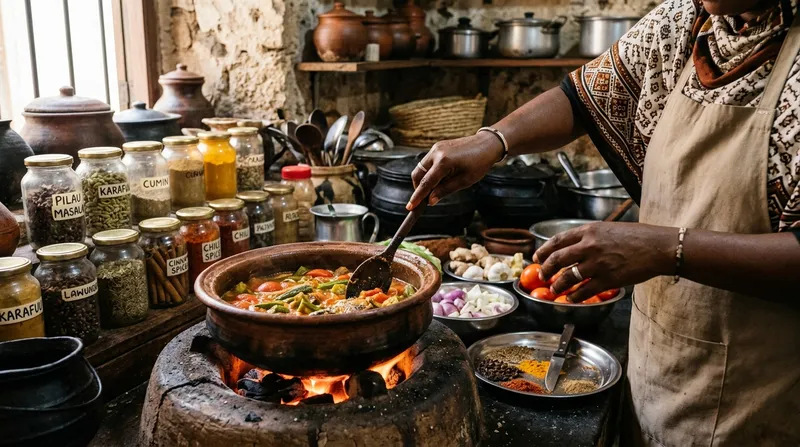
For allergies — shellfish, peanuts (common in some sauces), and gluten in things like mandazi — the safest approach is a private tour where the guide pre-visits vendors or arranges substitutions ahead of time. Ask specifically: does the operator brief vendors on your allergy in Swahili, not just tell you which stalls to avoid? That distinction matters because cross-contamination on shared grills and frying oil is a real risk at busy stalls, not a theoretical one. Hygiene standards vary stall to stall in any open market, so a guide who sticks to vendors they've vetted repeatedly is worth more than one who improvises the route daily. If anyone in your group has a severe allergy, it's reasonable to skip street stalls entirely and ask for a tour built around sit-down restaurants instead — slower, but much easier to control.
Frequently asked questions
What's included in a typical Stone Town food tour?
Most include a local guide, 6 to 10 tastings of Swahili dishes (urojo soup, octopus curry, Zanzibar pizza, mandazi, spiced tea), and a market or Forodhani Gardens walk. Drinks and transport to/from your accommodation aren't always included — check the listing before booking.
Are Stone Town food tours safe for families with allergies?
They can be, but only if you book a private or small-group tour and disclose the allergy in advance. Shellfish and peanuts appear in several common dishes, and cross-contamination at shared grills is a real risk — ask whether the guide briefs vendors directly rather than just avoiding certain stalls.
How much do Stone Town food tours cost?
Group tours are generally the cheapest per person since the guide fee is shared; private tours cost roughly double per head but include far more flexibility. Prices vary by season and operator, so compare current listings and reviews on your booking platform rather than relying on a fixed figure.
What's the difference between daytime and night food tours?
Daytime tours (roughly 9am–1pm) focus on Darajani Market, spices, and sit-down tastings, giving more insight into ingredients. Night tours (after 6pm) center on Forodhani Gardens street stalls and grilled snacks, with more atmosphere but less market context.
When should I book a Stone Town food tour?
Book 1–2 weeks ahead for group tours, 3 weeks ahead for private tours in peak season (June–October, December–January). During the April–May rainy season, availability is looser and daytime tours are more reliable than night ones if rain is heavy.