A 3-day Zanzibar nature itinerary covering Jozani Forest, Prison Island, mangroves and marine life. A practical eco-travel route with real logistics.
Who This Itinerary Is For
This Zanzibar nature itinerary is built for travelers who'd rather spend a morning watching red colobus monkeys forage than lying on a beach for the fourth straight day. It suits photographers chasing canopy light, families with children old enough to walk forest trails (think age seven and up), couples wanting a break from resort routines, and solo travelers comfortable arranging transport and guides independently.
It's less suited to anyone expecting Maldives-style overwater luxury or Seychelles-level seclusion — Zanzibar's nature sites involve shared paths, modest entrance infrastructure, and occasional crowds of day-trippers from Stone Town. If total isolation matters more to you than biodiversity, Pemba Island or Mafia Island nearby offer quieter alternatives with similar marine ecosystems but far less built-out access.
Three days is the minimum to do this properly without feeling rushed. Compress it into a single day-trip — which most package tours do — and you'll get twenty minutes at Jozani Forest and a hurried glance at Prison Island before being shuttled back for sunset cocktails. That's not a nature itinerary; it's a checklist. This version slows down, gives each ecosystem its own day, and builds in flexibility for weather and energy levels.
Expect moderate walking (1-2 hours total per day on uneven ground), some boat transfers, and one early start (around 6:30am) for the dolphin excursion on Day 3. Bring reef-safe sunscreen, closed shoes for the forest, and a dry bag for camera gear near water.
Each day of this Zanzibar nature itinerary targets a different ecosystem, with costs and time commitments that scale from modest to a full morning.
Zanzibar nature itinerary: day-by-day comparison of sites, time and cost
| Day & Site | Travel Time from Stone Town | Typical Cost (USD) | Best Time to Go |
|---|---|---|---|
| Day 1: Jozani Forest | 35-45 min | $10-13 entry | Before 10am |
| Day 2: Prison Island | 20-30 min boat | $4-8 entry + boat | Morning, first crossing |
| Day 2: Mangrove kayaking | 45-60 min | $25-45 per person | High tide, afternoon |
| Day 3: Kizimkazi dolphins | 60-90 min | $25-45 per person | 7am-9am departure |
| Day 3: Mnemba Atoll snorkel | 45-60 min boat (from NE coast) | $5-10 conservation fee + boat | Calm seas, midday |
Figures approximate as of 2024-2025; boat times vary with tide and weather, confirm current prices when booking.
Day 1: Jozani Forest & Red Colobus Monkeys
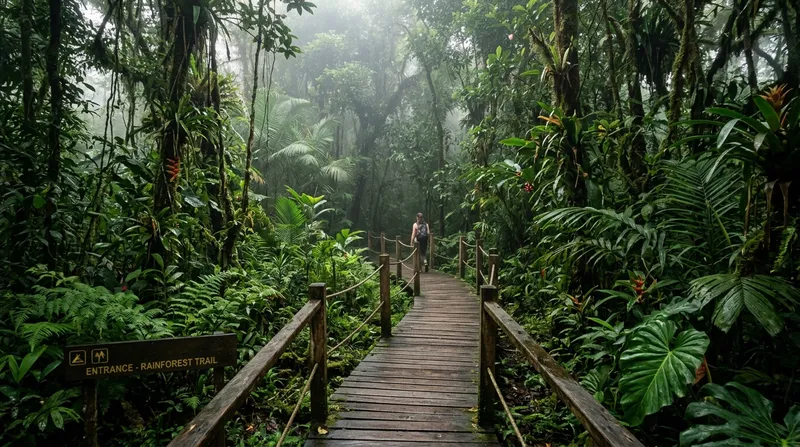
Base yourself in Stone Town or the nearby Bwejuu/Paje corridor the night before — Jozani Chwaka Bay National Park sits roughly 35-45 minutes south of Stone Town by road, and arriving by 8am avoids both the heat and the tour-bus crowds that build up from mid-morning. Entry to the park runs in the range of $10-13 USD for international visitors, and a licensed local guide is mandatory, included in that fee.
Morning forest walk and wildlife spotting
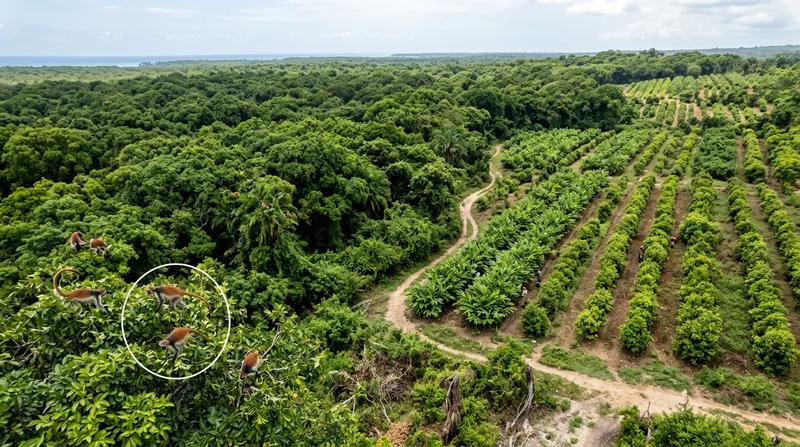
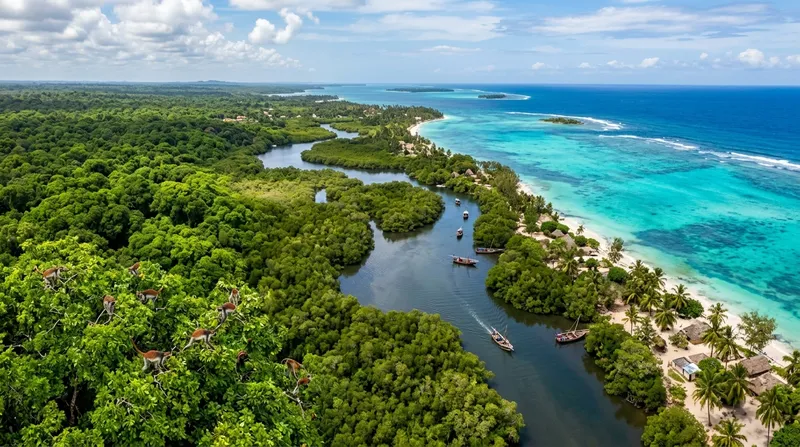
Jozani is the only place on Earth where the Zanzibar red colobus monkey survives in the wild — an endangered subspecies found nowhere outside this forest and a few fragmented patches nearby. Groups are habituated enough that you'll typically get within 3-5 meters, which makes for strong photography without needing a long lens, though a 70-200mm equivalent still helps for canopy shots. Guides lead a loop through the groundwater forest (about 45 minutes) before continuing into the mangrove boardwalk section. Go early: by 10am, heat slows the monkeys' activity and pushes them higher into the canopy, out of easy sight. I'd skip the request some guides make to "feed" monkeys for better photos — it's a conservation red line, alters natural behavior, and reputable guides won't suggest it.
Afternoon cultural integration and local guides
After the forest, most itineraries push straight to a beach. Instead, spend the afternoon in Stone Town's Darajani Market, a 30-40 minute drive back north. It's not strictly a "nature" stop, but it connects the itinerary to the spice trade and fishing economies that shape how Zanzibaris relate to the land and sea you've just walked through. Hire a local guide here rather than a generic city tour — ask your Jozani guide for a market contact, since cross-referrals are common and keep money within the same community network. Budget $5-10 USD per hour for an informal walking guide. This is also your best bad-weather fallback for the day: covered market alleys work fine in rain, unlike forest trails, which turn slick and are genuinely not worth the fall risk.
Day 2: Prison Island & Mangrove Ecosystems
Changuu Island — universally called Prison Island despite never having held a prisoner (the building meant as a jail became a quarantine station instead) — sits about 5.6km off Stone Town, a 20-30 minute boat ride from the port near Mizingani Road. Boats depart through the morning; aim for the first available crossing, around 8:30-9am, before midday tour groups arrive en masse.
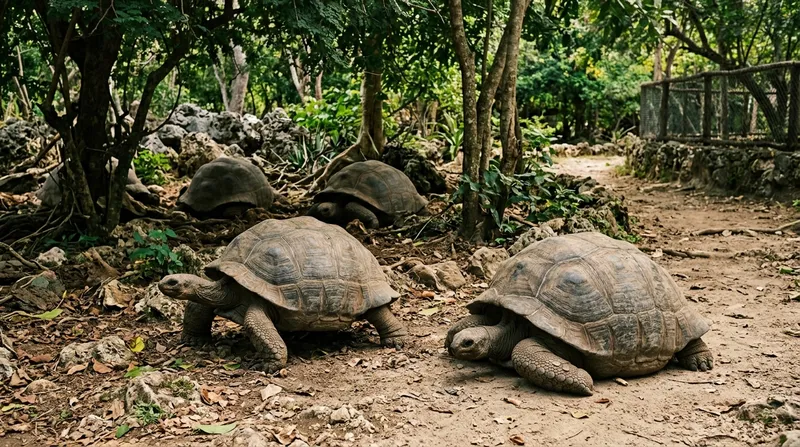
Morning island tour and giant tortoises
The island's Aldabra giant tortoises were gifted from Seychelles in the 1900s and now number around 100-plus, some individuals reportedly over 100 years old, identifiable by painted numbers on their shells (a tracking method, not decoration you should add to). Entrance fee is typically $4-8 USD, sometimes bundled with the boat transfer. Give this an hour — enough time to watch feeding, which happens most mornings, and to snorkel briefly off the island's small reef if conditions are calm. Comparing this to Mauritius's tortoise sanctuaries, Prison Island's setup is smaller and less manicured, but the colonial ruins and coastal views add a historical layer you won't get elsewhere in the archipelago.
Afternoon mangrove kayaking and birdwatching
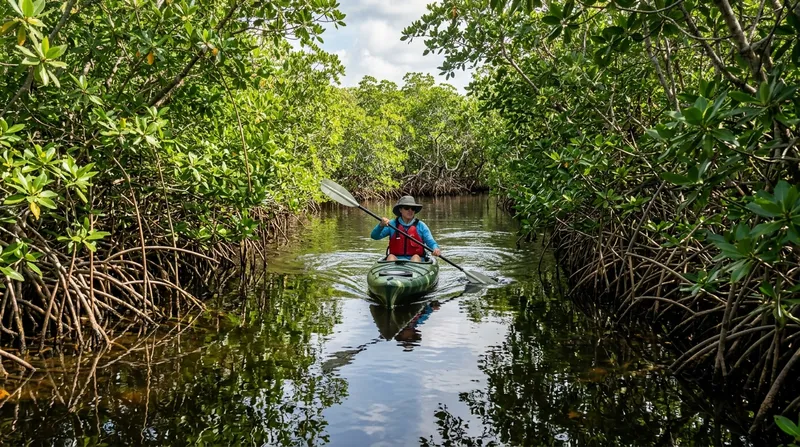
Back on the main island by early afternoon, head to one of the mangrove channels — Jozani's own mangrove boardwalk counts, but for kayaking specifically, the creeks near Chwaka Bay or Unguja Ukuu offer better paddling access. A guided kayak trip through mangrove ecosystems usually runs 2-3 hours and costs in the $25-45 USD range depending on group size. Mangroves here support kingfishers, herons, and the occasional mangrove kingfisher sighting for patient birdwatchers — bring binoculars, since birds tend to perch deep in the root systems rather than out in the open. Tide timing matters: paddling at high tide gives access to narrower channels; low tide can leave you walking kayaks through mud, which nobody enjoys. Ask your operator about tide schedules when booking, not on arrival.
Day 3: Dolphin Swimming & Marine Conservation
This day centers on Kizimkazi, a fishing village on Zanzibar's southwest coast, about 1-1.5 hours by road from Stone Town. It's the departure point for the archipelago's dolphin-swimming excursions, and it's also the day I'd urge the most caution on.
Morning dolphin encounter and snorkeling
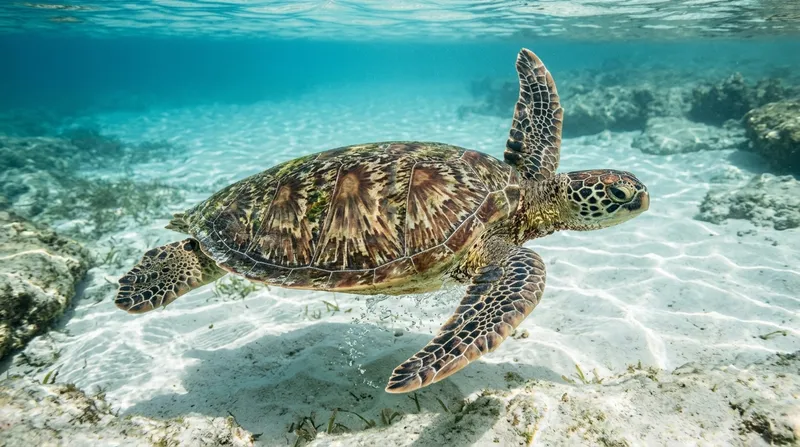
Bottlenose and humpback dolphins are resident in these waters year-round, but sightings and swim opportunities aren't guaranteed — boats typically go out between 7am and 9am when the water is calmer and dolphins are more active near the surface. Trips run 2-3 hours and cost roughly $25-45 USD per person depending on boat size. Here's my honest take: the industry here has a real problem with overcrowding boats around pods, which stresses the animals and degrades the experience. Book this one in advance with an operator that caps swimmer numbers and limits boat approaches — ask directly before paying. If that's not available, treat snorkeling over the nearby reef as the primary activity and the dolphin sighting as a bonus, not the goal.
Afternoon coral reef exploration and relaxation
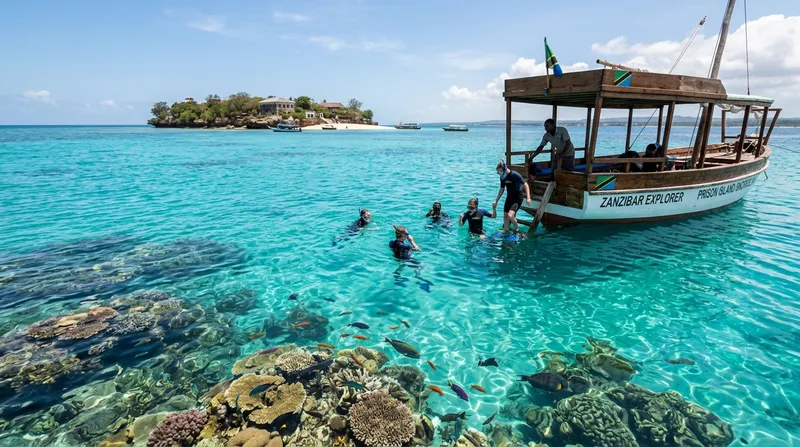
Spend the afternoon snorkeling or diving around Mnemba Atoll, roughly 45-60 minutes by boat from the northeast coast — logistically easier if you've shifted your base to Matemwe or Nungwi for this final day. Mnemba's reef is in noticeably better condition than reefs closer to Stone Town's boat traffic, with visible coral cover and reef fish density comparable to parts of Mafia Island's marine park. Expect a conservation fee of around $5-10 USD paid locally, which goes toward reef management. Compared to Maldives house-reef snorkeling, Mnemba requires more boat time but costs a fraction of the price. If seas are rough, swap this for a visit to a shoreline tide-pool area at low tide — less dramatic, but genuinely restful, and a sensible way to end three active days.
Getting Around Zanzibar
For this itinerary, a private driver hired by the day is the most practical choice — expect $40-70 USD per day including fuel, arranged through your accommodation or a local guide rather than a street tout. Public dala-dala minibuses are cheaper (often under $2 USD per route) but slow and inconvenient with snorkel gear or kayak pickups factored in.
Renting a scooter or small car gives independence but isn't ideal for Day 2 and Day 3, when boat transfers from specific jetties matter for timing. Roads south to Jozani and Kizimkazi are paved but narrow, with livestock and pedestrians common — night driving is genuinely risky and worth avoiding. Compared to Bali, where scooter rental is near-universal for independent travelers, Zanzibar's road conditions and lack of signage make a hired driver the safer default for a nature-focused trip with tight boat connections.
Where to Base Yourself
Splitting your base — Stone Town for Days 1-2, the northeast coast for Day 3 — cuts down driving time and matches each day's geography. If you'd rather not move hotels, Stone Town works for all three days, just add 30-45 minutes of extra driving on Day 3.
Eco-lodges and sustainable accommodations
Several small lodges near Jozani and along the Matemwe coastline run on solar power, use greywater systems, and employ local staff at a higher ratio than the big beach resorts near Nungwi. These tend to be mid-range rather than budget — figure $80-180 USD per night — and smaller, often under 20 rooms, which means less infrastructure strain on surrounding ecosystems. I'd avoid the large all-inclusive resorts for this particular trip; their scale and imported-food models work against the conservation message the itinerary is built around, even if the beaches are nicer.
Proximity to nature activity departure points
Stone Town accommodation puts you within 20-30 minutes of both the Prison Island boat jetty and the Jozani road south — genuinely convenient for Days 1 and 2. Matemwe or Nungwi bases cut Day 3's drive to Kizimkazi roughly in half if you choose a different departure village on the north coast for dolphin trips, though Kizimkazi itself remains the most established launch point. Weigh the extra one-night hotel change against the time saved; for a 3-day trip, I'd only bother relocating if you're also tacking on extra beach days afterward.
Frequently asked questions
What wildlife can you see in Zanzibar's nature reserves?
Jozani Forest holds Zanzibar red colobus monkeys (endemic and endangered), Sykes' monkeys, bushbabies, and over 40 bird species. Prison Island has Aldabra giant tortoises, introduced from Seychelles. Offshore, expect bottlenose and humpback dolphins near Kizimkazi, plus reef fish, moray eels, and occasional reef sharks around Mnemba Atoll's coral.
What is the best time to visit for nature activities?
June to October offers drier weather, calmer seas for snorkeling and dolphin trips, and easier forest walking. December to February is also dry and warm but busier. Avoid April-May, the long rains, when forest trails flood and boat trips are frequently cancelled.
How do you get to Jozani Forest from Stone Town?
It's roughly 35-45 minutes by road heading south. A private driver or organized tour is most practical; dala-dala minibuses run the route but take longer and require a walk from the main road to the park entrance.
Can you swim with dolphins in Zanzibar?
Yes, primarily from Kizimkazi village, with trips departing 7-9am when dolphins are most active. Sightings aren't guaranteed, and boat crowding around pods is a genuine problem — ask operators about swimmer limits before booking rather than assuming responsible practices.
What eco-lodges are recommended for nature-focused travelers?
Look for smaller solar-powered lodges near Jozani or along the Matemwe coast, typically under 20 rooms and priced $80-180 USD per night. Avoid large all-inclusive resorts for this trip; their scale works against the low-impact approach the itinerary is built around.