Planning a Zanzibar mangrove kayak tour? Get routes, wildlife, pricing ranges, fitness needs and booking tips before you paddle the channels.
What Is a Zanzibar Mangrove Kayak Tour
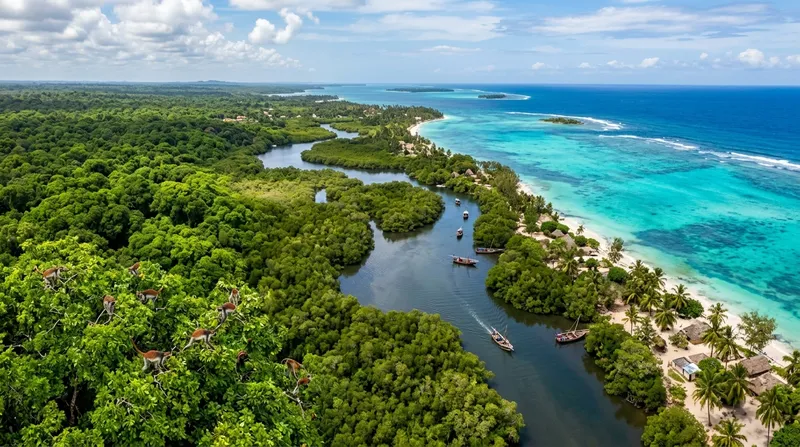
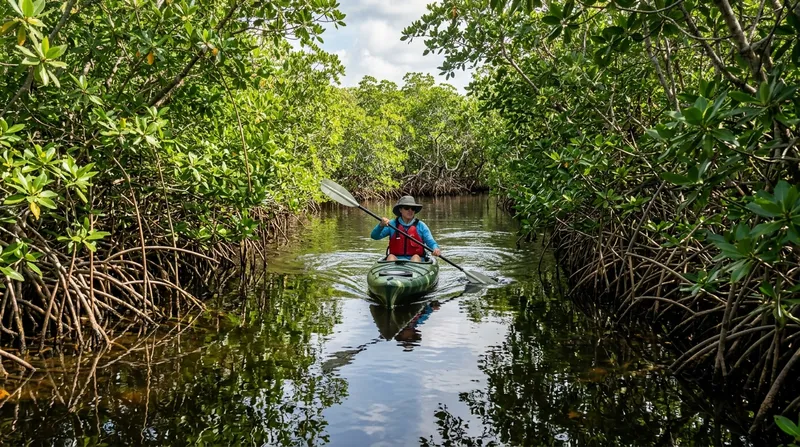
A Zanzibar mangrove kayak tour takes you through tidal channels cut into coastal forest, usually on Unguja Island's eastern or northern coast, paddling low, flat water bordered by dense root systems rather than open sea. It's a different Zanzibar experience from the one sold on brochures — no white sand, no sunbathing, just narrow green corridors, mud flats, and a noticeably quieter soundtrack once the outboard boats disappear behind you.
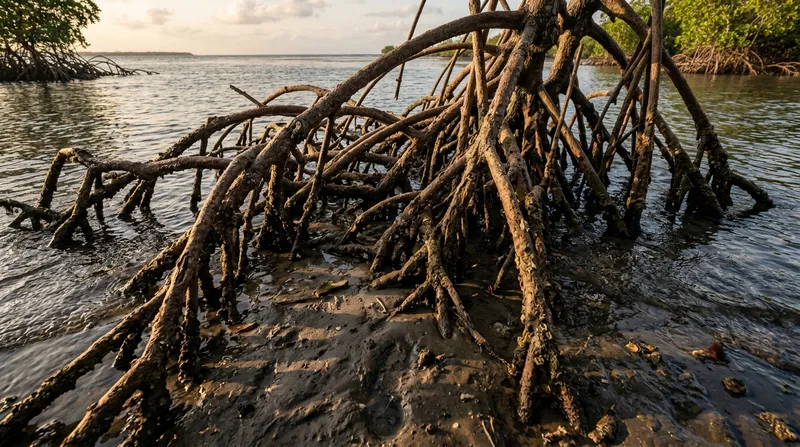
Most tours run two to three hours, departing from small coastal villages rather than the resort strips at Nungwi Beach or Jambiani Beach, though several operators now collect guests from those areas as part of the package. You're paddling sit-on-top or sit-in kayaks, usually in pairs, following a guide who knows which channels stay navigable as the tide drops — and that detail matters more than most first-time visitors expect, because mangrove creeks here can go from a meter deep to ankle-deep mud within an hour.
Mangrove ecosystem and wildlife highlights
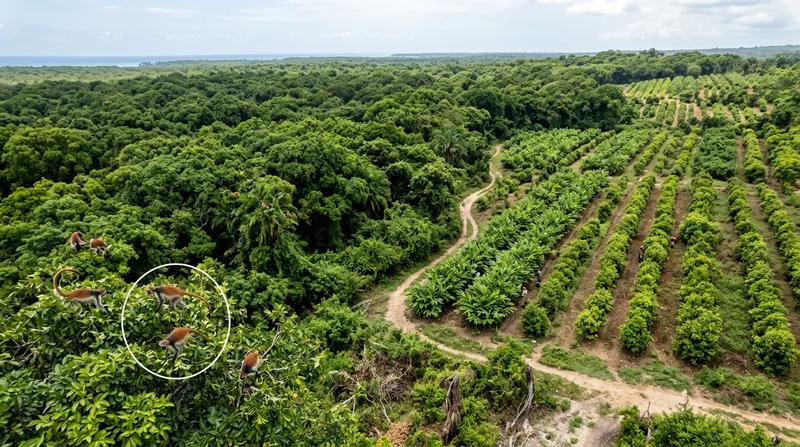
Zanzibar's mangroves are a genuine ecological asset, not a scenic backdrop. The forests here — dominated by red and black mangrove species — filter sediment before it reaches the reef systems around Mnemba Atoll, and they function as nurseries for juvenile fish and crustaceans. Paddling through them, you'll likely spot mudskippers flipping across exposed banks, fiddler crabs waving oversized claws at low tide, and various herons and kingfishers working the shallows. Troops of Zanzibar red colobus or Sykes' monkeys sometimes appear in mangrove-adjacent forest patches, particularly near Jozani Chwaka Bay National Park, though sightings aren't guaranteed on a pure kayak route. Fish activity is best an hour either side of high tide, when water fills the channels and small predators move in to feed — ask your guide to time the paddle accordingly rather than just accepting whatever slot is offered.
Why kayaking is ideal for this experience
Motorboats can't get into most of these channels, and even if they could, the noise would clear out everything worth seeing. A kayak draws almost no water, makes no noise beyond paddle strokes, and lets you drift close enough to watch a heron hunt without it bolting. That's the real argument for kayaking over, say, a mangrove boardwalk walk (which exists at Jozani but covers far less ground and no water wildlife) or a glass-bottom boat trip aimed at reef viewing. The trade-off is effort — you're providing the propulsion, and on a falling tide you'll occasionally be dragging the kayak over mud rather than paddling it.
How to Visit: Independent vs. Guided Tours
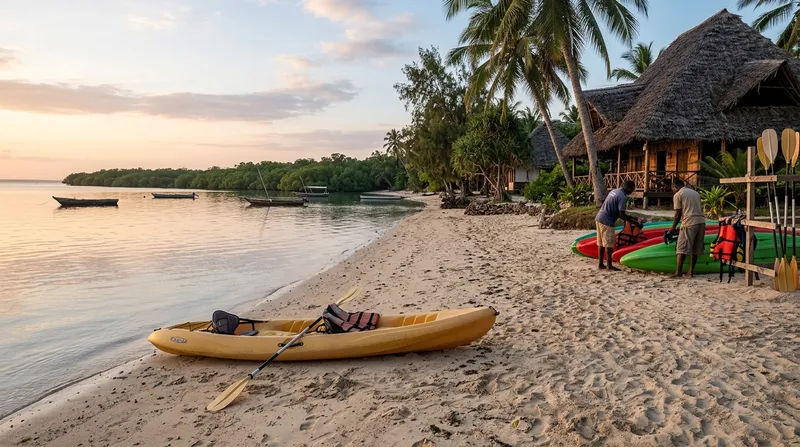
Unlike snorkeling off Nungwi or climbing aboard a dhow cruise, mangrove kayaking isn't something you can casually improvise by renting gear on the beach — the channels are genuinely easy to get lost in, and tidal timing is unforgiving if you don't know the local patterns.
Self-guided kayaking options and requirements
A handful of lodges near mangrove-fringed bays rent kayaks directly to guests, mostly around the Chwaka Bay and Michamvi areas, letting you paddle unguided within marked zones close to shore. This works fine if you've kayaked before, you're staying at that specific lodge, and you're sticking to open water rather than threading the actual mangrove maze. I wouldn't recommend going deep into unmarked channels without a guide — there's no cell signal in most creeks, the vegetation looks identical in every direction, and an incoming tide can strand a kayak in flooded root systems faster than you'd think. If independence matters to you, ask the lodge for a laminated tide chart and stick to the outer fringe.
Guided tour benefits and what to expect
A guided kayak tour Zanzibar operators run typically starts with a short briefing on the shore, a safety vest fitting, and a demonstration paddle stroke for anyone who's never sat in a kayak. Groups usually run four to ten people, led by one or two local guides who grew up fishing these same waters — their eye for wildlife is usually sharper than anything you'd manage solo. Expect frequent stops where the guide points out crab burrows, bird nests, or fish schools you'd paddle straight past otherwise. Most tours end with a short walk or snack break on a sandbank, and some combine the paddle with a village visit, which gives useful context on how coastal communities use the mangrove for fishing, boat-building timber, and medicinal bark.
Booking, Tickets & Entry Information
There's no single gate or ticket office for mangrove kayaking the way there is for Jozani Chwaka Bay National Park — access runs entirely through tour operators and lodges, which makes comparing options slightly more work but also means prices are negotiable in a way a fixed entry fee never is.
Tour operators and booking platforms
You'll find mangrove kayak tours listed through international booking platforms, through Stone Town-based tour desks, and directly via beach lodges in Jambiani, Paje, and Matemwe. Booking a day or two ahead is usually enough outside peak season (July–September, late December), but during those months, popular morning slots — timed to the best tide windows — can fill up by the evening before. Read recent reviews for group size and equipment condition specifically; older plastic kayaks with worn seats show up in complaints more often than any other issue. If you're booking through a hotel concierge rather than researching independently, ask directly whether the guide is a certified local operator or a subcontracted driver-guide, since quality varies noticeably between the two.
Typical pricing and package inclusions
Expect a Zanzibar mangrove tour price somewhere between $25 and $45 per person for a standalone two-to-three-hour paddle, rising to $60-$70 when it's bundled with a village lunch, snorkeling stop, or round-trip transport from Stone Town or the northern resort belt. That's broadly comparable to a half-day kayak outing in Mombasa's mangrove creeks, and noticeably cheaper than guided kayak wildlife excursions in the Seychelles, where similar trips often start above $90. Inclusions typically cover the kayak, paddle, life vest, and guide; water and snacks are hit-or-miss, so pack your own. Always confirm whether park or conservation fees are included separately — some mangrove zones near Jozani charge a small additional conservation contribution, often $5-10, collected on-site rather than folded into the tour price.
Best Time to Visit & Fitness Levels
Timing a Zanzibar mangrove kayak tour well has far more impact on the quality of your experience than which operator you book with — get the tide and season right and a budget tour will outperform an expensive one run at the wrong hour.
Dry-season mornings on an incoming tide consistently give the best paddling conditions and wildlife activity for a Zanzibar mangrove kayak tour.
Zanzibar mangrove kayak tour conditions by season
| Season | Months | Paddling Conditions | Wildlife Activity | Booking Ease |
|---|---|---|---|---|
| Long dry season | June-October | Calm, reliable | Good, steady bird activity | Easy, book 1-2 days ahead |
| Short dry spell | December-February | Calm, warm | Good | Moderate, holiday demand |
| Long rains | March-May | Poor, frequent cancellations | Low, muddy water | Difficult, reduced schedules |
| Short rains | November | Variable, scattered storms | Moderate | Moderate |
Conditions typical as of 2024; always confirm with your operator the morning of the tour, since local tide tables shift daily.
Seasonal weather and wildlife activity
Zanzibar's dry seasons — roughly June to October and late December through February — offer the most reliable paddling conditions, with calmer winds and predictable tides. The long rains (March to May) bring heavy, sometimes daily downpours that can cancel tours outright and turn mangrove mud into something closer to wet cement; most lodges quietly scale back kayak offerings during this window. Wildlife activity doesn't really follow season so much as tide and time of day — early morning (6:30-8:30am) tends to produce the most bird activity, since herons and kingfishers feed before the heat builds. Compare that to Pemba Island or Mafia Island, both of which have their own mangrove systems but far fewer organized kayak operators, meaning Unguja remains the more practical choice for a reliably bookable tour.
Physical requirements and difficulty ratings
This is a low-difficulty activity physically, but not a zero-effort one. You'll be paddling continuously for one to two hours with short rest stops, sitting in a fairly low, sometimes unstable kayak position. Most operators set a minimum age around 6-8 years for tandem kayaks with an adult, and there's generally no strict upper age limit, though guides may discourage anyone with significant balance or mobility issues from the sit-in style kayaks. If you have lower back problems, ask specifically about sit-on-top models, which are easier to get in and out of on muddy banks. Swimming ability isn't usually tested or required, but a life vest is non-negotiable regardless of experience level — don't book with an operator who treats this as optional.
Nearby Attractions & Add-On Activities
A mangrove kayak tour rarely fills a full day on its own, and most visitors pair it with something else on the same trip out from their resort base — which is sensible, given how much driving time a single activity otherwise "wastes."
Stone Town and cultural sites
If your kayak tour departs from or near Stone Town, combine it with a walk through the old quarter — the House of Wonders, the old slave market site, and the winding alleys near Forodhani Gardens are all walkable within two to three hours. Several operators bundle a mangrove paddle with a Stone Town heritage walk and a spice farm visit as a full-day package, which makes sense logistically but can feel rushed; if culture is your priority, I'd split these into separate days rather than cramming both into one itinerary.
Beach and snorkeling combinations
Pairing a morning mangrove paddle with an afternoon at Jambiani Beach or a snorkeling trip near Mnemba Atoll works well because the mangrove tour typically wraps by late morning, before the day's heat peaks. Mnemba's reef snorkeling costs considerably more than the kayak tour itself — often $40-60 for a half-day boat trip — but the two activities show off completely different sides of the same Indian Ocean ecosystem, from root-tangled nursery waters to open reef. Avoid scheduling a long dhow sailing trip the same day; stacking two water activities back to back in Zanzibar's heat and humidity leaves most people wrecked by evening.
Frequently asked questions
What wildlife can you see on a Zanzibar mangrove kayak tour?
Expect mudskippers, fiddler crabs, and small mangrove fish in the shallows, plus herons, kingfishers, and egrets overhead. Red colobus or Sykes' monkeys occasionally appear near forest-edge channels, especially close to Jozani Chwaka Bay, though monkey sightings depend on route and aren't guaranteed on every tour.
Do you need kayaking experience for a mangrove tour?
No. Guided tours are designed for beginners, with a short briefing and calm, flat water throughout. You should be comfortable sitting for one to two hours and able to manage brief periods of wading if the tide drops, but prior kayaking skill isn't required for a standard guided route.
What is included in a typical mangrove kayak tour package?
Most packages include the kayak, paddle, life vest, and a local guide for a two-to-three-hour paddle. Transport, bottled water, and snacks vary by operator — confirm these before booking. Village visits or snorkeling add-ons usually cost extra and push the total toward the $60-70 range.
What is the best season for mangrove kayaking in Zanzibar?
June through October and late December through February offer the calmest water and most reliable tours. Avoid the long rains from March to May, when heavy downpours frequently cancel trips and turn exposed mud banks into difficult, sticky terrain for landing or walking.
Can you combine a mangrove tour with other Zanzibar activities?
Yes — morning kayak tours leave most of the afternoon free for beach time at Jambiani or Nungwi, a Stone Town walking tour, or a snorkeling trip near Mnemba Atoll. Avoid stacking two demanding water activities in one day; the combined sun and paddling effort tends to tire people out faster than expected.