Plan your Jozani Forest tour in Zanzibar. Entry fees, guided tour options, best times to spot red colobus monkeys, and practical visitor tips.
What Is Jozani Forest and Why Visit
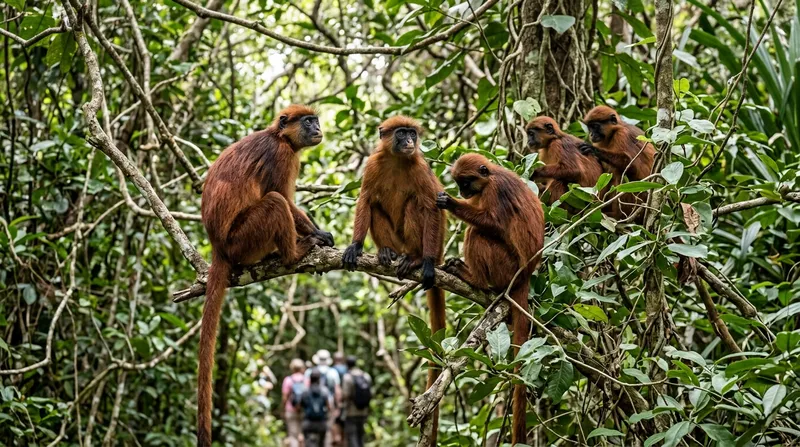
Jozani Forest sits roughly 35 kilometers southeast of Stone Town, in the heart of Zanzibar Island, and forms the core of Jozani Chwaka Bay National Park — the only national park in the Zanzibar archipelago. It's a patch of remnant groundwater forest, about 50 square kilometers in total protected area, though the visitor section you actually walk is much smaller, closer to a couple of kilometers of trail.
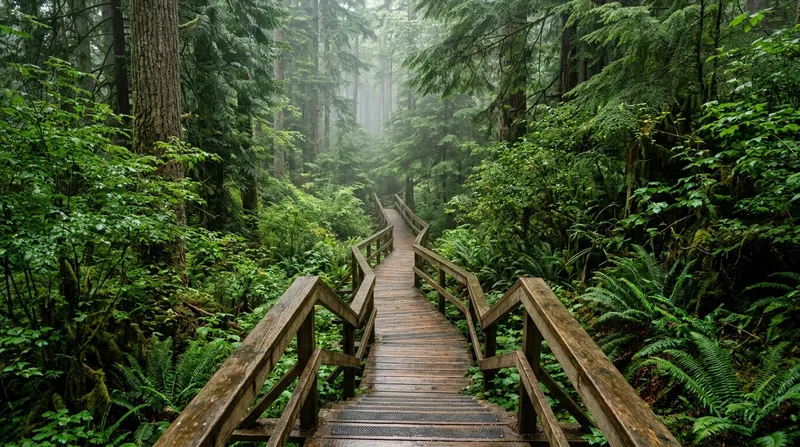
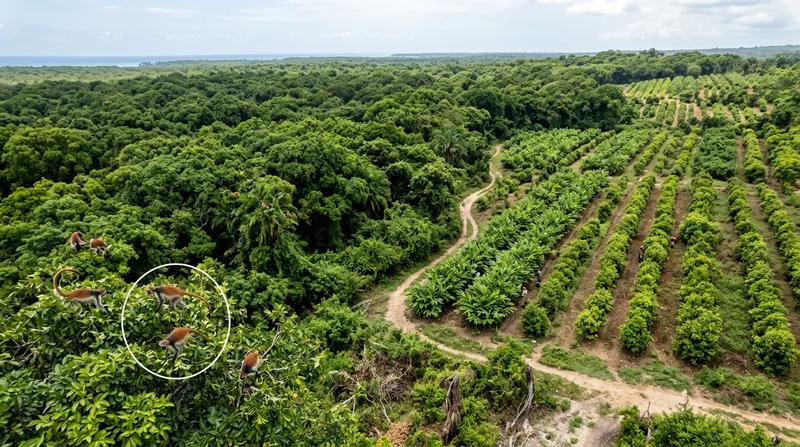
What makes it worth the drive isn't scale — it's not the Serengeti, and comparing it to the open savanna parks on mainland Tanzania sets the wrong expectation entirely. This is a dense, humid forest reserve, closer in spirit to a rainforest walk in Bali's Ubud monkey forest than to a game drive. The appeal is specific: you're walking through one of the last pockets of indigenous forest left on an island otherwise dominated by clove and coconut plantations, and it hosts a primate found nowhere else on Earth.
If you've already booked a spice tour or a Stone Town walking tour, Jozani slots naturally into the same day, since it sits roughly halfway between Stone Town and the southeast beach resorts around Paje and Jambiani. For travelers based in Nungwi or Kendwa up north, it's a longer haul — budget 90 minutes each way — so factor that into whether it's a standalone trip or part of a looping day tour.
Endemic Red Colobus Monkeys
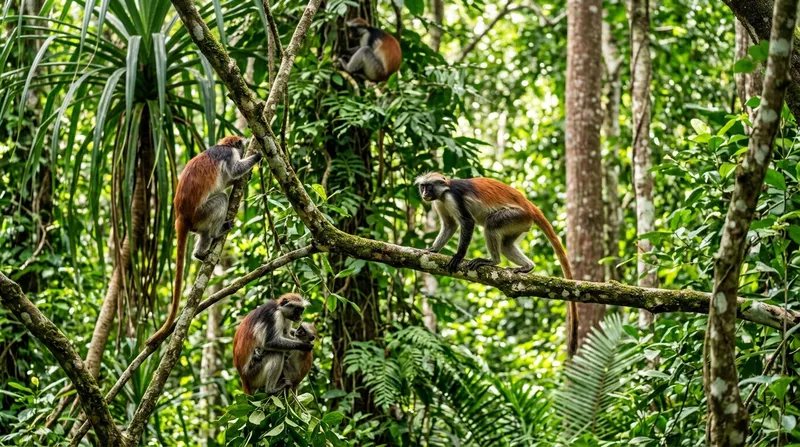
The main draw is the Zanzibar red colobus (Piliocolobus kirkii), found only on Zanzibar Island and nowhere else in the world. Conservation estimates put the total population at somewhere between 2,500 and 3,000 individuals, which is why the species is classified as endangered. Unlike the shy colobus you might glimpse in other African forests, Jozani's troops have become habituated to foot traffic over decades, so sightings are near-certain during daylight visits — guides report encounters on the vast majority of tours, weather permitting.
They're also unusually low-hanging, often feeding or resting just a few meters off the ground, which makes them far easier to photograph than most wild primates. A 70-200mm lens is more than enough; you don't need the long glass you'd pack for a mainland safari.
Mangrove Boardwalk Ecosystem
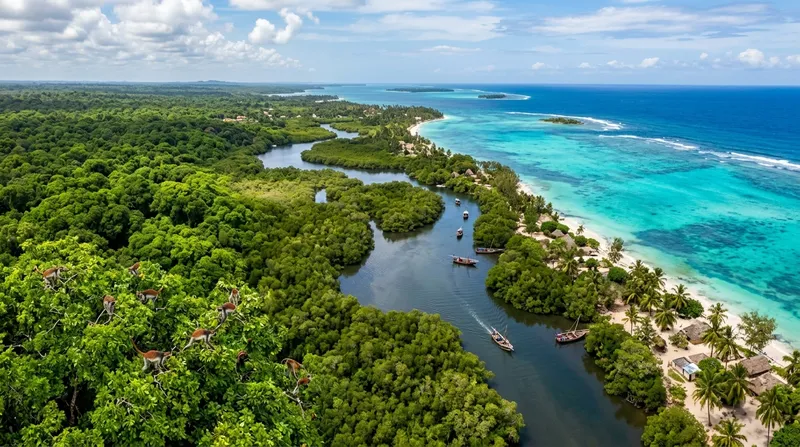
A separate section of the park — reached by a short drive or walk from the main forest entrance — holds a raised wooden boardwalk through a mangrove swamp. This loop takes about 30 to 45 minutes and is a different experience entirely: tidal, muddy, full of crab holes and the distinct sulfur smell of brackish water at low tide. It's quieter than the monkey trail and far less crowded, since most tour groups rush through it or skip it to save time. I'd argue it's the more underrated half of the visit — don't let your guide talk you out of it.
How to Visit: Independent vs Guided Tours
You cannot wander into Jozani Forest entirely unsupervised — a park-assigned guide is mandatory and included in your entry ticket, so the "independent vs guided" question isn't really about access, it's about how you get there and whether you add a private naturalist guide on top.
Driving yourself (via rental car or taxi) to the park gate, paying the entrance fee, and joining the included park guide is the budget option. You lose flexibility on timing in one sense — park guides lead fixed, short loops — but you gain the freedom to arrive whenever you like and skip the organized-tour crowds that show up mid-morning.
Self-Guided Forest Walks
"Self-guided" at Jozani really means independent transport plus the compulsory park ranger guide, since solo wandering off-trail isn't permitted — partly for your safety on uneven ground, partly to protect the habitat. If you hire a taxi from Stone Town (expect to negotiate, roughly $30-40 USD round trip with wait time) or drive a rental car, you control your arrival time completely. Arriving right at opening, around 7:30am, before the day-tour minibuses show up, is the single best independent-visit tip I can give you.
Guided Tour Benefits and Duration
A full guided tour booked through a local operator typically bundles transport from your hotel, the Jozani entry fee, and often a stop at a spice farm or Stone Town on the same day. These run roughly 4 to 7 hours depending on what's bundled in, and the forest portion itself — monkey trail plus mangrove boardwalk — usually takes 60 to 90 minutes. The advantage isn't the forest guiding, which you get regardless; it's not having to arrange transport logistics on unfamiliar roads, and having a driver who already knows to push for an early slot. Compare current Jozani Forest tour prices and combination packages before you book, since rates shift with fuel costs and season.
Entry Fees and Ticket Information
Jozani Chwaka Bay National Park charges a standard entrance fee that's paid in US dollars or Tanzanian shillings at the gate, and it covers both the colobus monkey trail and the mangrove boardwalk, along with your compulsory park guide. Prices for Jozani Forest Zanzibar tickets are set by the national park authority and have historically sat in the $8-10 USD range for adults, with reduced child pricing — but treat this as a reference point, not a locked figure, since park fees do get revised periodically.
A self-arranged visit is cheaper but a guided day tour saves you transport hassle and usually pairs Jozani with a spice farm or beach stop.
Jozani Forest tour options compared: cost, duration and what's included
| Option | Approx. Cost (USD) | Duration | What's Included |
|---|---|---|---|
| Gate entry only (own transport) | $8-10 adult, half for child | 1-1.5 hrs at park | Entry, compulsory park guide |
| Taxi + gate entry | $30-45 total round trip | Half day | Transport, entry, guide |
| Guided half-day tour | $35-55 per person | 4-5 hrs | Hotel pickup, entry, guide, drop-off |
| Jozani + spice farm combo | $45-70 per person | 6-7 hrs | Entry, spice tour, guide, lunch sometimes extra |
| Jozani + Stone Town combo | $50-80 per person | Full day | Entry, city guide, transport |
Figures as of 2025, approximate and subject to change; always verify current pricing when booking.
Adult and Child Pricing
Historically, adult non-resident entry has run around $8 USD, with children (typically under 12) charged roughly half that. Tanzanian residents and East African citizens pay a separate, lower local rate, so don't be surprised if you see different numbers quoted by other visitors — always check which rate applies to you. Payment is usually cash-only at the gate, so carry small USD bills; card machines are unreliable this far from Stone Town.
Where and How to Book
You don't need to pre-book entry tickets — they're sold at the park gate on arrival, and the forest rarely reaches capacity. What you should book ahead is your transport or guided tour, especially in peak season (July-September, and the December-January holiday stretch), when day-tour vehicles fill up and last-minute taxis get pricier. If you want the spice farm and Jozani combined in one booking, check current prices and availability for combination tours rather than trying to stitch together two separate taxi trips.
Best Time to Visit and Wildlife Spotting
Jozani is open daily, typically from around 7:30am to 5pm or 6pm, and timing your visit matters more here than at most Zanzibar attractions, because monkey activity and crowd levels both swing hard across the day.
Early Morning for Monkey Sightings
Arrive at opening if you can manage it. Red colobus troops are most active feeding in the first couple of hours after dawn, and the forest is noticeably cooler and quieter before 9am — both for you and for the monkeys, who tend to move deeper into the canopy once groups start arriving in volume. By late morning, when several tour minibuses converge at once, you'll often be walking in a queue of 15-20 people single-file along the narrow trail, which flattens the experience considerably. If early morning isn't possible, late afternoon (after 3pm) is the second-best window, as the midday heat tour groups thin out.
Seasonal Considerations
Zanzibar's long rains fall roughly March through May, and Jozani — being a humid groundwater forest — gets genuinely muddy during this period; the mangrove boardwalk stays passable since it's raised, but the monkey trail can turn slick. The dry season, June through October, and the shorter dry spell in January-February, are more comfortable for walking and photography, with better light filtering through the canopy. That said, the forest stays green and the monkeys stay put year-round — this isn't a destination where seasonality determines whether you'll see wildlife, unlike a mainland safari tied to migration patterns.
Nearby Add-Ons and Combination Tours
Jozani's location — inland, roughly midway down Zanzibar Island — makes it a natural link between the cultural stops near Stone Town and the beach zone down south, so most operators build it into a loop rather than selling it alone.
Spice Plantation Tours
Several spice farms operate within a 15-20 minute drive of Jozani, and pairing the two is the most common combination sold on the island. A typical spice tour runs 2-3 hours, walking you through cloves, vanilla, cardamom, and lemongrass under cultivation, usually ending with a small fruit tasting. It's touristy — guides sometimes lean into a scripted patter — but it's genuinely informative if you've never seen a nutmeg tree or seen how vanilla is hand-pollinated. I'd rank it as a solid half-day pairing with Jozani rather than a must-do on its own.
Beach and Cultural Experiences
Jozani sits close enough to the southeast coast that combining it with an afternoon at Paje or Jambiani beach works well logistically — about 30-40 minutes' drive separates them. For a cultural angle instead, pair it with a half-day in Stone Town (a UNESCO World Heritage site) covering the old fort, the former slave market site, and the winding alleyways — roughly 45 minutes from Jozani by road. If you're also considering a day trip to Mnemba Atoll for snorkeling or a multi-day add-on to Pemba Island, note those are separate bookings entirely and won't combine with a Jozani day trip given the boat transfer times involved.
Frequently asked questions
How much does it cost to enter Jozani Forest?
Adult non-resident entry has historically run around $8-10 USD, with children paying roughly half. Fees are paid in cash (USD or Tanzanian shillings) at the park gate and include your compulsory ranger guide. Always confirm the current rate on arrival, since national park fees are revised periodically.
What is the best time to visit Jozani Forest?
Arrive right at opening, around 7:30am, for the best red colobus monkey activity and the smallest crowds. By mid-morning, multiple tour groups converge and the narrow trails get congested. Dry season (June-October, January-February) offers easier walking conditions than the rainy months of March-May.
Do I need a guide at Jozani Forest?
Yes — a park-assigned ranger guide is compulsory and included in your entrance ticket; you can't walk the trails unsupervised. You can additionally hire a private tour operator for transport and a broader day itinerary, but the in-park guiding itself comes with your ticket regardless.
How long does a Jozani Forest tour take?
The forest visit itself — the colobus monkey trail plus the mangrove boardwalk — takes about 60 to 90 minutes. A full guided day tour that bundles hotel transport and a spice farm or Stone Town stop typically runs 4 to 7 hours total.
What should I wear to visit Jozani Forest?
Closed walking shoes are essential — trails get muddy, especially after rain, and the mangrove boardwalk has gaps and uneven planks. Wear light, breathable clothing in muted colors, bring insect repellent, and avoid strong perfume, which can affect how the monkeys respond to your presence.