Visit Zanzibar's turtle sanctuary for swimming, feeding, and conservation experiences. Learn about tickets, tours, ethical guidelines, and nearby attractions.
What Is the Zanzibar Turtle Sanctuary
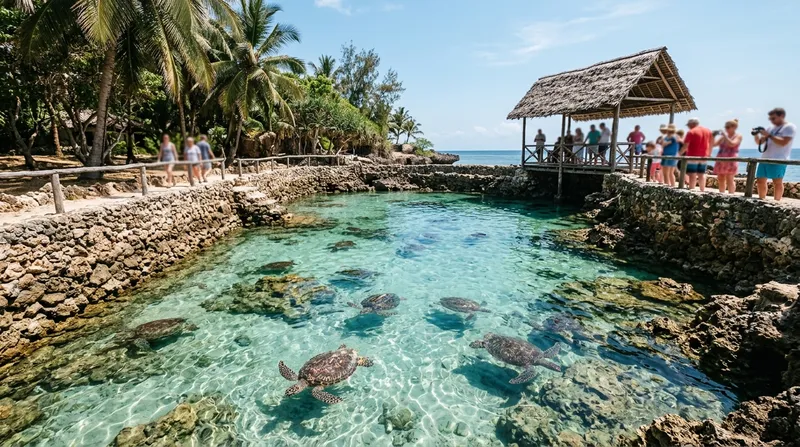
"Zanzibar turtle sanctuary" usually refers to one specific place: the natural seawater pond at Mnarani, on the edge of Nungwi village at the island's northern tip. It's sometimes marketed as the Nungwi Turtle Sanctuary or Mnarani Marine Turtles Conservation Pond, and it's the most visited turtle site on the island. There's also Baraka Natural Aquarium nearby, a smaller, privately run pool often sold under similar names to tourists booking through hotels, which causes real confusion when people compare notes afterward.
Don't assume all these names describe the same high standard of care. Mnarani has operated for over two decades as a tidal pond that fills naturally with seawater, which matters because it means the turtles live in real ocean water rather than a chlorinated tank. Baraka-branded setups vary more in quality, and a few beach-side "aquariums" along the Nungwi strip exist mainly to extract a quick entry fee from day-trippers, with far less attention to animal welfare.
Sanctuary facilities and turtle species
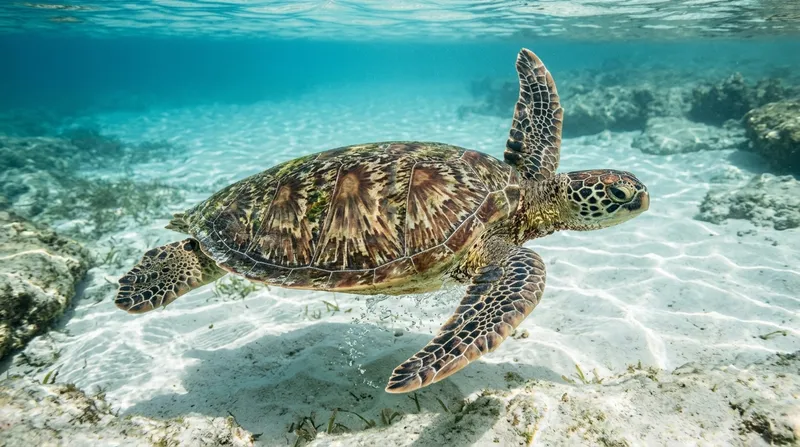
The Mnarani pond holds mostly green turtles (Chelonia mydas) and hawksbills (Eretmochelys imbricata), ranging from juveniles the size of a dinner plate to adults well over 50cm across the shell. The facility is modest — a natural rock-and-coral basin connected to the sea, with a shaded viewing deck and a small staff hut rather than anything resembling a modern aquarium. That's part of the appeal: no glass tanks, no artificial lighting, just a tidal enclosure where turtles that can't be released swim alongside temporary rescues awaiting recovery. Expect to spend 20-30 minutes here, not a half-day outing.
Conservation and rescue mission
The pond's stated purpose is rehabilitating turtles injured by boat strikes, fishing nets, or illegal capture, with the goal of returning healthy individuals to the ocean. Some turtles are permanent residents because old injuries make survival in open water unlikely. Local conservation groups, including The Living Ocean, have been involved in turtle protection work around Zanzibar's coastline, covering nesting beach monitoring as well as rescue response — a broader effort than any single pond can represent. If conservation is your main interest, ask staff on-site what percentage of turtles get released versus kept long-term; a transparent answer is a good sign.
How to Visit: Independent vs. Guided Tours
You don't need a tour operator to see the turtles. Mnarani sits right at the entrance to Nungwi village, walkable from most hotels in the area and well signposted from the main road. If you're already staying in Nungwi or Kendwa, independent visits make the most financial sense — you pay the gate fee directly and skip any markup.
Guided tours earn their fee mainly through transport and pairing. Most "Zanzibar turtle tour" packages sold through hotels or platforms like GetYourGuide and Viator bundle the sanctuary with a Nungwi village walk, a dhow-building workshop, or a sunset boat trip. If you're staying further south — Stone Town, Paje, or Jambiani — a return taxi alone can run close to what a half-day tour costs, so bundling starts to make sense purely on logistics.
Mnarani's pond is the main legitimate turtle sanctuary near Nungwi, while nearby Prison Island and Jozani offer different wildlife encounters worth combining into the same trip.
Zanzibar turtle sanctuary options compared: access, cost and best for
| Site | Location | Typical Visit Length | Entry Cost Level | Best For |
|---|---|---|---|---|
| Mnarani Turtle Pond (Nungwi) | Nungwi village | 20-30 min | Low | Swimming/feeding turtles, families |
| Baraka Natural Aquarium | Nungwi area | 15-20 min | Low | Quick stop, variable quality |
| Jozani Sea Turtle Sanctuary references* | Near Jozani Forest | 30-45 min | Low-Moderate | Combining with colobus monkey visit |
| Prison Island | Near Stone Town | 2-3 hrs incl. boat | Moderate | Giant tortoises, history, snorkeling |
| Mnemba Atoll snorkel trip | Boat from Nungwi | Half day | Moderate-High | Wild reef life, photography |
*Figures approximate as of 2024-2025; entry fees and boat trip durations vary by season and operator. Jozani is primarily known for red colobus monkeys; turtle-specific facilities there are limited and should be confirmed locally.
Self-guided visits and access
If you're driving or using a local taxi, tell the driver "Mnarani" rather than just "turtle sanctuary" — the generic term gets you dropped at whichever aquarium pays the driver a commission, and it's not always the legitimate one. Entry is walk-up, no advance booking required, and opening hours generally run from early morning until early evening daily. Bring cash in Tanzanian shillings; card payment isn't reliable at small operations like this.
Organized tours and hotel transfers
Hotel-arranged transfers typically include round-trip transport, a guide who explains the conservation work, and sometimes a stop at a nearby lighthouse or Nungwi beach. Operators listed on Kiyzo and similar booking platforms often combine the turtle pond with snorkeling trips toward Mnemba Atoll, which is a smart pairing — you get marine life in a controlled setting and in open water on the same day. Compare current tour prices and inclusions before booking, since transport costs and group sizes vary by season and operator.
Tickets, Pricing & Booking
Entry fees at Mnarani and similar ponds are modest by regional standards — cheaper than swim-with-turtle experiences in Mauritius or the organized marine excursions common in the Maldives, where almost everything is bundled into a resort package at resort prices. Expect a simple tiered structure: one rate for adults, a reduced rate for children, and sometimes a small additional charge if you want to feed the turtles seaweed provided by staff.
Entry fees and tour packages
Gate prices for foreign visitors at Mnarani have historically sat in the range of a few US dollars per adult, with children paying roughly half, though you should treat these as approximate — prices creep upward year on year and currency conversion shifts them further. Guided half-day tours that include the sanctuary alongside other Nungwi activities cost considerably more, reflecting transport and guide time rather than the attraction itself. Always confirm the current entry fee and what it covers before paying, since some staff quote a "photo fee" separately from general entry.
Booking platforms and operators
For independent visits, there's nothing to book — you just show up. For bundled tours, platforms like GetYourGuide and Viator list Nungwi-area operators with turtle sanctuary stops, and prices are usually shown per person with hotel pickup included. Read the inclusions carefully: some listings call the stop a "turtle sanctuary tour" when it's really a 15-minute add-on to a longer village walk. Compare current prices and reviews on these platforms before you commit, since standards among operators vary more than the marketing suggests.
Best Time to Visit & What to Expect
Early morning, shortly after opening, is the quietest window — fewer tour buses have arrived and the light is better for photos if you're bringing a camera. Midday brings the biggest crowds, especially when multiple hotel shuttles land at once, and the pond isn't large enough to absorb more than a couple of tour groups comfortably.
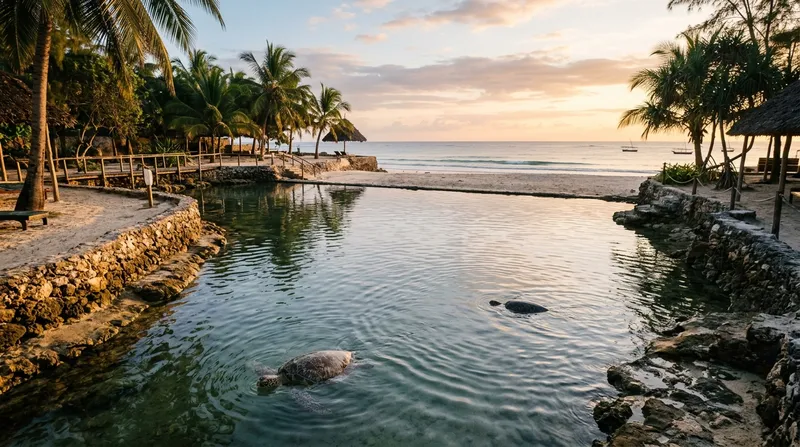
Seasonal turtle populations and behavior
Turtle numbers in the pond stay fairly constant year-round since it's a managed rescue population rather than a wild nesting site, but green turtle nesting season along parts of the Tanzanian coast and nearby Pemba Island typically runs roughly March through September, with hawksbills nesting at slightly different intervals. If you want to see wild nesting or hatchlings rather than pond residents, that's a different trip entirely — ask locally about ranger-monitored beaches, since nesting sites are protected and not open for casual viewing.
Visitor experience and interactions
Most visits follow the same pattern: a short talk from staff, an opportunity to wade into the shallow pond, and seaweed handed out for feeding. The water is usually waist-deep or shallower, so it's manageable for older children and non-swimmers, though toddlers should be watched closely near the rock edges. Don't expect a long swim-with-turtles experience like you might picture from Maldives resort marketing — this is a brief, supervised interaction, not an extended snorkel session.
Ethical Considerations & Animal Welfare
This is the section worth reading before you book anything. Turtle tourism in Zanzibar has a mixed reputation, and it's fair to be skeptical walking in. The core tension: ponds that keep turtles for years under the banner of "rehabilitation" without ever releasing healthy animals aren't really conservation facilities, they're informal aquariums using the language of conservation to justify entry fees.
Responsible interaction guidelines
Don't pick turtles up, don't ride them (yes, some visitors still try), and don't force feeding if a turtle swims away from you — let them approach. Avoid flash photography close to their eyes and limit your time in the water if the pond is crowded, since stressed turtles in confined space have nowhere to retreat. If a guide encourages aggressive handling for a better photo, that's a red flag about the operator's standards generally, not just that one interaction.
Conservation impact and standards
Ask direct questions: how many turtles have been released this year, what injuries are the current residents recovering from, and who funds the operation. Legitimate facilities answer without hesitation. Compare this mentally to Seychelles, where several resort-linked turtle programs publish release data and work with marine biologists — Zanzibar's pond-based model is more informal, closer to a community-run rescue than an institutional program, and that's not necessarily bad, but it means due diligence falls on you as the visitor.
Nearby Attractions & Combination Itineraries
Nungwi's turtle pond works best as one stop in a fuller day, not a standalone trip — it's simply too brief to justify a dedicated journey from the south of the island.
Complementary Nungwi activities
Pair the sanctuary with a Nungwi beach afternoon, a dhow-building tour (Nungwi has built wooden dhows for generations and several workshops allow visitors to watch), or a sunset boat cruise departing from the same beach. Snorkeling trips to Mnemba Atoll, roughly a 45-60 minute boat ride from Nungwi, pair naturally with a morning turtle pond visit — wild reef life in the afternoon after the controlled pond encounter in the morning gives useful contrast, especially for photographers.
Multi-day itinerary suggestions
If you have 3-4 days based in the north, combine the turtle pond with Mnemba snorkeling, a Stone Town day trip (about 90 minutes south by road), and Prison Island near Stone Town, which has its own giant tortoise sanctuary — a useful comparison point for how differently two conservation-tourism sites on the same island can be run. Travelers extending beyond Zanzibar sometimes add Jozani Forest for red colobus monkeys, or island-hop to Pemba Island or Mafia Island for quieter, less touristed diving and marine park access.
Frequently asked questions
How much does it cost to visit the Zanzibar turtle sanctuary?
Entry at Mnarani near Nungwi is inexpensive by regional standards, typically a few US dollars for adults with a reduced children's rate — cheaper than most swim-with-marine-life experiences you'd find in Mauritius or the Maldives. Prices rise gradually each year and some sites add a separate charge for feeding seaweed to the turtles. Confirm the exact current fee at the gate rather than relying on older online listings.
Can I swim and feed turtles at the sanctuary?
Yes — the Mnarani pond allows visitors to wade in (usually waist-deep or shallower) and hand-feed turtles seaweed provided by staff. It's a brief, supervised interaction rather than an extended swim, and turtles that avoid you should be left alone rather than chased for a better photo.
What is included in a guided turtle sanctuary tour?
Most guided packages bundle hotel pickup, transport, entry to the pond, and often a stop at Nungwi village or a dhow-building site. Some combine it with a half-day snorkeling trip toward Mnemba Atoll. Check listings on GetYourGuide or Viator carefully, since a few "turtle tours" allocate only 15 minutes to the sanctuary itself.
Is visiting the turtle sanctuary ethical and safe?
Mnarani is a genuine rescue and rehabilitation pond, which makes it more defensible than some roadside "aquariums" nearby that keep turtles indefinitely for tourist income. Ask staff about release rates and injury histories before paying, avoid any operator that allows handling or riding turtles, and treat vague answers about conservation purpose as a warning sign.
What is the best time to visit for turtle interactions?
Visit shortly after opening in the morning to avoid tour-bus crowds; the resident turtle population stays fairly stable year-round since it's a managed rescue pond rather than a wild nesting site. For wild nesting activity, roughly March through September is the broader regional window along the Tanzanian coast, though that's a separate, ranger-monitored experience, not something you'll see at the pond.