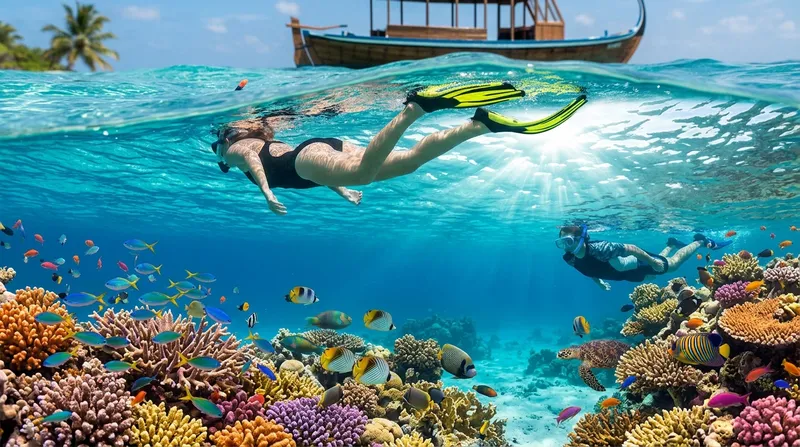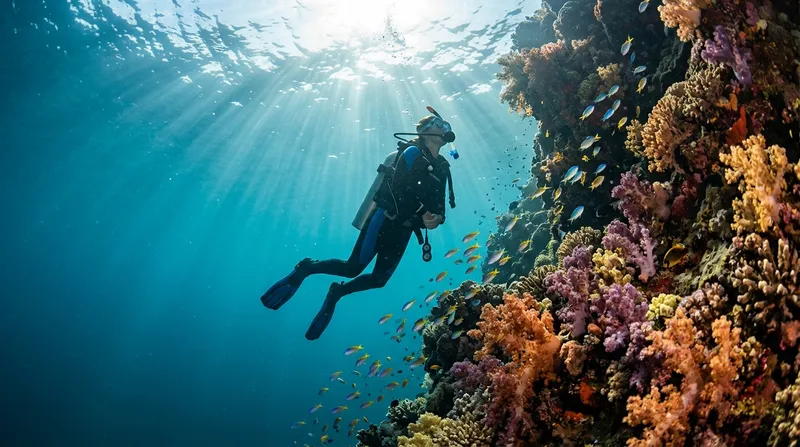
Compare Zanzibar scuba diving tours by certification level, dive sites, and operators. Find pricing ranges, gear quality, safety tips, and booking advice.
Who Each Dive Tour Suits
Zanzibar scuba diving tours split roughly into three categories: introductory dives for the uncertified, PADI certification courses for those committing a few days, and fun dives or multi-tank packages for certified divers who just want to get in the water. Which one you book should come down to your experience level and how many days you've got on the island, not what looks best on an Instagram feed.
If you're spending a week in Zanzibar and have never dived, a PADI Open Water course (typically 3-4 days) is the better investment over a one-off introductory "discover scuba" dive. The discovery dive is fun but shallow and heavily supervised — you won't see much beyond 12 metres. A full certification opens up sites like Mnemba Atoll and Leven Bank, which is where the marine life actually gets interesting.
Certified divers short on time should skip certification add-ons entirely and book multi-dive packages, often sold as 5 or 10-dive bundles with a modest per-dive discount. These packages suit returning visitors and liveaboard-style travelers who've dived Mombasa or the Maldives before and want to compare Zanzibar's reef health and visibility against what they already know.
Beginners and certification seekers
Expect a PADI Open Water course to run 3-4 days, combining classroom or e-learning theory, confined water skills in a pool or shallow lagoon, and four open-water dives. Most operators in Nungwi and around Stone Town offer the e-learning option so you can complete theory before you even land, cutting a full day off the in-water schedule. A Scuba Diver certification (a shorter, limited version of Open Water) is worth considering if you've only got two days — it certifies you to 12 metres with a professional present, which is enough for most of Zanzibar's shallow reef sites anyway.
Experienced divers and advanced explorers
If you're Advanced Open Water certified or higher, look specifically for operators running trips to Mnemba Atoll and Leven Bank rather than the closer, easier sites near Stone Town or Prison Island. These require a 45-60 minute boat ride from Nungwi and often involve current, so operators should ask for your logbook or dive number before booking you on. Don't let anyone put you on a drift dive at Leven Bank without checking your experience first — currents there can run strong and it's open water with no reef wall to hide behind if you get separated from your group.
Top Zanzibar Dive Sites by Level
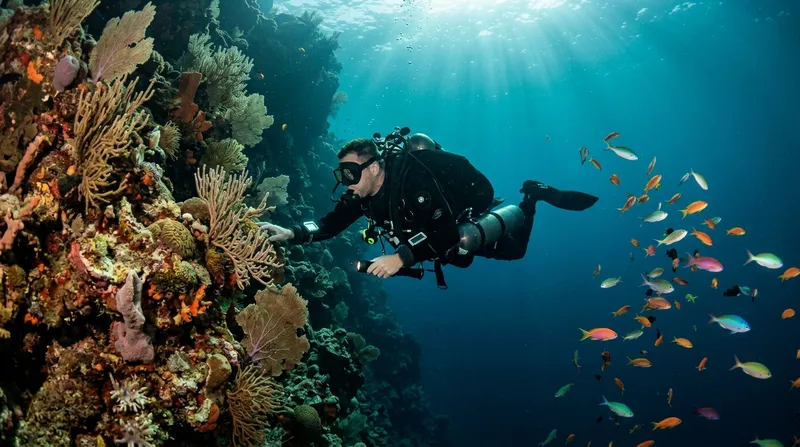
Zanzibar's dive sites cluster around two zones: the calmer waters near Stone Town and Prison Island in the west, and the more exposed, current-driven sites off Nungwi and Mnemba Atoll in the north. Visibility swings from a disappointing 8-10 metres in the rainy season to a reliable 20-30 metres from July through October, so site choice and season should be decided together, not separately.
Mnemba Atoll and Leven Bank reward certified divers with better visibility and bigger marine life, while Prison Island and Stone Town reefs suit beginners and training dives.
Zanzibar dive sites compared by certification level, depth, and marine life
| Site | Level | Depth range | Typical visibility | Marine life highlights |
|---|---|---|---|---|
| Prison Island | Beginner | 6-14 m | 10-15 m | Parrotfish, moray eels, small rays |
| Stone Town reefs | Beginner | 5-12 m | 8-15 m | Reef fish, nudibranchs |
| Mnemba Atoll | Intermediate-Advanced | 5-20 m | 15-30 m | Turtles, reef sharks, dense coral |
| Leven Bank | Advanced | 15-30 m | 15-25 m | Pelagics, drift current, occasional dolphins |
| Nungwi reefs | Beginner-Intermediate | 8-18 m | 10-20 m | Mixed reef fish, octopus |
Figures as of 2025; visibility and conditions vary seasonally and should be confirmed with your operator before booking.
Beginner-friendly sites
Prison Island and the nearby reefs off Stone Town sit in shallow, sheltered water — generally 6-14 metres — making them forgiving for first open-water dives or discovery dives. Expect to see parrotfish, moray eels, and the occasional small ray, but don't go expecting big pelagics here; this is a training ground, not a showcase. The upside is calm conditions almost year-round, which matters if you get queasy on boats.
Intermediate and advanced sites
Mnemba Atoll is the headline site and deserves the reputation — turtles, reef sharks on a good day, and dense coral cover in 5-20 metres of water, with visibility often exceeding 20 metres outside the rains. Leven Bank, further offshore, is a drift dive for confident intermediate-to-advanced divers, with depths to 30 metres and a real chance of larger fish and occasional dolphins. Note that Mnemba's popularity means boats can get crowded in August and over the Christmas peak — ask your operator how many boats they send and how many divers go in per group.
Dive Operators Compared
Zanzibar has a wide spread of dive operators, mostly concentrated in Nungwi and Stone Town, including established names like One Ocean Dive Centers, Dive Point Zanzibar, and Blue Water Dive Travel. I'm not going to rank them against each other on specifics I can't verify in real time — ratings and staffing change — but the categories of difference are consistent enough to guide your choice. Look at fleet size, group ratios, and how transparent they are about safety equipment before you look at price.
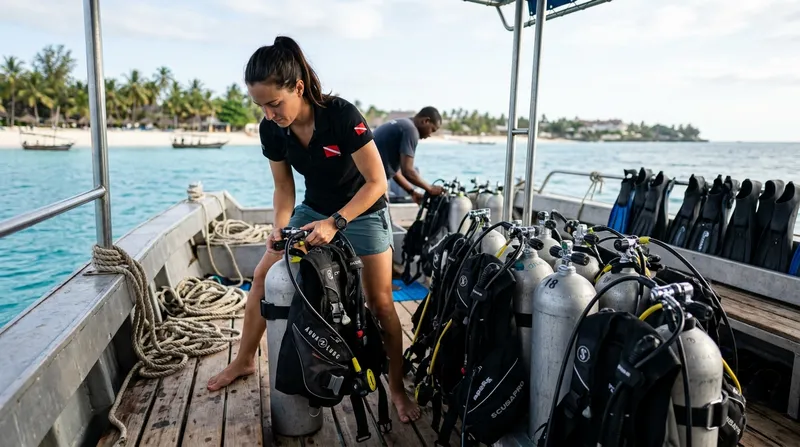
A cheaper package is tempting, but the gap in cost between operators often reflects boat quality, oxygen on board, and how many divers get crammed onto one dive master. Don't choose purely on the lowest quote — ask directly how many divers per guide they run on Mnemba Atoll trips, and whether they carry oxygen and a first-aid kit certified to DAN (Divers Alert Network) standard.
Safety records and certifications
Confirm the operator is a PADI 5-Star center or equivalent, and ask whether their instructors hold current rescue and first-aid certification, not just dive master status. A legitimate operator will have no problem telling you their diver-to-guide ratio (ideally 4:1 or better for open water, tighter for drift sites like Leven Bank) and whether they carry emergency oxygen on every boat. If an operator hesitates or gives vague answers about recompression chamber access — Zanzibar's nearest chamber is on the mainland — treat that as a red flag.
Gear quality and equipment standards
Rental gear in Zanzibar varies enormously — some operators maintain newer BCDs and regulators serviced annually, others run equipment that's clearly seen a decade of saltwater. Ask when gear was last serviced, and if you're fussy about fit, consider bringing your own mask and fins at minimum; they pack small and solve the two complaints I'd flag most often with rental kit — leaking masks and ill-fitting fins. Wetsuits are usually 3mm, which is adequate given water temperatures sit around 26-29°C most of the year.
What to Look for When Booking
Beyond safety and gear, the practical details separate a good day on the water from a frustrating one. Cancellation policy matters more here than at most dive destinations, because afternoon winds and current shifts are common enough that trips do get rescheduled, especially from June to September when the kusi wind picks up.
Group size and personalization
Ask how many divers will be on your boat total, not just per guide — a boat with 16 divers split into four groups of four feels very different from a boat with 8 divers in two groups. Smaller operators based in Nungwi tend to run tighter groups than the larger outfits that also handle snorkeling day-trippers to Mnemba, so if you want a more personal pace, say so when booking and ask directly about typical group size that week.
Inclusions and equipment provided
Most fun-dive packages include tank, weights, and boat transfer as standard; BCD, regulator, wetsuit, mask and fins are usually included too but worth confirming, since some operators charge extra for a full rental set if yours isn't included in the base price. PADI course prices typically include all course materials, certification fees, and equipment rental for the course days — but ask whether the certification card fee (a small one-off PADI processing charge) is bundled in or billed separately, since that trips up a surprising number of first-time divers.
When to Book Your Dive Tour
The best diving conditions in Zanzibar run roughly from July to October and again from late December through February, when visibility is at its best and the water's calm enough for comfortable boat rides to Mnemba Atoll and Leven Bank. The long rains, from March to May, bring reduced visibility and rougher seas — some operators pause Mnemba trips altogether during the heaviest weeks, so if you're set on that site, avoid booking a trip during this window without checking conditions first.
Book your PADI course or multi-dive package at least a few days ahead during peak season (July-August, and the Christmas-New Year stretch), since boats fill up and the better operators cap numbers deliberately. Outside peak months you can often book a day or two ahead with no trouble. Whichever window you choose, compare current prices and recent reviews before booking — conditions, staffing, and rates shift season to season, and a quote from six months ago won't reflect what you'll pay now.
Frequently asked questions
How much does scuba diving cost in Zanzibar?
A single fun dive for certified divers typically runs in the range of $40-70 USD depending on the site and operator, with multi-dive packages (5-10 dives) bringing the per-dive cost down somewhat. Prices to Mnemba Atoll or Leven Bank usually sit at the higher end because of the longer boat ride and fuel cost. Always check current pricing directly with the operator, since fuel surcharges and park fees can shift the total.
What are the best dive sites for beginners in Zanzibar?
Prison Island and the reefs just off Stone Town are the standard choice for beginners and discovery dives, with shallow depths of 6-14 metres and calm, sheltered conditions most of the year. Nungwi's closer reefs are a reasonable second option if you're based in the north and want to avoid a long boat transfer.
What PADI courses are available and what do they cost?
Zanzibar operators commonly offer PADI Discover Scuba (a one-day introductory experience), Scuba Diver (a shorter, limited certification), Open Water (full certification, 3-4 days), and Advanced Open Water for those already certified. Open Water courses are generally priced in the $350-500 USD range including materials and certification fees, though this varies by operator and season — confirm current pricing before booking.
Which dive operators have the best safety records?
Rather than naming specific companies, look for PADI 5-Star status, visible safety briefings, low diver-to-guide ratios (4:1 or tighter), emergency oxygen on board, and staff who can clearly explain their emergency evacuation plan. Read recent reviews focused specifically on safety practices, not just customer service, before you book.
What is the best time to dive in Zanzibar?
July to October and late December through February offer the clearest water, generally 20-30 metres visibility, and calmer seas for reaching Mnemba Atoll and Leven Bank. Avoid the long rains from March to May if visibility and site access matter to you — some operators scale back or pause trips to the outer sites during that stretch.