Compare Zanzibar kitesurfing lesson packages by price, duration, and skill level. Learn where to book at Paje and Jambiani beaches, and when to go.
What Is Kitesurfing & Why Learn in Zanzibar
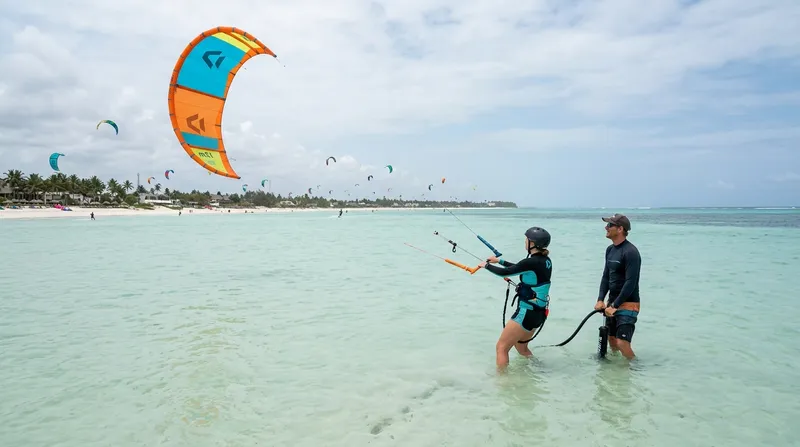
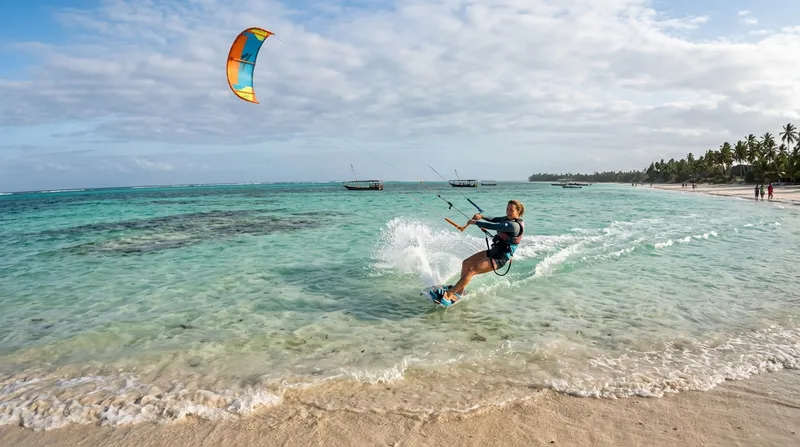
Kitesurfing combines a board strapped to your feet with a large inflatable kite controlled by a bar and harness, letting wind pull you across the water at speed. It's a steeper learning curve than windsurfing or stand-up paddleboarding — most schools budget 9 to 12 hours of instruction before a student can ride independently — but the payoff is a sport you can keep progressing in for years, from flat-water cruising to jumps and wave riding.
Zanzibar has become one of the more talked-about places to learn it, and for reasons that hold up against the hype. The east coast, particularly the stretch running from Paje through Jambiani to Muyuni Beach, gets a wide, shallow lagoon at low tide that's often waist-deep for hundreds of meters offshore. That matters enormously for beginners: a crash on your fourth lesson in chest-deep warm water is a non-event; the same mistake in deep, cold water somewhere like Cape Town's Table Bay is a different experience entirely.
Why Zanzibar Is Ideal for Beginners
The shallow reef-protected lagoon at Paje and Jambiani means instructors can wade alongside students for most of a lesson, correcting kite position and board angle in real time rather than shouting instructions from a boat. Water temperature sits around 26-29°C year-round, so there's no wetsuit needed, which removes one more barrier for first-timers. Compare that to learning in Tarifa or Cape Town, where wind is excellent but water is cold and conditions are more exposed — Zanzibar's lagoon is genuinely more forgiving on technique mistakes, which is why many schools here report higher first-week success rates for getting students up and riding.
What to Expect From Lessons
A typical beginner course splits into stages: kite theory and safety systems on the beach, then flying a trainer kite on land, then water relaunch and body-dragging (being pulled through water without a board, to learn kite control), and only then board starts. Expect lessons in blocks of 2-3 hours rather than full days — wind and sun exposure make longer sessions counterproductive. Most IKO-affiliated schools issue a logbook tracking what's been covered, which matters if you switch schools or countries later and want proof of your level rather than starting over from scratch.
Lesson Packages & Pricing by Level
Pricing across Paje and Jambiani schools tends to follow a fairly consistent structure, even if exact numbers shift year to year with fuel costs and demand. As a rough 2024/2025 benchmark, expect somewhere around $60-75 per hour for private one-on-one instruction, dropping to roughly $40-55 per hour per person in a semi-private or small group of two to three students. Equipment rental (kite, board, harness) is usually included in lesson pricing but costs extra — often $35-50 per day — if you want to practice solo afterward.
Don't assume the cheapest advertised package is the best value. A few schools quote low hourly rates but pad course length to 15+ hours for a "beginner" certificate, while better-run operations get competent students independent in 9-10 hours through tighter, more structured teaching. Ask directly how many hours past students typically need — a good school will give you a straight answer rather than a vague "it depends."
A 9-hour beginner package at a reputable Paje or Jambiani school typically costs $350-450 and is the minimum IKO-recommended duration to ride independently.
Zanzibar kitesurfing lesson options compared by price, duration, and skill level
| Lesson Type | Typical Duration | Price Range (USD) | Best For |
|---|---|---|---|
| Taster lesson | 3 hours | $120-180 | First-timers testing interest |
| Beginner course (IKO Level 1) | 9-12 hours | $350-450 | Complete beginners, independent riding goal |
| Semi-private group | Per hour, 2-3 people | $40-55/hour/person | Budget-conscious pairs or friends |
| Private intermediate coaching | 1-2 hours | $50-70/hour | Riders refining specific skills |
| Progression camp | 5-7 days | $400-600 | Intermediate riders wanting structured gains |
| Equipment rental only | Per day | $35-50 | Independent riders, no instruction needed |
Figures approximate as of 2024/2025; always confirm current prices directly with schools before booking, as rates shift seasonally.
Beginner Packages and Duration
Most schools sell beginner packages in blocks: a 3-hour taster, a 9-hour "learn to kitesurf" course (the IKO-recommended minimum for independent riding), and occasionally a 12-hour extended version for slower progressors or those wanting the full IKO Level 1 certificate. Expect to pay in the region of $350-450 total for a 9-hour package at most reputable Paje or Jambiani schools, whether grouped as three 3-hour days or spread across a week. Spreading lessons over 4-5 days rather than cramming them into two beats fatigue and lets muscle memory settle between sessions — worth requesting even if the school defaults to a tighter schedule.
Intermediate and Advanced Options
Once you can self-launch, ride upwind, and turn confidently, schools offer shorter top-up sessions — typically 1-2 hour private coaching blocks priced at $50-70/hour — focused on specific skills like toeside riding, light-wind kite sizing, or first jumps. Some operators, including specialist freeride and freestyle coaches at Paje, run multi-day "progression camps" bundling video analysis with on-water coaching, generally $400-600 for a week. If you're already competent, it's often cheaper and more useful to rent gear by the day ($35-50) and just buddy up with local riders than to book formal lessons at all.
Best Season & Wind Conditions
Wind, not sunshine, should drive your Zanzibar kitesurfing trip dates. The island sits in a trade wind belt with two distinct kite seasons, and missing them is the single most common mistake beginners make when booking.
Peak Season Months and Wind Patterns
The Kaskazi season (roughly December to February/March) brings lighter, warmer winds from the northeast — good for beginners, often 12-18 knots. The stronger Kusi season (June through September) brings the southeast trade winds, frequently 15-25 knots, favored by intermediate and advanced riders wanting more power for jumps. Many schools and repeat visitors rate June-September as the single most reliable stretch for consistent, bookable wind days — you'll lose fewer lesson days to flat conditions than in shoulder months. If your schedule is flexible, build in a few spare days regardless of season; even peak months have the occasional two-day lull.
Off-Season Considerations
April and May bring Zanzibar's long rains, and wind becomes unreliable alongside frequent downpours — most schools scale back instructor availability and some close short-term maintenance windows during this period. Late October and November are a quieter shoulder season: wind is inconsistent but water and beaches are pleasant, and it's worth it mainly if kitesurfing is a secondary activity on a broader Zanzibar trip rather than the main purpose. If a dedicated kite trip is the goal, don't book March-May and hope for the best — shift dates instead.
How to Book: Independent vs Guided Kitesurfing in Zanzibar
There are two practical routes to booking Zanzibar kitesurfing lessons: contacting a school directly once you've researched options, or booking through a package that bundles lessons with accommodation. Neither is objectively better — it depends on how much you value flexibility versus convenience.
Self-Booking at Schools
Schools along Paje and Jambiani beaches — names you'll encounter include Kite Centre Zanzibar, Zanzibar Kitesurfing, Bkite Zanzibar, Aquaholics, Sea Breeze Kite School, and Ebb and Flow — generally take bookings via email or WhatsApp a few days to a couple of weeks ahead in peak season, though walk-in lessons are often possible with a day's notice in quieter months. Booking direct lets you negotiate group size, pick your preferred instructor language (English, Italian, French, and German are common among Paje instructors), and inspect gear condition before committing. The trade-off: you're doing your own due diligence. Check specifically whether the school is IKO-affiliated — this isn't a bureaucratic nicety, it means instructors follow a standardized safety curriculum and the school carries appropriate insurance, which matters in a sport involving powerful kites near a public beach.
Package Deals With Accommodation
Several kite schools partner with nearby guesthouses and kite camps to sell combined accommodation-plus-lesson packages, often priced as a weekly rate covering a room, breakfast, and a set number of lesson hours. These suit travelers who want one booking to handle logistics, particularly solo travelers or couples visiting for a dedicated kite holiday rather than a wider Zanzibar itinerary. The downside: you're locked into one school's schedule and pricing, with less room to switch instructors if the fit isn't right, and bundled rates aren't always cheaper than booking separately — run the numbers both ways before deciding. If you're also planning Stone Town, Jozani Forest, or a Mnemba Atoll snorkeling trip, independent lesson booking usually gives more scheduling freedom to fit those in around wind conditions.
Nearby Beaches & Add-On Activities
Paje gets the most attention, but it's not the only kitesurfing beach on Zanzibar's east coast, and knowing the alternatives helps if you want fewer kites in the sky or a different vibe.
Alternative Beaches for Practice
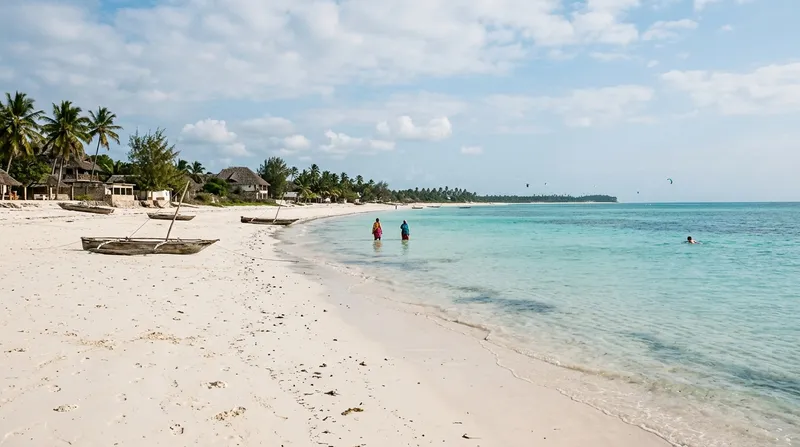
Jambiani, about 10km south of Paje, has a similarly shallow lagoon but noticeably fewer schools and quieter water — good if you find Paje's kite traffic intimidating as a beginner. Muyuni Beach, between the two, is used by some schools for lessons specifically because it's less crowded at peak hours. Further north, Nungwi and Kendwa have swimmable beaches but lack the same lagoon protection and consistent cross-shore wind angle, so they're rarely used for serious kite instruction — fine for a swim, not where you'd want to learn.
Complementary Water Sports and Tours
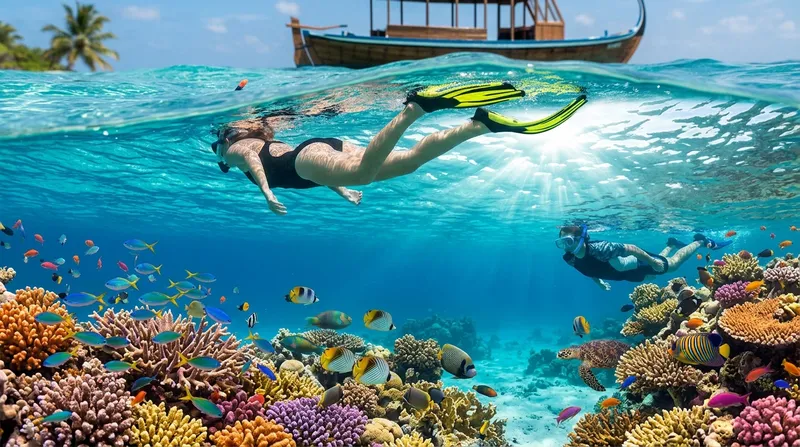
Rest days from kiting are worth planning for — your forearms and shoulders will want them after a few sessions. Snorkeling trips to Mnemba Atoll, bookable from Paje or nearby Matemwe, offer a strong contrast: calm, guided reef time versus the physical demands of kiting. A Jozani Forest half-day trip to see red colobus monkeys is a reasonable land-based break, and a Stone Town day trip (roughly 1-1.5 hours by road from Paje) covers the cultural side many kite-focused itineraries skip entirely. If you're weighing Zanzibar against other kite destinations, it compares well to Mauritius's Le Morne for consistency but with warmer, shallower water for learning; it's a different proposition altogether from the Maldives or Seychelles, where kite infrastructure is far more limited and lessons harder to arrange.
Frequently asked questions
How much do kitesurfing lessons cost in Zanzibar?
Expect roughly $350-450 for a full 9-hour beginner package at a reputable Paje or Jambiani school, or $60-75 per hour for private instruction. Semi-private lessons run $40-55 per hour per person. Equipment rental alone, for those already competent, is typically $35-50 per day. Always confirm current rates directly with the school before booking since prices shift with season and fuel costs.
What is the best season to learn kitesurfing in Zanzibar?
June through September (the Kusi season) offers the most consistent wind, generally 15-25 knots, making it the most reliable period for completing a lesson package without losing days to flat conditions. December to February (Kaskazi) brings lighter, warmer wind better suited to nervous beginners. Avoid April and May — the long rains bring unreliable wind and frequent downpours, and several schools reduce operations.
Can complete beginners learn kitesurfing in Zanzibar?
Yes — it's one of the main reasons Zanzibar has built a reputation among kite schools worldwide. The shallow lagoon at Paje and Jambiani stays waist-deep for a long distance offshore at low tide, letting instructors stand beside students during water sessions rather than coaching from a boat. Warm water (26-29°C) year-round also removes the wetsuit barrier that makes learning elsewhere less comfortable.
Which beach is best for learning kitesurfing in Zanzibar?
Paje Beach has the most schools, the most consistent cross-shore wind, and the widest shallow lagoon, making it the default choice. Jambiani, just south, offers similar shallow-water conditions with less kite traffic, suiting beginners who want a quieter learning environment. Muyuni Beach, between the two, is sometimes used by schools during busier hours for the same reason.
Are private lessons available in Paje and Jambiani?
Yes, most schools along both beaches offer private one-on-one instruction alongside group and semi-private options, typically priced around $60-75 per hour. Private lessons suit anyone wanting faster progression, flexible scheduling, or instruction in a specific language. If budget matters more than pace, semi-private lessons with one or two other students cost less per hour and still offer decent individual attention given the small group size.