Safari Blue Zanzibar is an iconic full-day dhow sailing tour in Menai Bay. Read our guide to itinerary, costs, booking options, and insider tips.
What Is Safari Blue and Why Visit
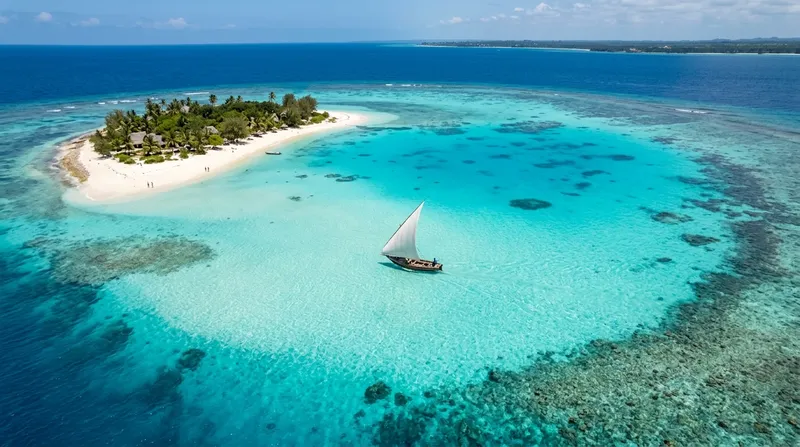
Safari Blue is a full-day boat excursion that runs out of Fumba, a village on Zanzibar's southwest coast, into the Menai Bay Conservation Area — Tanzania's largest marine protected area, covering roughly 470 square kilometers of reef, seagrass beds, and sandbanks. The tour combines traditional dhow sailing, snorkeling over coral reefs, a stop on a mangrove-lined sandbank, and a seafood lunch cooked on a nearby island. It's sold under the "Safari Blue" brand by the original operator, though the name gets used loosely by competitors and resellers, which causes some booking confusion worth untangling later in this guide.
The appeal is straightforward: for one price, you get transport, snorkeling gear, a guided boat day, and a meal, all in a part of Zanzibar that's harder to reach independently. Menai Bay sits roughly 45 minutes to an hour's drive south of Stone Town, and most tours include hotel pickup from the Stone Town area, Paje, or Jambiani, though pickup zones and extra transfer fees vary by resort location.
Marine Experience vs. Wildlife Safari
The name causes real confusion for first-time visitors to Tanzania. This has nothing to do with a savanna safari — no lions, no jeeps, no dust. "Safari" here uses the Swahili sense of "journey," and the experience is entirely marine: sailing, snorkeling, sandbanks, and seafood. If you're combining a Zanzibar trip with a mainland safari to the Serengeti or Ngorongoro Crater, keep the two completely separate in your itinerary planning — travel agents sometimes bundle them under similar names, which misleads people into thinking Safari Blue involves wildlife viewing on land.
Why It's Zanzibar's Top-Rated Tour
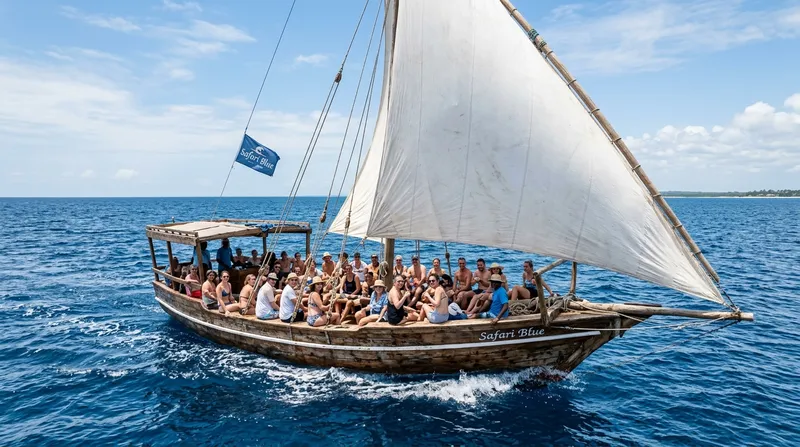
Safari Blue consistently ranks among the highest-reviewed activities on TripAdvisor for Zanzibar, and it's easy to see why once you compare it to the alternatives. Mnemba Atoll snorkeling trips are shorter and more expensive per hour, often running half-day only. Mafia Island's whale shark tours are seasonal and require a flight transfer. Safari Blue, by contrast, is a full eight-hour day, departs reliably year-round, and covers three distinct activities rather than one. That said, it's a shared-group experience — boats typically carry 15 to 25 guests — so don't expect the solitude you'd get on a private charter out of Pemba Island.
Safari Blue Itinerary and Activities
A standard Safari Blue day runs from roughly 9:00 am to 4:30 or 5:00 pm, with pickup times starting earlier depending on your hotel's distance from Fumba. The structure is consistent across operators, even if exact stop order shifts with tides.
Dhow Sailing and Boat Experience
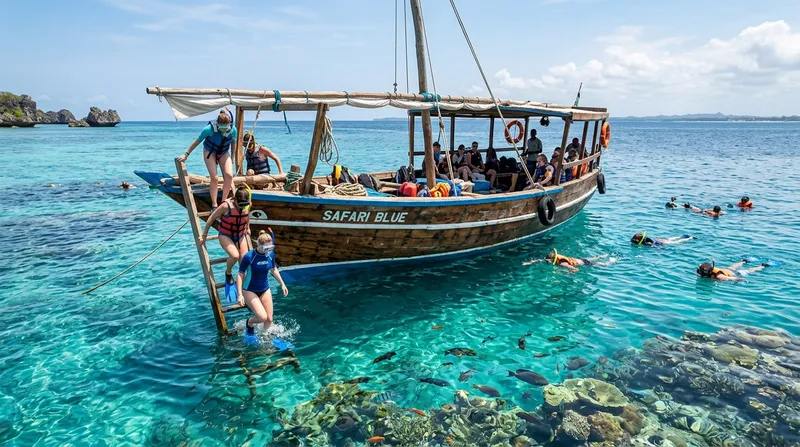
The day starts with boarding a traditional wooden dhow at Fumba Beach — these boats have been adapted with small motors and sometimes a canopy for shade, but they retain the classic lateen sail and shallow hull design used by Swahili coast sailors for centuries. Sailing time to the first reef stop is usually 30 to 45 minutes. The ride is scenic but not luxurious: seating is on wooden benches or cushions, there's no onboard toilet on most boats, and if the wind is low, you'll motor rather than sail for stretches. Bring a hat — shade is limited unless your specific boat has a canopy.
Snorkeling at Coral Reefs
This is the highlight for most guests. Safari Blue typically stops at two reef sites within Menai Bay where you'll snorkel for 45 minutes to an hour each time. Visibility is generally good — often 8 to 15 meters depending on season and tide — and you'll see parrotfish, small reef sharks occasionally, sea stars, and healthy hard coral in patches, though some areas show bleaching damage common across the Zanzibar archipelago. Snorkel gear and life vests are included; guides swim with groups and point out marine life, which is useful if you're not a confident swimmer. Note that water quality and reef health here are generally better than what you'll find on the heavily dived sites around Nungwi, though not quite on par with Mnemba Atoll's more protected reef.
Island Stops and Lunch
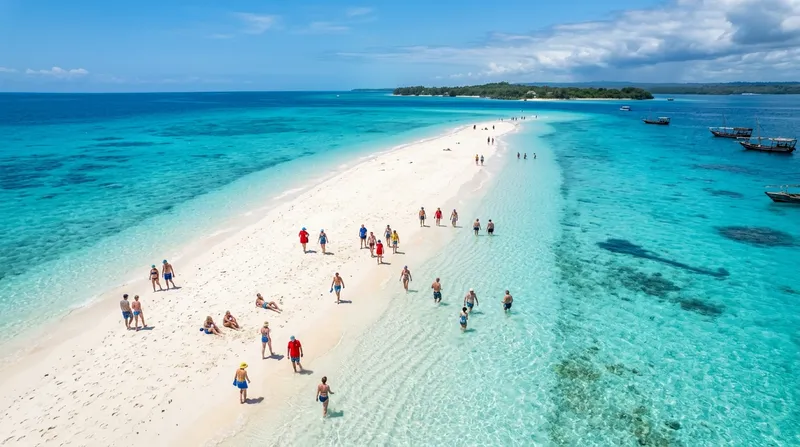
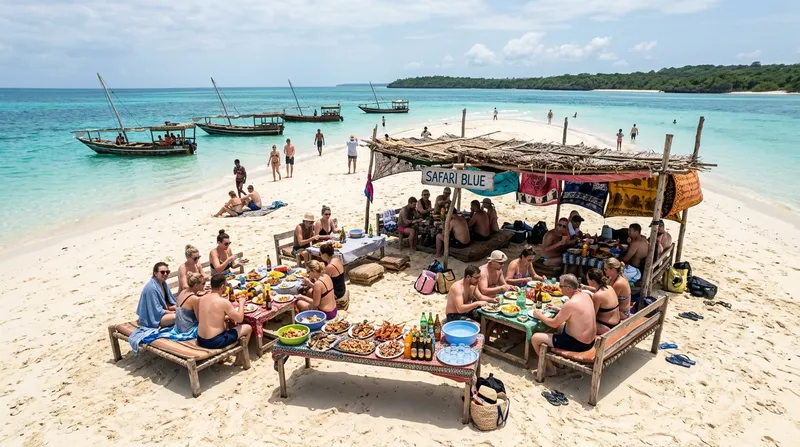
Midday, the dhow pulls into a sandbank or small island — Kwale or a similar uninhabited sandbar, depending on tide — for swimming and relaxing before lunch. Lunch itself is served on a nearby island, typically a buffet-style seafood spread: grilled fish, octopus, prawns, rice, Zanzibari-spiced vegetables, and fresh tropical fruit like mango, pineapple, and jackfruit cut tableside. Portions are generous and the seafood is usually fresh that morning, though if you have shellfish allergies, flag this at booking since cross-contamination on a shared grill is likely. A short mangrove channel visit by canoe sometimes rounds out the afternoon before the return sail.
Booking: Direct vs. Reseller Platforms
This is where most of the cost confusion happens, and it's worth five minutes of research before you pay. Safari Blue is sold through its own direct website and local booking offices in Stone Town, but it's also resold heavily through GetYourGuide, Viator, hotel concierge desks, and independent beach touts.
Direct Booking Advantages
Booking directly with the original Safari Blue operator usually means you're paying closer to the base rate without a middleman markup, and you deal straight with the company that controls pickup logistics — useful if your pickup point changes or you need to reschedule for weather. Direct booking also makes it easier to confirm you're getting the original operator and not an imitation tour using a similar name, which has been a recurring complaint in Zanzibar tourism forums for years. The tradeoff: direct websites sometimes have clunkier payment systems and less responsive customer service than a platform like GetYourGuide, which offers free cancellation windows and centralized support.
GetYourGuide and Reseller Comparison
Reseller platforms add convenience — instant confirmation, reviews you can check before paying, and flexible cancellation (commonly 24 hours free cancellation on GetYourGuide listings) — but they typically charge 10 to 25% more than direct booking for the identical tour. If you value the safety net of reviews and easy refunds, that markup might be worth it, especially for first-time visitors unfamiliar with Zanzibar operators. If you're comfortable emailing or WhatsApping a local company directly and reading recent TripAdvisor reviews yourself, booking direct is the better value. Either way, compare current prices and availability before you book, since rates shift with season and fuel costs.
Pricing and Cost Breakdown
Safari Blue tour price typically falls in the range of $70 to $100 per adult for the full-day package, with children usually priced at 50 to 70% of the adult rate. This generally covers hotel pickup and drop-off, the dhow trip, snorkeling equipment, guide, lunch, and soft drinks or water onboard. Alcoholic drinks, gratuities, and sometimes a marine park conservation fee are extra — ask specifically what's included when you book, since this detail varies by operator and by season.
Booking Safari Blue direct is usually cheaper, while reseller platforms trade a markup for easier cancellation and reviews.
Safari Blue Zanzibar booking options compared: cost, flexibility, and what you get
| Booking Method | Typical Adult Price (USD) | Cancellation Flexibility | Best For |
|---|---|---|---|
| Direct with Safari Blue operator | $70-$90 | Limited, policy varies | Budget-conscious travelers comfortable booking locally |
| GetYourGuide / Viator | $85-$105 | Often free up to 24h | First-timers wanting reviews and easy refunds |
| Hotel concierge desk | $90-$110 | Varies by hotel | Convenience, no independent research |
| Street tout / unofficial reseller | $50-$80 (unverified) | None | Not recommended — risk of imitation tours |
Prices approximate as of 2024-2025; always confirm current rates and inclusions before paying.
Standard Tour Pricing
Expect the baseline adult price to sit closer to $70-$80 when booked direct in low season, rising toward $90-$100 through resellers or during December-January peak demand. Private or smaller-group versions of the tour, if offered, cost significantly more — sometimes double — since you're not sharing the dhow and lunch setup with 20 other guests. For a family of four, budgeting $250-$350 total for the day, including transfers, is realistic.
Seasonal Variations and Discounts
Prices climb during Zanzibar's peak tourist months — July through September and the Christmas/New Year period — when demand from European travelers is highest. The quieter shoulder months, particularly June and early November, sometimes bring softer pricing or more room to negotiate with local booking agents in Stone Town. Be skeptical of "discount" offers from street touts near the port or Forodhani Gardens; these are frequently resold tickets or imitation tours bundled to look like Safari Blue, and refund recourse is minimal if something goes wrong.
Best Time to Visit and What to Bring
Safari Blue runs year-round, but sea conditions and crowding shift with Zanzibar's seasons, and these shifts genuinely affect how enjoyable the day is.
Seasonal Weather and Sea Conditions
The best months for calm water and good snorkeling visibility are June through October and January through February, which overlap with Zanzibar's dry seasons. Avoid booking during the long rains, roughly late March through May, when heavy downpours and choppier seas can cancel or shorten tours — operators will reschedule but it eats into a short trip. The short rains in November bring intermittent showers but rarely cancel the tour outright. Tides also matter: a low tide midday can expose more sandbank but shrink swimming area, so don't be surprised if the itinerary order shifts slightly from what's advertised.
Packing Essentials and Preparation
Pack reef-safe sunscreen — Menai Bay is a protected conservation area and regular sunscreen chemicals contribute to coral stress. Bring a rash guard or light long-sleeve shirt for sun protection during snorkeling, a dry bag for your phone, a hat, and sandals you don't mind getting wet. Seasickness tablets are worth taking an hour before departure if you're prone to motion sickness, since the open-water crossing can get bumpy with wind chop. Cash in small denominations is handy for tipping the crew and buying drinks or souvenirs at the lunch stop. Leave valuables at your hotel — there's no secure storage on the dhow.
Nearby Add-Ons and Alternative Tours
If you're building a full Zanzibar itinerary around this tour, there's more to do near Fumba and reasonable alternatives if Safari Blue's group size or price doesn't suit you.
Fumba Beach and Local Attractions
Fumba itself is a quiet fishing village with a couple of beach resorts, worth an overnight if you want to combine Safari Blue with a slower southwest coast stay rather than a long transfer back to Stone Town or the northern beaches at Nungwi and Kendwa. Stone Town, a UNESCO World Heritage site, is close enough for a half-day add-on before or after your Safari Blue date — allow at least two to three hours to walk the old town and visit the former slave market site.
Other Menai Bay Boat Tours
Smaller operators run near-identical sandbank-and-snorkel dhow trips in Menai Bay under different names, usually at lower prices but with less polish and smaller group oversight. If you want fewer crowds, ask local agents about private dhow charters, which run higher per person but let you set your own pace. For comparison beyond Zanzibar, Mafia Island offers a more remote, less commercialized version of this marine-day-trip format, while Mnemba Atoll gives better reef quality for a shorter, pricier outing — worth considering if diving quality matters more to you than the full-day variety Safari Blue offers.
Frequently asked questions
Is Safari Blue worth it for the price?
Yes, for most travelers — at $70-$100 for a full day covering transport, two snorkeling stops, equipment, and a seafood lunch, it's competitively priced against comparable half-day tours elsewhere in Zanzibar. It's less worth it if you dislike group tours of 15-25 people or want a flexible, private pace.
What is included in a Safari Blue tour?
Standard inclusions are hotel pickup and drop-off, dhow sailing, snorkeling gear, guide, a seafood lunch buffet, and soft drinks. Alcohol, gratuities, and sometimes a marine conservation fee are usually extra — confirm this at booking since it varies by operator.
How much does Safari Blue cost in Zanzibar?
Expect $70-$90 per adult booked direct, rising to $85-$110 through resellers like GetYourGuide or hotel concierge desks. Children typically pay 50-70% of the adult rate. Peak season (July-September, December-January) pushes prices toward the higher end.
Where does Safari Blue depart from?
Tours depart from Fumba Beach on Zanzibar's southwest coast, about 45 minutes to an hour's drive from Stone Town. Most packages include pickup from Stone Town, Paje, or Jambiani hotels, though pickup from more distant areas like Nungwi may cost extra or require an earlier start.
What should I bring on the Safari Blue tour?
Reef-safe sunscreen, a hat, a rash guard or cover-up, a dry bag for electronics, cash for tips and drinks, and seasickness tablets if you're prone to motion sickness. Wear sandals you don't mind getting wet and leave valuables at your hotel.