Visit Prison Island, Nakupenda, and Chumbe in 2 days. Boat schedules, booking tips, and logistics for independent island hopping in Zanzibar.
Who This Itinerary Is For
This Zanzibar island hopping itinerary is built for travelers who want variety over volume — a prison-era history stop, a sandbar swim, and a serious reef experience, all within 48 hours. It suits couples on a short stopover before or after a longer Tanzania trip, solo travelers comfortable arranging their own boats, and photographers who want three very different backdrops without committing a full week to boat logistics.
It's less suited to families with young children who need predictable nap times, since Day 1 involves two separate boat transfers and a fair amount of sun exposure with little shade on Nakupenda. Senior travelers who struggle with getting in and out of small boats on open water should also think twice about the Chumbe crossing, which can get choppy between June and September.
If you're after a slower pace, stretch this into three or four days and add Mnemba Atoll or a Jozani Forest morning — both are easy add-ons from the same base. But if your window is genuinely two days, this order (Prison Island and Nakupenda first, Chumbe second) works better than the reverse, because Chumbe requires advance permits and a fixed departure time that's easier to plan around once you know your Day 1 went smoothly.
Expect total costs for boat transport and park fees across both days to run somewhere in the range of $120–200 per person, depending on whether you book a shared speedboat tour or a private charter — more on that under booking platforms below.
Day 1: Prison Island and Nakupenda
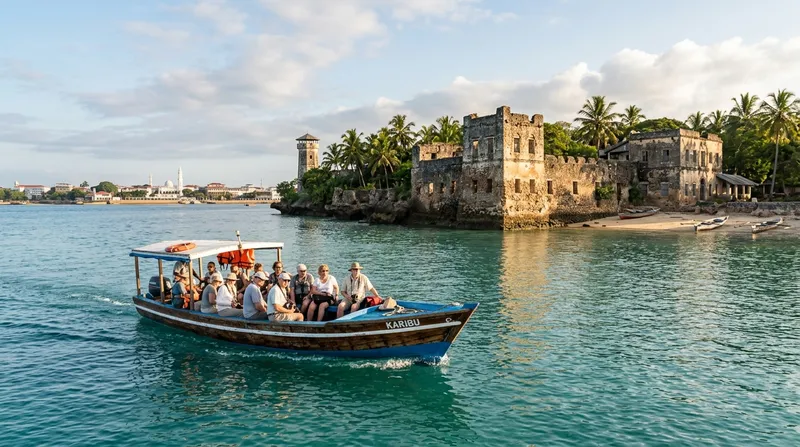
Day 1 combines a short, easy history-and-wildlife stop with a half-day at a sandbar that only properly forms at certain tides. Start early — boats to Prison Island leave from Stone Town's harbor area roughly between 8:30am and 10am, and getting the earlier slot means you beat both the heat and the tour groups arriving from the cruise-ship crowd when ships are in port.

Morning: Prison Island departure and giant tortoise encounter
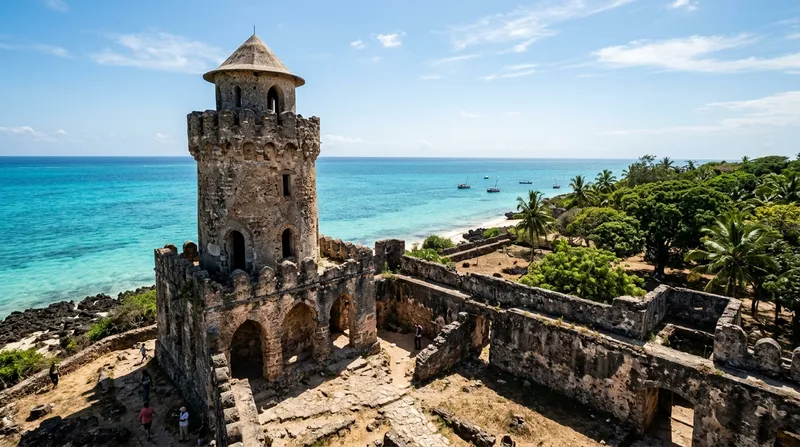
The crossing from Stone Town to Prison Island (also called Changuu) takes about 20–30 minutes by motorboat. The island never actually held prisoners — it was built as a detention stop for slaves in the 19th century and later used as a quarantine station — but it's now best known for its Aldabra giant tortoise sanctuary, with tortoises reportedly over 100 years old. Entry fee for the tortoise enclosure is typically a few dollars extra on top of the boat fare, paid on arrival.
Budget 1.5 to 2 hours here: 30 minutes with the tortoises, the rest for a walk around the small ruins and a swim off the jetty if the water's calm. The snorkeling directly off Prison Island is mediocre compared to what's coming at Nakupenda, so don't linger expecting great reef — this stop is about the tortoises and the view back toward Stone Town's skyline, which is a solid photo opportunity in mid-morning light.
Afternoon and evening: Nakupenda sandbar and snorkeling
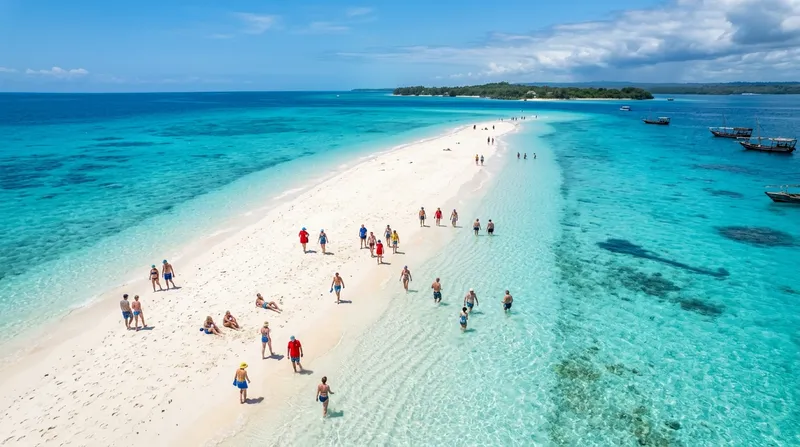
From Prison Island, most boats continue roughly 30–40 minutes further to Nakupenda sandbar rather than backtracking to Stone Town first — ask your operator to confirm this combined routing when booking, since some only do one island per trip. Nakupenda means "I love you" in Swahili, and the appeal is simple: a strip of white sand that's sometimes fully submerged and sometimes a wide beach, depending entirely on the tide.
This matters practically — check a tide chart before booking, because a trip timed against low tide gets you a much bigger sandbar and better snorkeling in the shallow coral patches just offshore. Most day operators include a grilled seafood lunch on the sandbar itself, which is worth confirming is in your package since it saves you carrying food.
Plan for 3–4 hours here, including snorkeling time. Water visibility is generally good but not Mnemba-atoll good — Mnemba, further northeast off Zanzibar's coast, has noticeably better reef structure and is worth a separate dedicated trip if you have a third day. By late afternoon, boats head back to Stone Town, arriving around 5–5:30pm, leaving time for a sunset drink overlooking the harbor before dinner.
If weather turns — strong wind or rain squalls are the main risk, especially April through May — ask your operator about a Stone Town walking tour alternative for the afternoon; the House of Wonders area and the old fish market are workable wet-weather fallbacks.
Day 2: Chumbe Island and Return
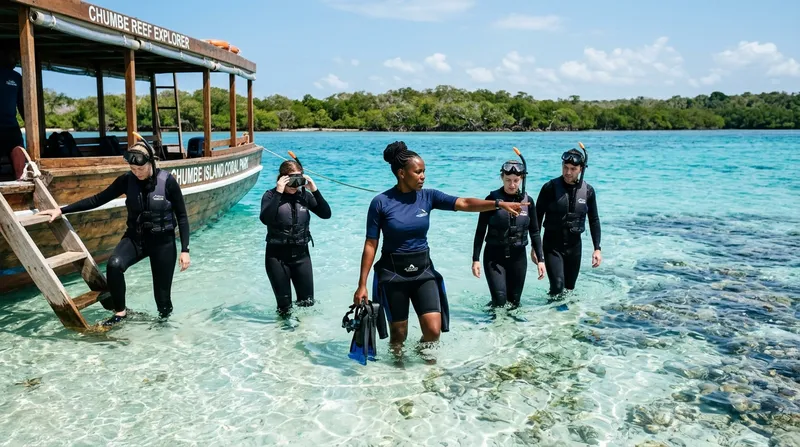
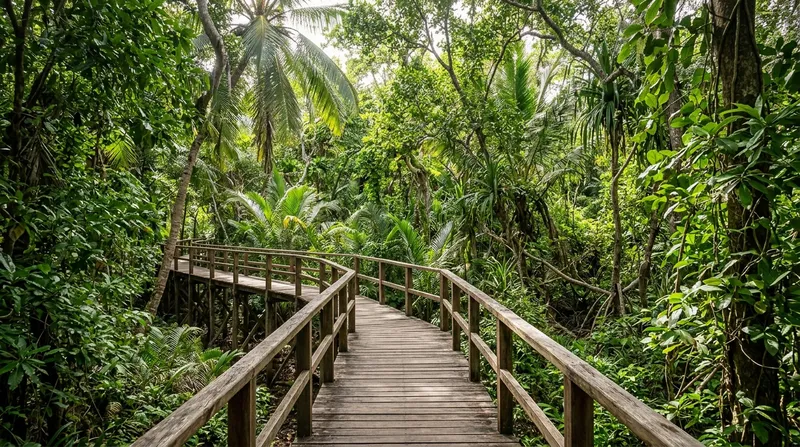
Chumbe Island Coral Park is the most ecologically serious stop on this itinerary and the one that requires booking furthest ahead — sometimes weeks, since visitor numbers are capped to protect the reef. It sits roughly 12km south of Stone Town and is one of the oldest protected marine parks in East Africa, with a no-fishing policy dating back to the early 1990s that's made its coral noticeably healthier than most reefs along this coast.
Prison Island suits a quick morning stop, Nakupenda is best for sandbar time, and Chumbe delivers the strongest reef and forest experience but needs advance booking.
Zanzibar island hopping itinerary: 2-day island comparison
| Island | Boat time from Stone Town | Best for | Advance booking needed | Typical time onsite |
|---|---|---|---|---|
| Prison Island | 20-30 min | Tortoises, harbor views | Not required | 1.5-2 hours |
| Nakupenda | 30-40 min (often combined with Prison Island) | Sandbar swim, lunch, light snorkeling | Recommended, tide-dependent | 3-4 hours |
| Chumbe Island | 45-60 min | Reef snorkeling, forest walk, conservation | Yes, weeks ahead | 5-6 hours |
Figures as of 2025; boat times vary with tide and weather, and Chumbe visitor numbers are capped so book early.
Morning: Chumbe Island reef and forest walk
Boats to Chumbe generally depart Stone Town between 8am and 9am, with a crossing time of around 45 minutes to an hour depending on sea conditions. Unlike Prison Island and Nakupenda, Chumbe operates as a managed day visit with a fixed structure: a guided snorkeling session on the fringing reef, lunch, and a forest walk through the coral rag forest with a ranger.
The snorkeling here is the best of the three islands by a wide margin — expect to see parrotfish, triggerfish, and healthy coral cover that's a genuine step up from Nakupenda. The forest walk afterward covers roughly 1–1.5 hours and includes a chance to see coconut crabs and, if you're lucky, Ader's duiker, a small antelope found almost nowhere else. Closed shoes are worth packing for this part — the coral rag terrain is sharp and uneven.
Afternoon: Return to Zanzibar main island
Most Chumbe day visits wrap up by early-to-mid afternoon, with return boats to Stone Town departing around 3pm and arriving back by 4pm. This leaves a window for a late lunch in town or, if your legs are tired from two days of boats and sand, simply resting at your accommodation before an evening Stone Town food walk — the night food market at Forodhani Gardens is the obvious choice and needs zero advance planning.
If you're based in Nungwi or Kendwa rather than Stone Town, factor in an extra 1–1.5 hours of road transfer time each way to reach the Chumbe departure point, which changes the math on whether this two-day plan is realistic from the north coast — more on that trade-off below.
Getting Around Between Islands
All three islands in this itinerary are reached by boat from Zanzibar's main island, usually departing Stone Town's harbor front near the old fort. There's no scheduled public ferry network between these smaller islands — this isn't the Maldives, where inter-atoll speedboat transfers are standardized and run by resorts. In Zanzibar, you're booking with independent operators or through tour platforms, and the boat itself is part of the experience, not just transport.
Speedboat vs. dhow options and journey times
Most day-trip operators use motorized speedboats or larger covered launches rather than traditional dhows for these specific routes, mainly because dhows are slower and less practical for a tight two-day schedule — a dhow crossing to Prison Island can take close to double the time of a speedboat. That said, some Nakupenda trips do offer a dhow sailing option as a scenic add-on, which is worth it if you have an extra hour to spare and want the classic wooden-boat photo.
Journey times are generally short — 20 to 60 minutes per leg — but conditions matter more than distance. The Kusi season (June to September) brings stronger winds and choppier water on the Chumbe crossing specifically, while the calmer Kaskazi season (December to March) generally gives smoother rides across all three routes. If you're prone to seasickness, mid-morning crossings tend to be calmer than early morning ones when wind picks up.
Booking platforms and operator selection
For independent travelers, platforms like GetYourGuide list combined Prison Island and Nakupenda day trips as well as standalone Chumbe Island visits, and booking through one of these gives you a cancellation window and reviews to check before paying — useful since you can't easily verify a small Stone Town street-side operator's reliability in advance. Chumbe Island Coral Park also takes direct bookings through its own conservation-linked channel, which is worth considering since the island is run as a nonprofit eco-project, not a standard tour product.
Whichever route you choose, confirm three things before paying: the exact departure point in Stone Town (there are several jetties), whether lunch and park fees are included, and the cancellation policy for weather. Compare current boat tours and prices before you book, since availability shifts with season and Chumbe especially sells out its daily visitor cap well ahead of peak months (July–August and December–January).
Where to Base Yourself
Your choice of base changes this itinerary's logistics more than almost anything else. This is a two-horse race between Stone Town and the north coast beach strip around Nungwi and Kendwa, and the right answer depends on whether you'd rather minimize transfer time or maximize beach time in the evenings.
Stone Town for logistics and culture
Basing in Stone Town puts you within a 5–10 minute walk of the harbor departure points for all three islands, which removes the extra road transfer that eats into your mornings from the north coast. You also get easy access to Forodhani Gardens' night market, the old fort, and spice tour operators without needing a car. The trade-off: Stone Town's beaches are poor — narrow, affected by tide, and not worth comparing to Kendwa's. Accommodation here tends to be heritage guesthouses in converted Swahili-Arab townhouses rather than beach resorts, which some travelers love and others find cramped and hot without strong air conditioning.
Nungwi or Kendwa for beach proximity
Nungwi and Kendwa, on Zanzibar's northern tip, have genuinely good swimming beaches with minimal tidal drop-off compared to the east coast — a real advantage if you want to actually swim, not just look at sand. The catch for this specific itinerary is distance: you're looking at a 1–1.5 hour drive each way to reach Stone Town's harbor, which means leaving by 7am to make an 8:30am boat. For a relaxed one-island day that's fine; for this packed two-day plan, it adds real fatigue. If you choose the north coast, consider adding a third day and treating this as a slower five-day island loop instead, or stay one night in Stone Town specifically to simplify the two island-hopping days.
Bookable Experiences and Tours
Beyond the three core stops, a few bookable add-ons are worth reserving ahead rather than arranging last-minute. A sunset boat tour out of Stone Town harbor — typically a 1.5 to 2-hour sail on a traditional dhow with drinks included — makes a good evening-of-Day-1 booking, since you'll already be back from Nakupenda by late afternoon with energy left for one more outing. It's a lower-effort alternative to another full island visit if your legs need a break.
If you extend beyond two days, a half-day Jozani Forest tour to see the red colobus monkeys is an easy land-based add-on that needs no boat at all, and it pairs naturally with a spice farm visit on the way back toward Stone Town. For snorkelers who found Chumbe's reef impressive, a dedicated Mnemba Atoll trip is the natural next booking — it's further out (roughly 45–60 minutes by boat from the northeast coast near Matemwe) and often rated as Zanzibar's best single reef site, though it comes with a separate conservation fee and is usually booked as its own day trip rather than combined with the islands in this itinerary.
One thing I'd avoid: booking a "multi-island" package that crams Prison Island, Nakupenda, and a third unnamed stop into a single rushed day. These exist, and they look efficient on paper, but they typically give you 30–40 minutes per stop — not enough time at Nakupenda to actually relax, and barely enough at Prison Island to see the tortoises properly. Two focused days, as laid out here, beat one exhausting one.
Frequently asked questions
What islands can you visit island hopping in Zanzibar?
The most commonly visited islands near Stone Town are Prison Island (Changuu), Nakupenda sandbar, and Chumbe Island. Further afield, Mnemba Atoll off the northeast coast is popular for snorkeling, while Pemba Island and Mafia Island require longer boat or flight connections and are better suited to a separate multi-day trip rather than this two-day loop.
How do you get between islands in Zanzibar?
By motorized boat from Stone Town's harbor — there's no fixed public ferry schedule between these smaller islands. Journey times run 20–60 minutes depending on the island and sea conditions, and most independent travelers book through tour platforms or directly with operators rather than showing up unannounced at the jetty.
What is included in island hopping tours?
Most day packages include the boat transfer, park or conservation fees, and often a grilled lunch (especially for Nakupenda trips). Chumbe Island visits typically include a guided snorkel session, forest walk, and lunch as part of a fixed-structure day since it's run as a conservation project rather than a standard beach outing. Always confirm inclusions before booking — fees aren't always bundled.
Can you island hop in Zanzibar independently?
Yes. Independent travelers regularly arrange their own boats to Prison Island and Nakupenda through local operators or platforms like GetYourGuide. Chumbe Island is the exception — because visitor numbers are capped to protect the reef, it's worth booking at least a couple of weeks ahead rather than arranging it on the day.
What is the best time to visit Zanzibar for island hopping?
December to March (the Kaskazi season) generally offers the calmest seas and best visibility for snorkeling across all three islands. June to September is also good and slightly cooler, though the Chumbe crossing can get choppier. Avoid April and May if possible — this is the long rainy season, and rough seas can cancel boat departures with little notice.