A comfort-first Zanzibar itinerary for seniors with minimal walking, accessible transport, and gentle pacing. Practical, honest tips for older travellers.
Who This Itinerary Is For
This itinerary prioritises comfort, accessibility, and gentle exploration for senior travellers visiting Zanzibar. It's built for people who want to see Stone Town's history, taste the Spice Island's famous cloves and cardamom, and float in the Indian Ocean — without feeling like they've run a logistics marathon to do it.
It suits couples in their 60s, 70s and beyond who travel independently but appreciate a guide rather than a map and guesswork. It also works for anyone recovering from a hip or knee procedure who still wants real cultural immersion, not just a resort with a view. If you use a cane or walk more slowly than you used to, this plan accounts for that — shorter outings, scheduled rest, and transport instead of long walks between sights.
It is not for travellers wanting to island-hop constantly between Unguja (the main island, usually just called "Zanzibar") and Pemba Island in a week — that adds ferry transfers, luggage handling, and unpredictable sea conditions that aren't worth the trade-off for most older travellers. Stick to Unguja and go deeper rather than wider. One honest caution: Stone Town's streets are narrow, cobbled, and occasionally uneven, with no consistent dropped kerbs. If mobility is a serious concern rather than just "slower pace," ask your accommodation about wheelchair-accessible vehicle transfers before booking anything else.
Day 1: Stone Town & Waterfront
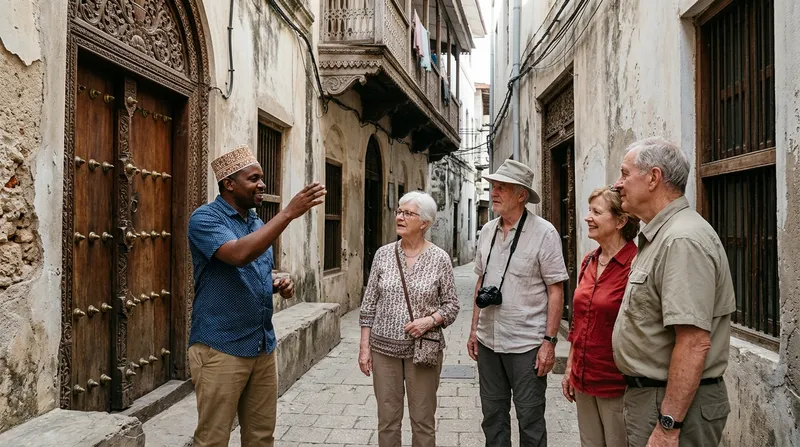
Spend your first day adjusting to the heat and humidity rather than fighting it. Stone Town deserves unhurried attention — it's a UNESCO World Heritage old quarter of coral-stone buildings, carved doors and narrow lanes, and trying to "do" it in two hours leaves you exhausted and seeing nothing.
Morning: Guided walking tour
Book a small-group or private walking tour starting around 9am, before the midday heat sets in — temperatures regularly hit 30°C (86°F) by noon even in cooler months. A good guide will keep the pace slow, point out shaded rest stops, and know which alleys have benches or café doorways to pause in. Expect roughly two hours of walking covering the House of Wonders area, the old fort, and the market, with frequent stops. Ask in advance for a "slow-paced" or "senior-friendly" version — many Stone Town guide services will happily adjust the route length once you explain your needs. Wear supportive shoes with good grip; the coral-stone paving is uneven and polished smooth in places from foot traffic.
Afternoon & evening: Rest and dining
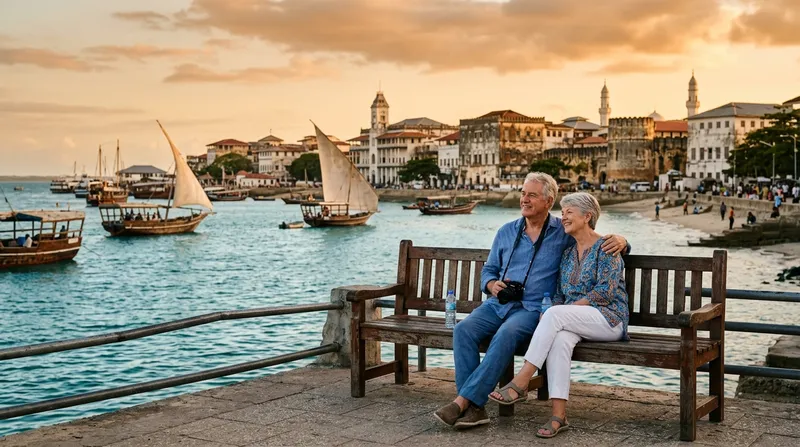
Return to your hotel by early afternoon for a proper rest — not a quick nap, but two or three hours off your feet with air conditioning. Zanzibar's humidity drains energy faster than dry heat destinations like parts of Morocco or inland Kenya, so don't schedule anything demanding before 5pm. In the evening, head to the waterfront Forodhani Gardens for an early dinner around 6:30pm, while there's still daylight and it's less crowded than after 8pm. Choose a seated restaurant with proper chairs rather than the street-food stalls if standing or crouching is uncomfortable — several waterfront restaurants in Stone Town offer the same grilled seafood and Zanzibari dishes with table service and sea views.
Day 2: Spice Farm & Local Culture
This is Zanzibar's signature inland experience, and it's genuinely well-suited to older travellers because the pace is naturally unhurried — you're walking through cultivated gardens, not scrambling over terrain.

Morning: Spice farm visit
Book a half-day spice farm tour starting around 9:30am, after the morning's worst mosquito activity has passed. Most farms near Stone Town run tours lasting 2 to 2.5 hours on mostly flat, shaded paths under clove, nutmeg and cinnamon trees — far gentler terrain than Jozani Forest's boardwalks, which involve more uneven ground. Guides typically let you smell and touch spices rather than requiring climbing, and many offer a seated fruit-tasting break midway. If you have breathing sensitivities, mention it beforehand — some farms process vanilla and pepper in ways that produce strong smells in enclosed drying sheds. Request a vehicle with air conditioning for the transfer, which runs 20 to 40 minutes depending on which farm and where you're staying.
Afternoon & evening: Village exploration
After lunch and a rest, consider a short, guided village visit rather than Jozani Forest's full red colobus monkey trek, which involves more walking on boardwalks and uneven forest floor. A scaled-back cultural stop — a local market, a textile or basket workshop — gives you contact with daily Zanzibari life without the physical demands of the forest reserve. If you do want to see the red colobus monkeys, ask about accessible viewing points near the entrance rather than the full loop trail; some guides can arrange a shorter route. Keep the evening low-key: an early dinner near your hotel beats another transfer across the island.
Day 3: Beach Relaxation & Snorkelling
By day three, most seniors are ready to stop moving and start floating. Base this day around one beach rather than beach-hopping — Nungwi Beach on the northern tip of Unguja is a strong choice because it has minimal tidal range compared to east coast beaches like Paje, meaning the water stays swimmable most of the day rather than retreating hundreds of metres at low tide.
Nungwi and Kendwa suit senior travellers best because of minimal tidal retreat and more accessible resort infrastructure.
Zanzibar beaches for seniors compared: access, tides and pace
| Beach | Tidal range | Walk to water | Best for |
|---|---|---|---|
| Nungwi | Low | Short | Easy swimming, sunset dining |
| Kendwa | Low | Short to moderate | Calm water, accessible resorts |
| Paje | High | Long at low tide | Kitesurfing, younger travellers |
| Jambiani | High | Long at low tide | Quiet guesthouses, walking |
| Mnemba Atoll area | Low (boat access) | Boat only | Snorkelling day trips |
Figures as of 2025; tidal patterns vary by season and lunar cycle, confirm locally before planning swim times.
Morning: Gentle beach time
Start early, around 8 to 9am, when the sun is milder and the beach is quieter. Choose accommodation or a beach club with loungers close to the water rather than a long sandy walk from the access point — some stretches of Kendwa and Nungwi involve 100 metres or more of soft sand between the road and shoreline, which is tiring in heat. Bring a wide-brimmed hat, SPF 50, and more water than you think you need; dehydration sneaks up fast near the equator. A short, calm swim in the shallows is enjoyable for most fitness levels and doesn't require snorkelling gear or a boat.
Afternoon & evening: Optional water activities
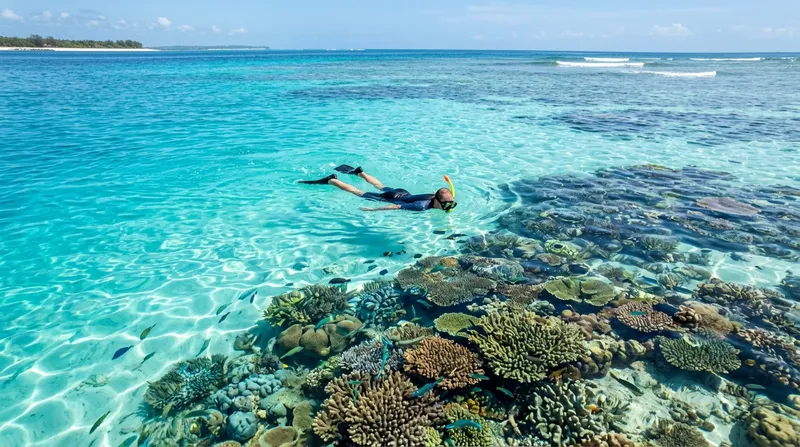
If you're comfortable in the water and reasonably fit, a short snorkelling trip to a calm reef area is worth considering — ask operators specifically for shallow, current-free sites rather than drift snorkelling spots. Mnemba Atoll is the famous option but involves a longer boat ride and can have stronger currents; for a gentler alternative, ask about reef sites directly off Nungwi, which involve less time in open water. If snorkelling doesn't appeal, a glass-bottom boat tour gives you the same reef views without getting wet. Finish with a sunset dinner on the beach — most beachfront restaurants here offer level, sandy access rather than stairs.
Getting Around Zanzibar
Self-driving is not something I'd recommend here — roads range from decent tarmac to badly potholed, driving customs take adjustment, and the stress isn't worth it on holiday. A private driver, arranged through your hotel or a tour operator, is the single best investment for a senior-friendly Zanzibar trip. Expect a sedan or small SUV with air conditioning, which matters enormously given the heat; agree on the day's stops and timing in advance so you're not negotiating fares mid-trip.
Tuk-tuks are fun for short hops but bounce over uneven road surfaces and offer no real back support — fine for a five-minute ride, uncomfortable for 40 minutes to the airport. Stone Town itself is pedestrian-only in the old quarter core, so even with a driver, expect some walking once you're dropped off; this is the main accessibility limitation of the whole island, and there's no way around it entirely. For transfers between the airport, Stone Town and the north coast (roughly 45 to 75 minutes depending on traffic and exact location), book a private transfer rather than relying on shared shuttles, which make multiple stops and extend the journey significantly.
Where to Base Yourself
Don't try to change hotels every night — one or two bases for a week-long trip is far more restful than constant packing and transfers. For a first two or three nights, Stone Town itself puts you within walking distance (or a short tuk-tuk ride) of the waterfront and restaurants, though rooms in heritage buildings sometimes have stairs and no lift, so ask directly about ground-floor rooms when booking.
For the beach portion, Nungwi and nearby Kendwa offer more purpose-built resort infrastructure — ramps, pools, accessible bathrooms — than the east coast's Paje or Jambiani, which lean more toward backpacker and boutique guesthouses with charming but less accessible design. Compared to Mauritius or the Seychelles, Zanzibar's accessible-accommodation options are fewer and less formally rated, so it pays to call ahead and ask specific questions: step-free room access, grab rails, walk-in showers versus high-sided tubs. If true step-free resort living matters more to you than cultural immersion, Mauritius generally has more resorts built to international accessibility standards; Zanzibar asks a bit more flexibility from its guests in exchange for a rawer, more local experience.
Optional Bookable Experiences
Beyond the core three days, a few add-on experiences suit a slower itinerary well if you're staying five to seven nights total, which I'd recommend over a rushed three-day visit if your schedule allows it.
Sunset cruises and boat tours
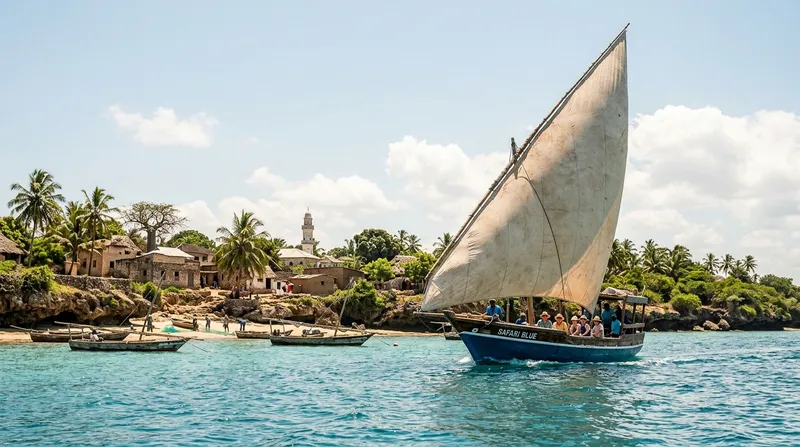
A sunset dhow cruise along the west coast near Stone Town is one of the easiest "wow" experiences for limited mobility — you sit, the boat does the work, and the views of the Indian Ocean and old town skyline are excellent for photographers. Trips typically run 1.5 to 2 hours in the early evening. Ask whether boarding involves wading or a fixed jetty; some smaller dhows require stepping from a small tender boat, which isn't ideal if balance is a concern. Larger catamaran-style sunset tours generally have sturdier boarding and seating with backrests, which matters more than people expect after an hour on the water.
Cooking classes and cultural workshops
A half-day cooking class is a low-impact way to go deeper into Zanzibari culture without walking at all — most are run from a seated or standing kitchen counter setup over 2 to 3 hours, often including a market visit beforehand that can be skipped if you'd rather go straight to the cooking. These classes typically cover coconut-based curries, pilau rice and chapati, finishing with a shared meal. It's a good rainy-day alternative, too — Zanzibar's short rains (roughly March to May) and shorter November rains can disrupt beach plans, and an indoor cultural activity is a better fallback than waiting out a downpour at the hotel.
Frequently asked questions
Is Zanzibar suitable for senior travellers?
Yes, with planning. The main challenges are heat, humidity and Stone Town's uneven paving — not the activities themselves, which are mostly low-impact (spice farms, beach time, boat tours). Travellers with good general mobility who pace themselves and avoid midday sun do well here, often better than on more physically demanding safari-style trips elsewhere in Tanzania.
What is the best time of year for seniors to visit Zanzibar?
June to October offers the driest, coolest conditions, with daytime temperatures around 27 to 29°C and lower humidity than the hot season. Avoid the long rains from March to May, when heavy downpours disrupt transport and outdoor plans. December and January are popular but hotter and more humid, which matters more for older travellers than for younger ones.
How much walking is involved in typical Zanzibar tours?
A Stone Town walking tour covers roughly 2 to 3 kilometres over two hours with frequent stops. Spice farm tours involve similar flat, shaded walking. Jozani Forest's monkey trails involve more uneven boardwalk sections — ask for a shortened route if that's a concern, since most guides can adjust on request.
Are there accessible transport options in Zanzibar?
Private drivers with air-conditioned vehicles are the most reliable option and can be arranged through most hotels or tour operators. True wheelchair-accessible vehicles are limited compared to Mauritius or Mombasa, so confirm specific requirements directly with your accommodation or transfer provider well before arrival.
What health precautions should seniors take in Zanzibar?
Check with your doctor about malaria prophylaxis, since Zanzibar is a malaria risk area, and bring any regular medication in original packaging with a spare supply. Stone Town has reasonable private clinics for minor issues, but serious medical care often means evacuation to mainland Tanzania or home, so travel insurance with medical evacuation cover is essential, not optional.