A 5-day Zanzibar solo travel itinerary with group tours, safety tips, budget hacks, and social experiences for independent travellers.
Who This Itinerary Is For
This Zanzibar solo travel itinerary is built for the independent traveler who wants structure without rigidity — five days, flexible enough to stretch to seven if you fall for Paje's kite-surfing scene or shrink to four if you're short on time. It assumes you're flying into Zanzibar International Airport (often via Dar es Salaam, a 20-minute hop or a 2-hour ferry away) and staying mostly on Unguja, the main island locals just call Zanzibar.
It suits solo female travelers who've done their research and want concrete safety habits, not vague reassurance. It suits budget backpackers comparing hostel dorms against Bali's Canggu scene or Mombasa's Old Town, and photographers chasing Stone Town's doorways and Nungwi's sunsets. It's less suited to travelers wanting the silent, couples-only seclusion of the Maldives or private-villa Seychelles — Zanzibar's social infrastructure (hostels, group tours, shared boats) is its biggest asset for solo travel, and that means some built-in noise and crowd.
If you want total isolation, consider Pemba Island instead, where tourism infrastructure is thinner and solo travel is harder to arrange safely. If you want constant company, Zanzibar's hostel circuit — concentrated in Stone Town and Nungwi — delivers that more reliably than Mafia Island, which is quieter and better suited to divers traveling in pairs.
Day 1: Stone Town Arrival & Orientation
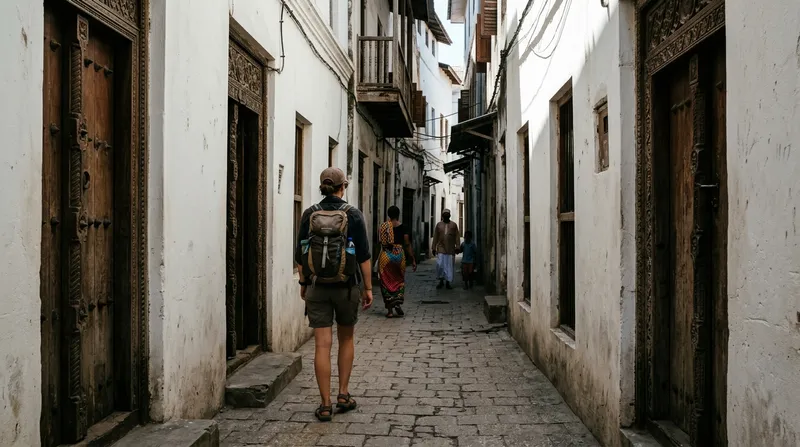
Stone Town is the natural first stop — compact, walkable, and dense with budget accommodation, which matters when you're arriving solo and jet-lagged.
Days 2 and 4 offer the strongest built-in social opportunities because they center on small-group bookable tours.
Zanzibar solo travel itinerary: day-by-day activities, timing and social opportunities
| Day | Main Activity | Best Time to Go | Social Opportunity | Approx. Cost (USD) |
|---|---|---|---|---|
| Day 1 | Stone Town walk & food market | Year-round, avoid midday heat | High (food market benches) | $5-15 |
| Day 2 | Spice farm tour | Morning, dry season preferred | High (group tour) | $20-30 |
| Day 3 | Nungwi/Paje beach & snorkelling | June-October for clearer water | Medium-High | $25-35 |
| Day 4 | Prison Island / Mnemba snorkel trip | Morning departure, calmer seas | High (group boat) | $20-70 |
| Day 5 | Market visit or lighthouse walk | Morning before transfer | Low | $0-10 |
Figures approximate as of 2024-2025; prices fluctuate by season and operator, so check current prices before booking.
Morning: Arrive and settle in
Land at Zanzibar International Airport, roughly 15 minutes by taxi from Stone Town (expect to pay $10-15 USD, agree the fare before you get in). Check into a hostel with a common area — this matters more than décor for solo travelers, since shared kitchens and rooftop bars are where you'll meet people in the first hour. Spend the late morning getting oriented: buy a local SIM card (Tigo or Airtel kiosks near Darajani Market, roughly $5-10 for a week of data) and withdraw cash, since many small guesthouses and spice tours are cash-only.
Afternoon & evening: Explore Stone Town
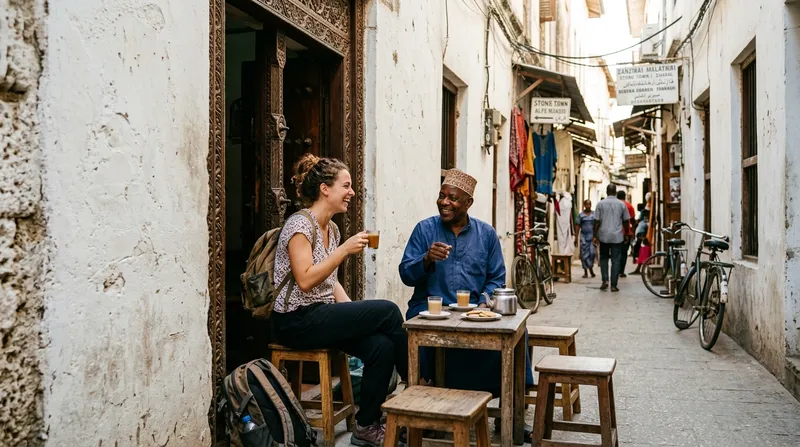
Walk the old town without a fixed plan — it's small enough (roughly 1 square mile) that getting mildly lost is part of the experience, not a risk. Visit the House of Wonders exterior, the old slave market site, and Forodhani Gardens for the evening food market, where grilled seafood skewers and Zanzibar pizza run $2-4 a plate. This is genuinely one of the best places in Zanzibar to strike up conversation solo, since the benches and food stalls naturally mix tourists and locals. If you're tired or it's raining, skip the walking and book a late-afternoon Stone Town walking tour instead — most hostels can arrange one with a guide for $10-15 per person, and you'll get the history without navigating alone.
Day 2: Spice Farm Tour & Local Culture
This is the day to book a group tour rather than go independently — spice farms are scattered outside Stone Town, transport is awkward solo, and the guided format is where solo travelers consistently report meeting their first travel companions of the trip.

Morning: Join a group spice tour
Several operators run Zanzibar Spice Tours from Stone Town, typically $20-25 per person including hotel pickup, a 2-3 hour walk through a working farm, and tastings of cloves, vanilla, cardamom, and lemongrass. Groups are usually 6-12 people, mixed nationalities, which makes this one of the more reliable social anchors of the trip. Book a day ahead through your hostel desk or a local tour office in Stone Town — prices vary little between operators, so compare current prices before confirming rather than booking the first one offered.
Afternoon & evening: Local dining
Many spice tours bundle in a Swahili lunch cooked by a local family — worth paying the extra $5 if offered, since eating with a host family is a rare, legitimate cultural experience rather than a staged one. Back in Stone Town by late afternoon, rest before joining a hostel-organized dinner or rooftop bar crawl, common in the backpacker guesthouses near Shangani. If the farm tour feels too touristy for your taste — some are, frankly, rushed — ask specifically for a smaller operator; the better ones cap groups at 8 and spend less time on the souvenir stall at the end.
Day 3: Beach & Snorkelling Adventure
Time to leave Stone Town. Most solo travelers head north to Nungwi Beach or southeast to Paje Beach — the choice shapes the rest of your trip, so pick deliberately rather than defaulting to whichever hostel your new friends mentioned first.
Morning & afternoon: Beach day
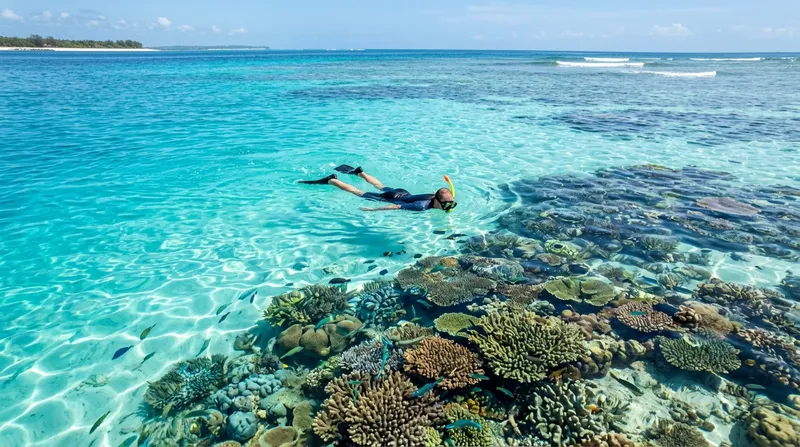
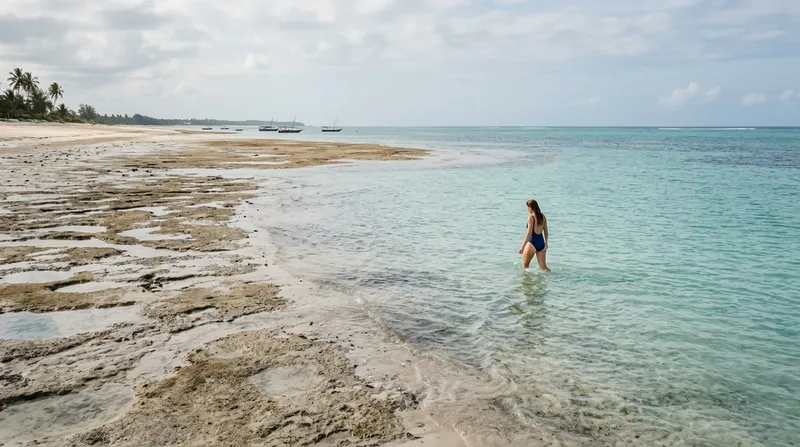
A shared taxi or dala-dala (local minibus) from Stone Town to Nungwi takes about 90 minutes and costs $2-3 on a dala-dala or $25-30 for a private taxi split among passengers. Nungwi's sand stays swimmable at low tide, unlike much of the east coast where the reef exposes mudflats — a real downside of Paje and Jambiani that catches first-time visitors off guard. Spend the day on the beach, book a half-day snorkelling trip to the nearby reef (typically $25-35 per person including equipment and a boat), and compare this honestly against the Maldives or Mnemba Atoll: the coral here is less pristine, but the price is a fraction of either.
Evening: Sunset activities
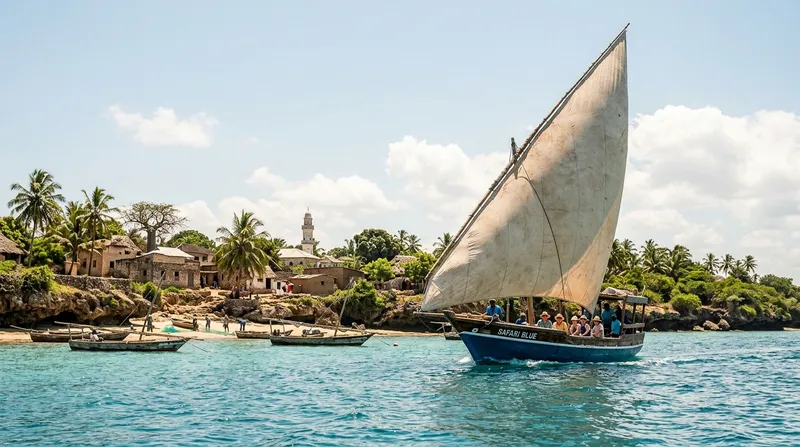
Nungwi's west-facing beach makes it one of the better sunset spots on the island, and several beach bars run informal nightly gatherings that solo travelers drift into without needing an invitation. If you'd rather not drink or socialize that night, a sunset dhow cruise is the quieter alternative — usually 90 minutes, $20-30 per person, and worth booking the day before since boats fill up in high season (July-September, December-January).
Day 4: Island Hopping & Water Activities
A full-day guided excursion is the single most valuable booking of this Zanzibar solo travel itinerary — it solves transport, safety, and the "who do I talk to today" problem in one move.
Full day: Guided group excursion
Prison Island (also called Changuu) sits about 30 minutes by boat from Stone Town and is the standard half-day add-on, known for its giant tortoise sanctuary and decent snorkelling just offshore — expect to pay $20-30 for boat transfer and entry combined. Pair it with a trip toward Mnemba Atoll if you're staying near Nungwi, where snorkelling and diving trips run $40-70 depending on whether you're diving or snorkelling, and whether equipment is included. These trips run as small groups of 8-15, making them genuinely useful for meeting people, unlike a private charter which costs more and defeats the social purpose. Don't expect Mnemba's reef to rival the Maldives for density of marine life — it doesn't — but it beats most of what you'll see off Mombasa's coast.
Evening: Rest and socialise
You'll be salty and tired by late afternoon — use the evening for a slow dinner near your hostel rather than planning another activity. This is also a sensible night to swap contacts with people from the boat trip if you're continuing south to Paje or Jambiani next; onward travel is far easier with a companion or two, even for a day.
Day 5: Relaxation & Departure
Keep the last day light. Flights out of Zanzibar International Airport are best booked with at least a 3-hour buffer before departure, since road transfers from Nungwi can take 90 minutes and traffic near the airport junction is unpredictable.
Morning: Last-minute exploration
If you're departing from Stone Town, use the morning for souvenir shopping at Darajani Market — bargain openly, start at half the asking price — or a final walk through the old town's quieter back streets before the heat sets in around 11am. If you're coming from Nungwi, a short walk to the lighthouse at the northern tip is a low-effort way to close the trip with a decent photo rather than rushing straight to transport.
Afternoon: Depart or extend
Many solo travelers extend here rather than fly home — adding 2-3 days on Pemba Island for diving, or a ferry to Dar es Salaam to continue down the Swahili Coast toward Mombasa. If you do extend, book the inter-island ferry at least a day ahead in high season; seats sell out faster than the schedule suggests, and the Zanzibar-Pemba route runs far less frequently than the Zanzibar-Dar crossing.
Getting Around Zanzibar Solo
Dala-dalas are the cheapest way to move around Unguja — $1-3 for most routes — but they're slow, crowded, and not ideal with luggage on arrival day. Taxis are the realistic default for solo travelers: agree the price before departure every single time, since meters don't exist and quoted prices can double for anyone who looks unsure. A private driver for a full day, useful for combining Jozani Forest with a beach stop, typically runs $50-70 depending on distance.
Renting a scooter is tempting and genuinely fun, but I'd avoid it unless you have real riding experience — Zanzibar's roads mix potholes, unlit stretches, and unpredictable livestock crossings, and solo medical evacuation from a rural accident is a slow, expensive process. Group tour minibuses solve this neatly: you get the same routes without the risk, plus company.
Where to Base Yourself
Your base shapes your whole trip more than any single activity choice.
Stone Town for culture and nightlife
Stone Town suits travelers who want walkability, history, and easy access to day tours without arranging transport each time. Dorm beds run $10-18 a night in well-reviewed hostels with rooftop common areas — these roofs are where most solo friendships start. The trade-off: no real beach on your doorstep, and some streets near the port feel rougher after 10pm, so stick to main routes at night.
Nungwi or Paje for beach access
Nungwi offers swimmable water at all tides and a tighter backpacker cluster, making it easier to meet people without seeking out organized events. Paje, further south, leans into kite-surfing culture and has its own strong social scene, but the exposed reef at low tide means you can't just wander into the water whenever you like — check tide charts before planning a swim. Compare both against Jambiani, which is quieter and cheaper but has fewer solo travelers around, so you'll need to work harder to find company there.
Budget-Friendly Booking Tips
A budget Zanzibar itinerary for five days, staying in hostel dorms and eating mostly street food, realistically runs $35-55 a day excluding flights — cheaper than the Seychelles or Maldives by a wide margin, and roughly in line with budget Bali.
Book spice tours and snorkelling trips through your hostel desk rather than hotel concierge services; hostels negotiate group rates and you'll often join other guests, which solves two problems — cost and company — at once. Avoid booking everything before you arrive. Day 1 and 2 plans are worth fixing in advance, but leave days 3-5 flexible so you can join whatever group trip your new hostel acsmallances are already organizing; duplicate solo bookings on the same route cost more than one shared one. Do book island-hopping or diving trips at least 24 hours ahead in peak months (July-September, December-January) — boats do sell out, unlike the quieter shoulder months of April-May.
Safety Advice for Solo Travellers
Zanzibar is, on balance, safe for solo travelers, including solo women, but "safe" here means "requires normal vigilance," not "requires none." Petty theft and overly persistent beach vendors are the most common friction points, not violent crime. Keep valuables in a daypack you can see, and avoid walking Stone Town's quieter alleys alone after 11pm — stick to Kenyatta Road and other lit, populated streets instead.
Dress modestly away from the beach — Zanzibar is roughly 99% Muslim, and shoulders/knees covered in town earns noticeably better treatment from shopkeepers and officials. Agree taxi fares before the ride, every time, and never hand over your passport as a "deposit" for a scooter or snorkel gear — a photocopy or cash deposit is standard and sufficient. If you're drinking at a beach bar in Nungwi or Paje, do it with people you met that day rather than completely alone, and watch your drink the way you would anywhere else in the world — Zanzibar isn't unusually risky here, but isolation plus alcohol is a bad combination on any island.
Optional Group Experiences to Book
Beyond the core five days, a few bookable group experiences are worth prioritizing if you extend your stay or want to swap a rest day for something more structured.
Spice plantation tours
Already covered on Day 2, but worth repeating: these are the single best low-cost, high-social-return booking on the island. If your Day 2 tour felt rushed, a second, smaller operator visit later in the trip (some cap groups at 6) gives a better pace and more hands-on tasting.
Snorkelling and diving trips
Group snorkelling trips toward Mnemba Atoll or Prison Island run $20-70 depending on gear and distance, and are typically capped at 10-15 people per boat. If you're certified, a two-tank dive trip from Nungwi runs roughly $80-120 and is a reasonable way to compare Zanzibar's reef quality against Pemba Island, which many divers rate higher for wall dives and visibility, though it's less convenient to reach solo without adding 2-3 days to your trip.
Frequently asked questions
Is Zanzibar safe for solo travellers?
Yes, with normal precautions. Petty theft and pushy vendors are more common issues than violent crime. Stick to lit, populated streets at night in Stone Town, agree taxi fares upfront, and dress modestly away from beaches — this matters more for how you're treated than most travelers expect.
What is the best time to visit Zanzibar solo?
June to October offers the driest weather and clearest water for snorkelling, plus the busiest hostel scene for meeting people. December-January is also good but pricier. Avoid April-May if you want social energy — it's the rainy season and many budget hostels run near-empty.
How much does a solo trip to Zanzibar cost?
A budget solo traveler staying in hostel dorms, eating street food, and booking group tours can expect $35-55 a day excluding international flights. Add $20-70 per group excursion (spice tour, snorkelling, island hopping) and budget $10-30 a night for accommodation depending on location and season.
Which group tours are best for solo travellers in Zanzibar?
Spice farm tours and snorkelling/island-hopping boats to Prison Island or Mnemba Atoll are the most reliably social bookings — small groups of 6-15 people, booked easily through hostel tour desks, with built-in conversation during transport and shared meals.
Can solo travellers easily meet other travellers in Zanzibar?
Yes — more easily than in the Maldives or Seychelles, where tourism is couple-oriented. Stone Town and Nungwi both have dense hostel clusters with rooftop common areas, and group tours (spice farms, boat trips) naturally mix solo travelers together.